Hezbollah’s Tehran script: what Naim Qassem’s letter to Qalibaf really signals
The Hezbollah leader’s tribute to the Speaker of Iran’s parliament reads less as diplomacy and more as a confession of dependency — and the timing exposes a regional alignment that Western coverage has been slow to name.
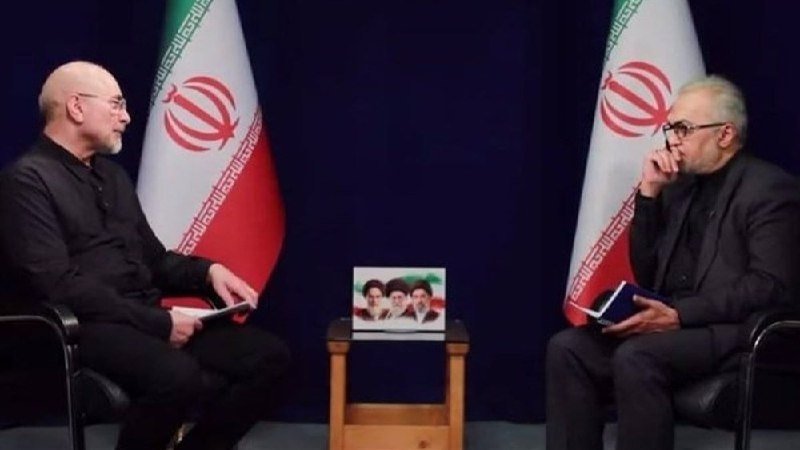
On 16 June 2026, in the middle of a Beirut summer, Hezbollah secretary-general Sheikh Naim Qassem dispatched an open letter to Mohammad Bagher Ghalibaf, the speaker of Iran’s Islamic Consultative Assembly. The letter, broadcast in full by the Iranian state-aligned outlet Fars News and by Al-Alam Arabic, ran to a single, unmistakable theme: gratitude, expressed in language usually reserved for co-religionists, not for a foreign head of legislature. "Words cannot express our deep gratitude towards the strong and supportive positions of Lebanon and the resistance," Qassem wrote, addressing Ghalibaf directly (Fars News, 16 June 2026, 12:41 UTC; Al-Alam Arabic, 16 June 2026, 12:37 UTC). In a second passage, the Hezbollah leader went further, thanking Tehran for having "turned the only effective glimmer of hope in the palm of the hand of the Israeli-American aggression against Lebanon into" — the sentence is truncated in the broadcast version, but the drift is unmistakable (Al-Alam Arabic, 16 June 2026, 12:36 UTC).
The letter is not a courtesy. Read alongside Qassem’s accompanying remarks — in which he argued that had "others followed Iran’s path, America and Israel would not have been arrogant, and the Zionist occupation would not have remained entrenched in the land of Palestine" — it functions as a public declaration that Hezbollah’s political ceiling, in this phase of the conflict, is set in Tehran (Al-Alam Arabic, 16 June 2026, 12:37 UTC). That is the news, and it is a news the Western wire has so far handled gingerly.
The vocabulary of dependency
Diplomatic correspondence between a Lebanese Shia party leader and a parliamentary speaker in Tehran is, on paper, unremarkable: the two countries maintain embassies, trade missions and a long-standing security relationship. What is striking is the register. Qassem does not address Ghalibaf as a counterpart; he addresses him as a patron whose "supportive positions" are credited with sustaining the resistance project itself. In standard state-to-state correspondence, that language would be disqualifying — a junior partner does not thank a senior one in public for the privilege of continued existence.
Hezbollah, of course, has long described its relationship with the Islamic Republic in theological rather than geopolitical terms, and Iranian state media has long reciprocated. What has changed is the venue. A letter of this kind, broadcast on the morning of 16 June 2026, is calibrated for a domestic Lebanese and Iranian audience simultaneously. The message on each side is different but consistent: in Beirut, the party’s base is reminded that the supply line through Damascus and Tehran remains intact; in Tehran, the Guardian Council-aligned public is told that the Lebanese front has not been abandoned.
A counter-narrative the Western wire has declined to print
The dominant Western framing of post-2024 Hezbollah has emphasised the movement’s weakening — degraded command structure, assassinated senior figures, a forced withdrawal from the south Lebanese border, and an enforced disarmament track mediated by the Lebanese army and Washington. Coverage in that mode tends to read Tehran-Hezbollah correspondence as the lobbying of a weakened client.
The 16 June letter does not sit comfortably inside that read. Qassem is not asking for money, weapons or a ceasefire. He is thanking Tehran for political cover at exactly the moment when Iranian parliamentary backing matters most: Ghalibaf’s Majles has been the institutional vehicle through which Iran has framed the regional confrontation as a defence of the "axis of resistance," and Qassem’s letter is, in effect, an Iranian parliamentary endorsement re-exported back to Lebanon as a Hezbollah communiqué. The dependency, on the evidence of the letter, runs in both directions. Tehran needs the Hezbollah file open as proof that its regional deterrence architecture still functions; Hezbollah needs the parliamentary seal to justify the costs its Shia base has absorbed.
The structural read, in plain prose
Strip away the theological language and a familiar pattern emerges. A state that cannot project force directly against a regional rival cultivates non-state allies to do so on its behalf, then absorbs the political and financial cost of sustaining those allies as a feature of its own security doctrine. The doctrine is not new; what is new is the public admission of it, in writing, between named officials, on a weekday morning, in two languages. Public letters of this kind are usually reserved for moments when one side of the relationship believes the other side’s audience needs to be told something it would not otherwise believe.
That is the structural point. Qassem’s letter tells the Lebanese Shia public — the constituency that bears the heaviest cost of the current confrontation — that the Iranian state, and not merely the Iranian Revolutionary Guard Corps, stands behind the party’s current course. It tells the Iranian parliamentary audience that the Lebanese file is still being managed, not wound down. And it tells every other actor in the region, from the Lebanese prime minister’s office to the Israeli negotiating team in Cairo, that the channel is open and the script is written in Tehran.
Stakes and what remains contested
If the trajectory continues, two things become more likely. First, any future Lebanon-Israel arrangement that does not pass through, or at minimum acknowledge, the Iranian parliamentary position will be treated in Beirut and Beirut’s southern suburbs as illegitimate — not by Hezbollah alone, but by the broader Shia political class that takes its cues from the Majles. Second, the cost of sustaining the relationship will continue to migrate onto Lebanese state institutions, in the form of unpaid electricity bills, parallel social-service networks and the recurring fiscal crises that the post-2024 government has been unable to resolve.
What remains genuinely uncertain is whether the letter is the opening of a new phase or the closing of an old one. The truncated final sentence in the Al-Alam broadcast — the line about the "glimmer of hope" turned into the palm of "Israeli-American aggression" — is the part of the message the Iranian and Hezbollah media teams have not yet decided how to finish. That indecision is itself information. The two sides are not yet agreed on how publicly to describe what comes next.
Desk note: Monexus has framed this as a story about regional alignment signalling, not as a story about a single letter. The Western wire has led with the diplomatic-courtesy read; the structural read — and the dependency it implies in both directions — is what we think the file actually contains.
Wire provenance
This editorial synthesis draws on the following public wire/social posts:
- https://t.me/farsna/
- https://t.me/alalamarabic/
- https://t.me/alalamarabic/
- https://en.wikipedia.org/wiki/Naim_Qassem