The Hormuz deal that wasn't quite — and what its $3.997 gallon means for the rest of us
A reported US-Iran understanding on the Strait of Hormuz is already moving pump prices. The fine print — and the contradictions — are what matters now.
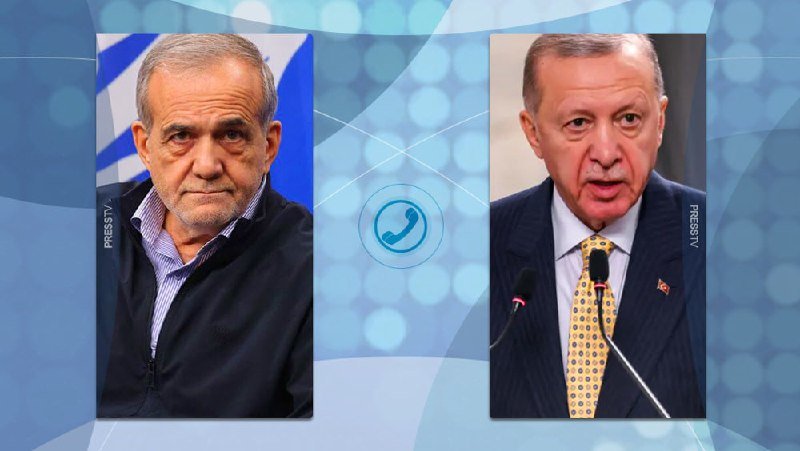
By 19:14 UTC on 16 June 2026, the framing had already done its work: a New York Post report, surfaced by Middle East Spectator, claimed a memorandum of understanding would let Iran "manage" the Strait of Hormuz, the narrow corridor between the Persian Gulf and the Gulf of Oman through which roughly a fifth of the world's oil passes. By the time the post landed, US retail gasoline had already begun to register the news — the national average slipped to $3.997 a gallon, a move The Epoch Times attributed to Washington and Tehran "finalizing a deal to end the conflict and reopen the Strait of Hormuz." Iran itself, via channels tracked by Unusual Whales, said the blockade of the strait was "easing." The dollar figure, the photograph of an Iranian-flagged tanker, and the word "deal" were all doing exactly what they were designed to do.
This publication is sceptical. Not because peace is impossible in the Gulf — it is plainly necessary — but because the package now circulating is a MoU whose terms are not on the record, whose counterparties have not jointly confirmed it, and whose headline price tag ($300 billion) was walked back the same morning by Vice President JD Vance, who insisted Iran would "only gain access" to funds under a structured arrangement rather than receive a lump sum. The story is half-firmed and half-implied, and the gap between the two is where ordinary Americans are about to pay rent.
What the wires actually say
Three things are demonstrable, on the public record, as of mid-afternoon UTC on 16 June. First, retail gasoline responded. The Epoch Times reported the national average falling to $3.997 a gallon, framing the move as the market's verdict on a US-Iran understanding. Second, Tehran signalled movement. Posts aggregated through Unusual Whales reported Iran stating that the blockade of the Strait of Hormuz was easing — a meaningful, if not yet operational, change of posture from a regime that had been treated, weeks earlier, as the principal source of kinetic risk in the corridor. Third, the New York Post, per Middle East Spectator, described an MoU that would allow Iran to "manage" the strait — language that, if accurate, would mark a notable concession on transit governance from a sitting US administration.
That is the public floor. Everything else — the sanctions architecture, the fate of Iran's enriched-uranium stockpile, the regional security guarantees — is inference stacked on a still-blurry foundation.
The $300 billion question, and Vance's walk-back
The most arresting number in circulation is the $300 billion Iran is "reportedly" to receive. Telegram channels surfacing commentary attributed to JD Vance pushed back hard on that figure on the morning of 16 June: Iran, the Vice President said, would not be handed a cheque but would gain access to restricted funds under a controlled mechanism. The distinction is not cosmetic. A direct transfer is geopolitics; a controlled-release escrow is sanctions law. One lets Tehran spend; the other lets Tehran import specific, permitted categories of goods, on a schedule, under oversight. If the Vance framing is the operative one, the $300 billion headline is closer to a balance-sheet cap than to a wire transfer.
This is also where the deal's most politically combustible feature lives. The New York Post's claim that Iran would "manage" the strait, if true, implies a degree of sovereign authority over a corridor that Saudi Arabia, the UAE, Oman, and the US Fifth Fleet all treat as a shared commons. The MoU's precise mechanism — joint patrol, Iranian-flagged convoys, a UN-administered corridor, a notional Iranian role in a multilateral body — is the difference between a face-saving protocol and a strategic reversal. Sources circulating the claim have not, as of 16 June 2026, published text.
What this looks like in plain terms
Strip the diplomacy away and the structural picture is familiar. The US has the world's reserve currency, the world's deepest capital markets, and a political class that reads pump prices the way other countries read consumer-confidence indices. When a Gulf crisis looks like it is ending, gasoline falls. When it looks like it is escalating, gasoline rises. The market is not making a judgement about Iranian intentions or Israeli deterrence; it is making a judgement about the next six weeks of seaborne flow through a 21-mile-wide chokepoint. The $3.997 print is a discounted bet, not a victory.
There is also a media-frame dimension worth naming. Reporting that emphasises Iranian "management" of the strait produces a different political reaction in Washington, in Riyadh, and in Tel Aviv than reporting that emphasises "eased" or "lifting" of an Iranian blockade. The former hands Tehran a prize; the latter frames a climbdown. Both characterisations can be true at once, and which one ends up in the lead paragraph is, increasingly, the news.
The open questions, in order of consequence
Four uncertainties are doing all the work in the gap between the headlines and the deal's eventual text. First, the MoU's binding force — memoranda of understanding are not treaties, and US commitments to a hostile-adjacent theocracy carry a half-life of one administration, sometimes less. Second, the verification regime for any Iranian "management" of the strait, given that international maritime inspectors have no standing access to Iranian naval or IRGC-Navy assets. Third, the regional reaction — particularly from Gulf states whose own sovereignty claims over the strait pre-date the Iranian revolution by more than half a century. Fourth, the durability of the gasoline move, which depends on whether the next seven days deliver confirmed de-escalation or a single headline that revives the risk premium.
The right read of 16 June 2026 is neither triumph nor cynicism. It is a market pricing in the possibility of a deal that does not yet exist on paper, while a political class in Washington and Tehran negotiates over the words that will eventually define it. Pump prices fell because traders bet on that possibility. The bet, like the MoU, is not yet a contract.
Desk note: The wire has so far led with the $300 billion figure and the Post's "manage" language. Monexus is leading with the Vance walk-back and the absence of text. The market's $3.997 print is real; the deal behind it is provisional.
Wire provenance
This editorial synthesis draws on the following public wire/social posts:
- https://t.me/Middle_East_Spectator
- https://t.me/AngelList