Strait of Hormuz reopens on paper: who really believes the shipping lane is clear?
President Trump declared tankers moving on a 'totally safe, secure, and pristine' Hormuz route. The world's largest tanker operator, the FT, and Polymarket bettors all tell a more complicated story.
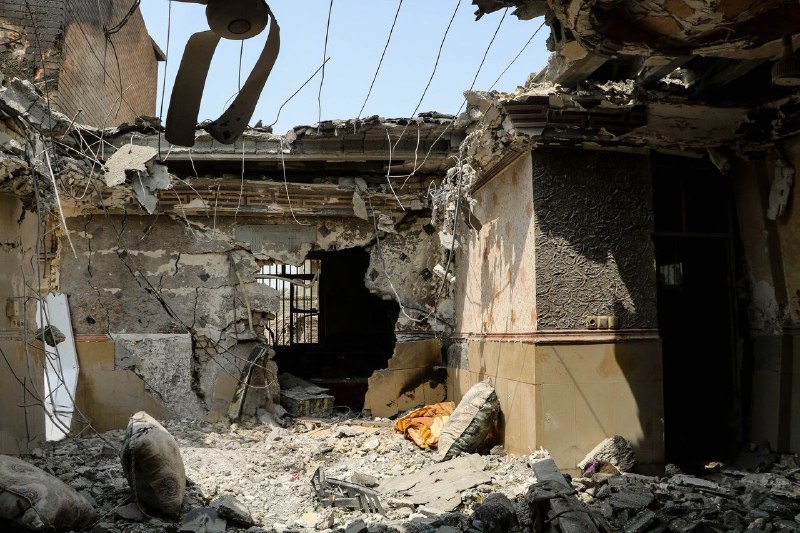
The first commercial oil tanker crossed back into the Strait of Hormuz on Sunday under a US-brokered arrangement with Iran. By Monday morning, the picture on the water and the picture in the briefing room had drifted apart in ways that should worry anyone pricing a barrel of Brent, refining a shipping schedule, or underwriting a Persian Gulf policy.
At 14:00 UTC on 15 June 2026, President Donald Trump told reporters that "ships are starting to move, many loaded up with oil, out of the Strait of Hormuz," characterising the transit corridor as "totally safe, secure, and pristine." That language landed as the most aggressive framing yet of a reopening the White House has been trying to declare for nearly a week. Within two hours, Trump himself walked it back, conceding on Truth Social and at a follow-up appearance that there may still be "a couple of mines" in the waterway. Polymarket traders, who had been pricing an imminent Hormuz normalisation, repriced the question in minutes. The average US petrol price, which had been creeping toward $4 a gallon on the assumption the corridor would stay choked, fell back below that threshold on the news of the deal, per the Financial Times. The signal from the futures market was real. The signal from the water was less clear.
What the White House is claiming
The Trump administration's narrative is straightforward. A deal has been struck with Tehran, the mines that Iran or its proxies laid during the late-spring confrontation are being cleared, and the world's most important oil chokepoint is returning to business as usual. Trump's own words, distributed via Cointelegraph's news feed at 14:00 UTC on 15 June, are the cleanest distillation: tankers are moving, they are loaded, the route is open. The political incentive to declare victory is obvious. A reopened Hormuz means cheaper petrol, a reprieve for an inflation print that was tracking uncomfortably high, and a foreign-policy win in an election year that has so far been defined by grinding entanglements.
The White House framing also has a market tailwind. Polymarket, the prediction-market platform where real money is staked on binary questions about geopolitical events, moved sharply on the news. The headline read "Trump announces oil ships are now moving out of the Strait of Hormuz along a 'totally safe, secure, and pristine' route," and traders who had been pricing a prolonged closure began cutting their positions. The signal matters because Polymarket is increasingly read by oil desks, sovereign-wealth funds, and treasury teams as one of the cleaner aggregators of public expectation. When that market moves, so do term-sheet assumptions.
What shipping executives are saying on the record
The industry's response has been considerably more cautious. The world's largest independent tanker operator told the Financial Times, in reporting relayed by Reuters at 05:40 UTC on 16 June, that even under the most optimistic clearance scenario, full commercial transit through the Strait of Hormuz will take "weeks" to resume. The reasoning is structural. Tankers that diverted to longer routes around the Cape of Good Hope cannot simply pivot back the moment a politican declares the corridor open. Insurance premiums, which spiked into the stratosphere during the closure, are renegotiated on a vessel-by-vessel basis. Crews have been rotated. Charter contracts have been re-papered. Cargo commitments have been re-routed to refineries expecting different crudes on different arrival dates.
Middle East Eye on 16 June quoted a shipping executive who put the same point more colourfully: any Hormuz reopening "must be reflected in reality," meaning that physical verification — sweep teams confirming the absence of mines, naval escorts in position, marine warranty surveys reissued — has to happen before commercial operators re-commit. The executive's framing is a polite way of saying the market does not trade on presidential adjectives. It trades on passage plans, Lloyd's bulletins, and the actual position of mine-countermeasure vessels. Until those line up with the rhetoric, the rhetoric is, at best, a forward indicator.
The mine problem and the credibility gap
The credibility gap is most visible in the question of mines. Trump's own walk-back — that there may still be "a couple of mines" in the waterway — is, on its face, anodyne. A handful of mines is a manageable engineering problem for any Western or Gulf-state navy with modern countermeasure capability. But the political signal is different. If the US president is uncertain about whether the waterway is fully cleared, then tanker captains, P&I clubs, and charterers are entitled to be uncertain too. The Polymarket post that recorded the walk-back did not bury the lede: the market moved on the headline "Trump reveals there may still be 'a couple of mines' in the Strait of Hormuz." That is the read traders took away.
The structural problem is older than this particular crisis. The Strait of Hormuz is, by any measure, the single most consequential maritime bottleneck on earth. Roughly a fifth of globally traded oil passes through it, along with a substantial share of liquefied natural gas from Qatar. There is no overland pipeline that fully substitutes for it; the UAE's Habshan-Fujairah route offers partial relief, and Saudi Arabia's East-West pipeline can bypass Hormuz for some crude flows, but neither is sized to absorb a full closure. That asymmetry gives whoever controls the waterway — in practice, Iran, whose northern coast forms one shore — extraordinary leverage. The current arrangement appears to trade that leverage for sanctions relief or some other concession that the public record does not yet specify. The sources in this article do not detail the terms.
The deeper question is whether the deal is enforceable. Iran's track record on inspection regimes, particularly in the nuclear file, suggests that "a couple of mines" can become "a few dozen" with little warning and less outside visibility. The same prediction-market traders who moved on the reopening headline have not yet moved on the corollary question of whether the deal holds for thirty, sixty, or ninety days. The position of the bid is, in effect, a public referendum on whether the US–Iran understanding is durable or whether it is a tactical pause in a longer confrontation.
What stays unresolved
Several pieces of the picture remain genuinely unknown, and a responsible read requires naming them rather than papering over them. The sources reviewed for this article do not specify the exact terms of the US–Iran arrangement: what sanctions are being eased, what reciprocal steps Iran has committed to, what verification mechanism is in place, and what the trigger conditions are for re-imposition. Reuters' reporting on the tanker-operator warning is second-hand via the Financial Times; the underlying FT story is paywalled and not directly in the record. The shipping executive quoted by Middle East Eye is identified only as "a shipping executive," without a named company or vessel.
The mine question is also unresolved in operational terms. "A couple," in the language of a politician trying to manage expectations, could mean two or it could mean a number that is being deliberately softened. The Pentagon, the Iranian navy, the Gulf Cooperation Council, and the Combined Maritime Forces have not, in the materials available here, published a comprehensive clearance bulletin. The London insurance market, which underwrites most of the world's tanker hull and cargo policies, has not been quoted on the new risk regime. Until those voices are on the record, the most defensible read is that Hormuz is partially open, transit is technically possible, and full commercial normalisation is weeks away on the working assumption of the largest operators.
Stakes and the road to July
The stakes are concrete and time-bound. If the deal holds and clearance is verified within the next two to four weeks, the geopolitical dividend accrues to the White House: lower pump prices, a managed de-escalation, a talking point. Iran gets sanctions relief and a face-saving framework for de-escalating a crisis of its own making. The Gulf monarchies, which spent the closure window watching tanker traffic slow to a trickle off their coasts, get back the transit revenue and the perception of stability that underpins their sovereign-debt pricing. China and India, the two largest single buyers of Hormuz crude, get a normalised supply chain. The Russian oil complex, which has been the largest beneficiary of the closure-driven price spike, loses a windfall.
If the deal does not hold — if a stray mine detonates, if an Iranian proxy group tests the perimeter, if a hardline faction in Tehran or Washington decides the arrangement constrains them too much — the path back to a $90 or $100 Brent is short, and the political cost of the walk-back will be paid in the currency of credibility. The Polymarket bid is, in effect, the most efficient aggregator of that probability. Its current price reflects a market that believes the reopening is real, conditional, and reversible. That is also the most defensible read for anyone who cannot afford to be wrong.
This publication framed the reopening against the shipping industry's most cautious public voice, rather than the most bullish political voice, on the principle that market-clearing prices and operator behaviour are better evidence of a working waterway than a press-conference adjective.
Wire provenance
This editorial synthesis draws on the following public wire/social posts:
- https://x.com/MiddleEastEye/status/...
- http://reut.rs/4uJBOmV
- https://x.com/unusual_whales/status/...
- https://x.com/Polymarket/status/...
- https://t.me/cointelegraph/...
- https://t.me/cointelegraph/...
- https://x.com/Polymarket/status/...