India's contemporary art crosses into the Hermitage, and a monsoon road-trip canon is rewritten
Indian artists land a debut at the State Hermitage in St Petersburg, while Indian Express redraws the country's monsoon road-trip map with five new routes.
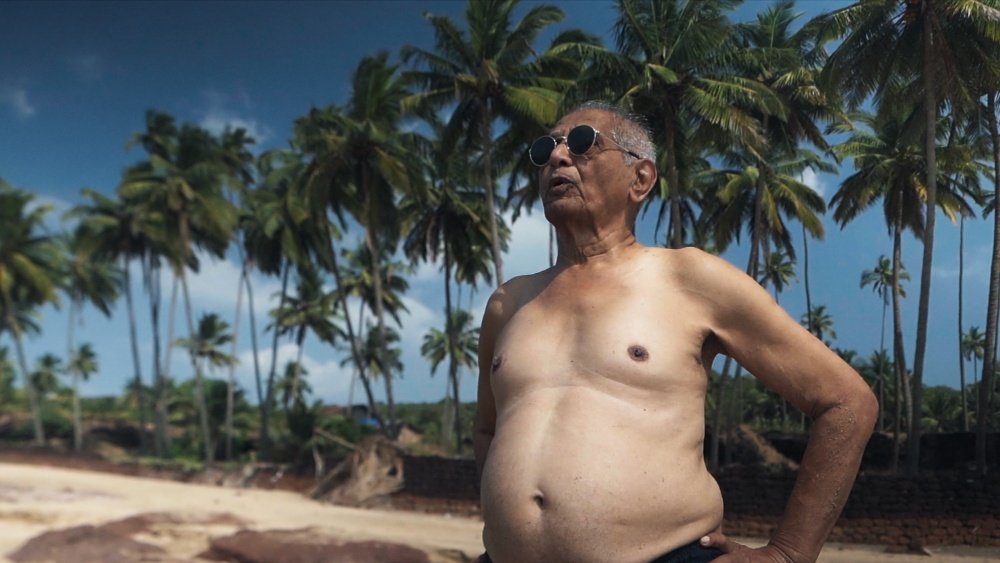
Two small cultural bulletins landed in the same Indian Express wire on the morning of 16 June 2026, and read together they sketch a more interesting India than either does alone. The first is a debut: a cohort of Indian contemporary artists showing inside the State Hermitage Museum in St Petersburg, one of the world's oldest and most canonically European art institutions. The second is a rewrite of the monsoon road-trip canon, with five new routes positioned for the wet season that has already begun across the subcontinent.
Both items matter less for what they announce than for what they quietly signal. A non-Western contemporary practice gaining a foothold in a Russian imperial-collection landmark is a different kind of cultural exchange than the bilateral art traffic of the last decade, and a travel list that treats Indian roads as a year-round proposition — not a December-to-February product — re-routes the country's domestic tourism economy in a small but durable way.
A debut that is also a diplomatic corridor
The Hermitage exhibition, reported by The Indian Express on 16 June 2026, places Indian artists inside a museum whose symbolic weight far exceeds its visitor numbers. The State Hermitage, founded by Catherine the Great in 1764 and housed in the Winter Palace on the Neva, has long been the centre of gravity for European painting from the Renaissance forward. A contemporary Indian showing inside those walls is, on its face, a curatorial decision. It is also, in the present geopolitical weather, a diplomatic one.
Russia's cultural ties to South Asia have thickened since 2022 as Moscow has worked to rebalance its external relationships. Avenues that were once dominated by European exchange have been deliberately diversified — energy, defence, and now the slower, softer currency of visual art. The Indian artists' presence at the Hermitage does not require the reader to take a position on the larger confrontation; it does, however, register as one of the smaller, more legible signals that the architecture of Russia's cultural partnerships is being rebuilt in real time.
For India, the optics are straightforward. New Delhi has spent two decades trying to position its contemporary artists inside the global marquee institutions — Tate Modern, the Venice Biennale, MoMA PS1, the Centre Pompidou. A Hermitage showing belongs on that list, and on a list that also includes museums in Shanghai, Doha, and Seoul where Indian work has appeared over the last five years. The pattern is unmistakable: a Global South cultural confidence that no longer waits to be invited into the European canon, and that increasingly arrives in cohorts rather than as solo exceptions.
The reporting does not specify the size of the cohort, the names of the exhibiting artists, the curatorial framing, or the duration of the show. The Indian Express dispatch, as carried in the 16 June wire, is an opening announcement — a hook for the deeper coverage that will follow in the days and weeks ahead. The piece that matters is the one that lands when the exhibition opens to the public, and the catalogue, the loans, and the parallel programming become legible.
Five roads, one season
The second bulletin, also from the Indian Express on the same morning, is a travel feature that names five road-trip routes pitched at the 2026 monsoon. Indian travel writing has historically been a winter and a hill-station industry: the canonical road trip is the Manali-Leh highway in July, the Spiti loop in September, the Konkan coast in December. The monsoon canon is thinner, more cautious, and largely written around the south-west coast.
The Express list, as carried in the 16 June wire, treats monsoon driving as a category worth curating properly. The framing is the news. Indian road infrastructure has changed materially in the last decade — the Bharatmala programme, the coastal roadworks in Maharashtra and Karnataka, the steady upgrade of state highway connectors in the Western Ghats, and the new airport-to-highway last-mile builds in the north-east have all rewritten what is driveable in the wet months. A monsoon road-trip list, written for a domestic audience that already has the cars and the leave, is an editorial argument: that the country is a year-round driving proposition, not a season-bound one.
The travel section of the Indian Express has, over the same period, expanded from a heritage-and-pilgrimage register into a routes-and-itineraries register that more closely resembles the Condé Nast Traveller or National Geographic Traveller (India) house style. The monsoon feature is the latest move in that shift, and it is the kind of editorial product that pulls ad revenue from automotive OEMs, tyre manufacturers, hospitality chains, and premium fuel retailers — a small but real economy in its own right.
What the two stories together suggest
Read in isolation, the two bulletins are unrelated. Read together, they describe a single India: confident enough to send its visual art into one of the world's most canonically European museums, and confident enough to invite its own domestic travellers onto its own roads in the wet months. Both moves are quietly post-colonial in posture — neither provocative, neither apologetic. The first is an arrival on someone else's stage; the second is a recommitment to one's own geography.
The geopolitical subtext is real but should not be overdrawn. The Hermitage showing is a soft-power data point in a wider rebalancing of Russia's external partnerships, and a marker of how India has positioned itself as a cultural interlocutor in a multipolar moment. The monsoon road-trip list is, more locally, a signal that the Indian middle class is being sold a more ambitious, less season-bound, and more infrastructure-aware version of its own country.
What remains uncertain
The Indian Express wire does not, in these two items, name the exhibiting artists, specify the cohort size, identify the curator, or give exhibition dates. It does not name the five monsoon routes, give distances, or specify difficulty. The reporting is at the level of the announcement and the headline pitch. The granular material — the catalogue, the lenders, the curatorial statement on the one hand; the route-by-route breakdowns, the recommended stopovers, the photography on the other — will follow in the days and weeks ahead, and the present dispatch should be read as the curtain-raiser rather than the substance.
Monexus Desk Note. The wires carried these as two unrelated lifestyle items. Read together, they describe a country that is exporting its visual culture into Russian imperial space while rewriting its own domestic travel canon — a quietly post-colonial posture, neither provocative nor apologetic.