India's Telegram block ahead of NEET re-exam: a high-stakes test of platform governance
India has restricted Telegram nationwide until 22 June and barred message-editing on the platform, citing risks to the integrity of a re-scheduled medical entrance exam. The move is the Centre's most aggressive platform intervention since the 2020s internet shutdowns, and it arrives with little public technical justification.
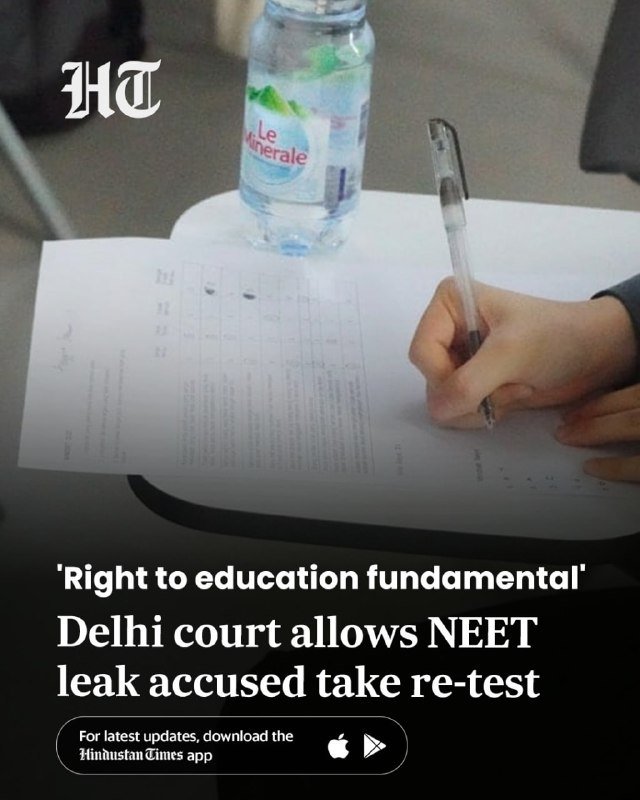
On 16 June 2026, India's central government ordered internet service providers to restrict access to Telegram until 22 June, days before roughly 2.4 lakh students are due to retake the undergraduate medical entrance examination known as NEET UG. The order, issued by the Ministry of Electronics and Information Technology, also disables the ability of users to edit messages on the platform, a feature Telegram introduced in 2019 and one of the service's principal selling points. The trigger, officials say, is the risk that leaked examination material could once again move through the encrypted messaging app — a fear rooted in the precedent of the previous year's NEET paper-leak controversy, which has never been fully closed out in public record.
The Indian Express reported on 16 June that the Centre framed the move as a temporary, exam-window measure, and that access would be restored the day after the re-test concludes. But the order's scope is national and its mechanism — a blanket block delivered through telecom operators — is the bluntest instrument available under the Information Technology Act. What is being tested here is not only the integrity of one examination, but the precedent for restricting a globally hosted communications platform on the grounds of preventing future leaks, with the technical evidence for that risk neither published in detail nor independently audited. India's National Testing Agency, the body that conducts NEET, has said it is preparing a live portal where students and parents can confirm the genuineness of admit cards, results, and any information circulating online about the exam.
What the order actually does
The restriction, first reported by Scroll.in on 16 June, covers the full Telegram ecosystem in India — direct messaging, group chats, channels, and bot services — rather than specific accounts or channels that might be credibly linked to past paper leaks. That distinction matters. A targeted takedown of a small number of identified channels would be a routine law-enforcement action; a nationwide block is a platform-level intervention. The government has also instructed Telegram to disable the edit-message feature for Indian users for the duration, a request that requires the company's cooperation at the protocol level and that, if complied with, marks the first time India has compelled a global platform to alter a product feature for a domestic user base. The exact compliance mechanism, and whether Telegram has formally assented or is being routed around by Indian users via VPN, has not been publicly disclosed.
The Indian Express noted that the block is tied to a single event window — the NEET UG re-examination scheduled for 21 June — rather than to an ongoing criminal investigation, which is the more common justification for section 69A blocking orders. Euronews, citing India's National Testing Agency, reported the same window and described the restriction as a measure to prevent further paper leaks while applicants retake the test. None of the reporting reviewed identifies specific channels, accounts, or pieces of content that prompted the order, leaving the public record with an action and a stated motive but no documented chain of evidence.
Why NEET, and why now
The NEET controversy is the load-bearing fact in the government's case. In 2024, the NEET UG examination was marred by allegations of a paper leak and large-scale irregularities, including claims of grace marks awarded to thousands of candidates. The episode triggered nationwide protests, court challenges, and a re-test for a subset of students. The political damage was significant: opposition parties framed the leak as evidence of administrative decay under the incumbent government, and the BJP's response — combination of defensive messaging, targeted arrests, and a partial re-test — did not fully close the political wound. The Supreme Court of India has, in parallel hearings, examined NTA's procedures and the broader question of whether multiple national entrance examinations should be consolidated or replaced.
In that context, the Telegram block reads less as a calibrated counter-leak operation and more as a defensive posture ahead of a politically charged re-test. The NTA's separate move on 16 June — a live information portal intended to give students a single authoritative source for admit cards, results, and exam-day updates — is the agency's own attempt to take the oxygen out of rumour markets on Telegram and other messaging apps. If the portal works, it will reduce the audience for leaked material. If it does not, Telegram will continue to fill the information vacuum, and the block will be the only remaining tool. The Indian Express's coverage of the portal flags that the design is rudimentary and that its effectiveness in displacing informal channels is, on past Indian government experience with information portals, an open question.
Platform governance at scale
The structural question sits above the exam itself. India is Telegram's largest market by user count, with the company having publicly estimated more than 100 million monthly active users in the country — a figure the company has cited when negotiating with Indian regulators and which makes India the platform's most important single national jurisdiction. A block of six days is short; a block of six days that is publicly justified on grounds of preventing a future leak establishes a template. The next time a major Indian examination is scheduled, the political incentive to repeat the move is high. The next time a civil-unrest event, a religious gathering, or a sensitive court ruling falls inside a Telegram-friendly news cycle, the precedent will be available to be invoked.
The Information Technology (Procedure and Safeguards for Blocking for Access of Information by Public) Rules, 2009, and their later amendments, give the central government broad authority to direct intermediaries to block access to online content on a range of grounds, including sovereignty, defence, public order, and "contempt of court." The procedural safeguards — inter-ministerial review, written orders, periodic review by a committee — are present in the rules but operate behind closed doors, and the orders themselves are not routinely published. That opacity is the principal lever the government has used to scale up internet shutdowns in recent years; India has led the world in documented internet shutdowns for several consecutive years, according to tracking by civil-society groups. The Telegram order is the first major application of that framework to a globally dominant messaging platform in the context of an exam-integrity claim rather than a public-order or national-security claim.
Telegram's structural position complicates the picture. Unlike Meta's WhatsApp — which has a corporate presence in India, complies with the IT Rules' traceability requirements in form if not in spirit, and has a routine government-relations channel — Telegram has historically been more combative with state requests, has resisted data-localisation and traceability demands on encryption grounds, and has had a strained public relationship with Indian law enforcement over the use of the platform in specific criminal cases. That posture has made Telegram a popular channel in India for precisely the kind of low-trust information exchange — exam tips, political rumours, community organising — that state agencies are most concerned about. The block can therefore be read as either a one-off security measure or as the first move in a longer negotiation between New Delhi and a platform that has, until now, been harder to bring to heel than its larger competitors.
What we verified / what we could not
Verified: The restriction is in force nationwide as of 16 June 2026 and is set to end on 22 June, the day after the re-test. (Indian Express, Scroll.in, Euronews.) The order disables message-editing for Indian users during the window. (Scroll.in.) The move is officially tied to the NEET UG re-examination scheduled for 21 June. (Indian Express, Euronews.) The NTA has launched a live information portal intended to give candidates a single authoritative source for exam-related communications. (Indian Express.) Telegram has a user base in India that the company itself has, in prior public statements, described as its largest national market.
Not verified from the source set: The specific Telegram channels, accounts, or pieces of content that triggered the order; whether Telegram has formally complied with the disable-editing instruction or whether the effect is achieved only at the Indian ISP level; the legal provision of the IT Act or the 2009 Blocking Rules under which the order was issued; whether the order has been challenged in court; the technical implementation of the block and the role of major Indian telecom operators in enforcing it; the number of candidates registered for the 21 June re-test. Reporting from the Indian Express refers to applicants in the "lakh" range; the precise figure across the available sources is not consistent and has not been used here.
Stakes
For the students sitting the re-test on 21 June, the practical question is whether the block measurably reduces the surface area for paper leaks. The honest answer is that the source set does not support a confident judgment either way. Telegram is a vector for rumour and a vector for genuine information, often at the same time; blocking the platform in full prevents both. For the wider Indian internet, the precedent is the more durable consequence. A government that can credibly argue "an exam is at risk" to justify a six-day nationwide block of a major global platform has acquired a tool that can be redeployed under a much wider set of justifications the next time the political moment is right. The NEET re-examination is, in that sense, the cover story for a test of digital-state capacity that will outlast the exam window by a long way.
The opposition, civil-society groups, and Telegram itself have not, in the source material reviewed, registered a public response with detail sufficient to evaluate. The next 48 hours — the portal's launch, the political reaction, and any judicial scrutiny of the order — will be the first real read on whether the block holds, is widened, or is quietly walked back. India has used internet shutdowns as policy for the better part of a decade; this is the first time it has used one against a single global platform on exam-integrity grounds. The framings adopted now will set the terms of every comparable case that follows.
Desk note: Monexus framed this as a platform-governance story anchored to a specific, dated exam window, rather than as a general internet-shutdown story. The wire coverage reviewed was consistent on the dates and the scope of the order and divergent on the underlying rationale, with the Indian Express emphasising the paper-leak precedent and Euronews emphasising the NTA's role. The technical implementation of the block, and Telegram's response, are the open questions and have been flagged as such.
Wire provenance
This editorial synthesis draws on the following public wire/social posts:
- https://en.wikipedia.org/wiki/NEET
- https://en.wikipedia.org/wiki/Telegram_(software)