Iran's cultural establishment claims a civilisational first as wartime rhetoric intensifies
A senior Iranian cultural official told a Tehran ceremony that the Islamic Republic is the first Muslim state in two centuries to defeat foreign invaders — a claim that lands inside an active war and a widening official narrative of national resilience.
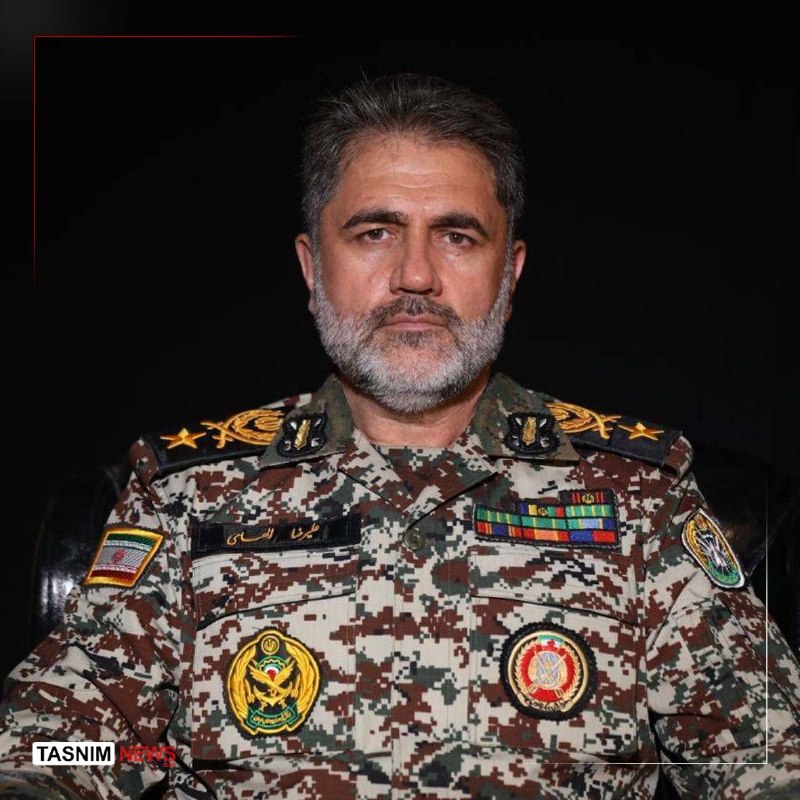
At a Tehran ceremony held on 16 June 2026, a senior Iranian cultural official cast the Islamic Republic as the first Muslim-majority state in two centuries to have defeated foreign invaders on its own soil — a characterisation that, by any reading of the public record, is far heavier than the immediate facts on the ground warrant.
The remarks, attributed in Iranian state-media reporting to a member of the Supreme Council of the Cultural Revolution, are not an isolated flourish. They sit at the intersection of a live regional war, a long-running official narrative of resistance, and an institutional mandate — the Cultural Revolution Council — that exists to coordinate precisely this kind of message. The claim deserves to be examined in those terms, not just at face value.
What was actually said
According to Tasnim News Agency, the official told the audience that Iran is the first Muslim country to have defeated foreign invaders in the past two centuries. The framing is civilisational: it is not a tactical claim about a specific battlefield, but a placement of the Islamic Republic within a longer historical arc stretching back to the Ottoman era and beyond. Tasnim, a state-affiliated outlet, carried the statement as part of its coverage of a wider ceremony that the snippet does not fully describe; the full transcript and the identity of the cultural figure heading the event have not been independently published in the international press as of this writing.
That matters. The Cultural Revolution Council — set up in the 1980s to oversee higher-education policy and broader ideological alignment — has institutional weight that a cultural minister or a Friday prayer leader does not. Statements attributed to its members, particularly at flag-raising or commemorative ceremonies, tend to be read in Tehran as guideposts rather than off-the-cuff remarks.
The strategic context the statement lands inside
Iran is fighting an active war. Israeli strikes on Iranian military and scientific infrastructure, and Iran's retaliatory ballistic-missile and drone exchanges, have continued in pulses since the first direct exchanges in 2024 and the subsequent 12-day war of June 2025. Tehran's public line during this period has hardened around two propositions: that the country has absorbed unprecedented strikes without its command structure being broken, and that the wider regional order — Iran's network of partners and proxies from Lebanon to Yemen — has not collapsed under the pressure.
A claim of civilisational firsts fits that line neatly. If the past two years' fighting is read inside the regime as a successful defence rather than a costly stalemate, then the narrative writes itself: the Islamic Republic did what earlier Muslim-majority powers failed to do. The structure of the claim is less interesting than what it is built to do, which is to anchor a wartime mobilisation message in a longer story about national dignity.
The counter-read, plainly stated
The strongest counter-read is that the statement is symbolic, not factual. Several Iranian neighbours — Turkey, Egypt, Iraq at various points in the twentieth century — repelled foreign military occupation on specific theatres and dates, and the historical claim of a two-century vacuum is the kind of periodisation that serves the speaker's argument rather than the historical record. A second counter-read is structural: this is not the first time the Cultural Revolution Council, or its peers, has framed a wartime moment in civilisational language, and treating it as news of a doctrinal shift is to over-read it.
A third counter-read sits outside Iran. Western and Israeli analysts have argued for years that Iran's official narrative systematically inflates its battlefield successes and minimises its costs. Under that framing, the Tasnim report is less a piece of cultural commentary than a piece of domestic information management, designed to ensure that wartime casualty and economic burdens do not translate into political pressure on the system.
What the statement is built to do
Iranian state communications in wartime tend to operate on two registers simultaneously: a diplomatic register aimed at outside audiences, and a domestic register aimed at the bazaar, the universities, and the Friday prayer audiences. The Tasnim snippet belongs firmly to the second register. Its function is to convert an ongoing military confrontation into a chapter in a longer national story — one that cannot easily be unwound by any single battlefield loss, and that ties the present generation of Iranians to a civilisational lineage that predates the Islamic Republic itself.
That is a coherent political strategy. It is also a strategy that has limits. Civilisational framing holds when the underlying facts can be made to fit; it strains when they cannot. The public does not appear, on the available evidence, to have been told in granular terms what the war of the past two years has cost in lives, equipment, and economic output. The longer the gap between civilisational rhetoric and daily experience, the harder the rhetoric has to work.
Stakes, and what to watch next
For Tehran, the immediate stakes are domestic legitimacy. The claim that Iran is the first Muslim state in two centuries to defeat foreign invaders is, in plain terms, an attempt to write the current war into the official history of the Republic before the war ends. For Iran's regional partners, the message is a reassurance that the Islamic Republic intends to remain the organising pole of the regional axis. For outside analysts, the claim is a reminder that the Cultural Revolution Council continues to function as a vehicle for high-level ideological messaging, and that Iranian wartime narratives should be read as political artefacts, not as dispatches.
The claims that remain genuinely uncertain are the ones the source material does not resolve: the full text of the ceremony, the precise institutional standing of the speaker, the date and circumstances of the wider event, and the official reaction from neighbouring governments. The Iranian state press will carry the speech for days; the international press will treat it as colour. Both readings will be correct, in their own registers. The harder analytical work — separating what was said from what was meant, and what was meant from what will actually stick — begins now.
Monexus framed this against the Iranian state wire rather than the Western wires, on the principle that wartime rhetoric from the country at war is itself the document under examination.
Wire provenance
This editorial synthesis draws on the following public wire/social posts:
- https://t.me/tasnimplus
- https://en.wikipedia.org/wiki/Supreme_Council_of_the_Cultural_Revolution
- https://en.wikipedia.org/wiki/Iranian_cultural_revolution
- https://en.wikipedia.org/wiki/2024%E2%80%9325_Iran%E2%80%93Israel_crisis
Follow the event.
These dated source records provide context. They do not retrospectively verify this archive article.
Separate what the nuclear watchdog reported from what it could not determine after the June 2025 strikes.