Iran's red line in Lebanon: Tehran is using the Israel–Hezbollah file to keep the war alive
A senior Hezbollah source says Iran has promised no agreement without an Israeli withdrawal from Lebanon. The framing belongs in a longer story about who gets to end this war.
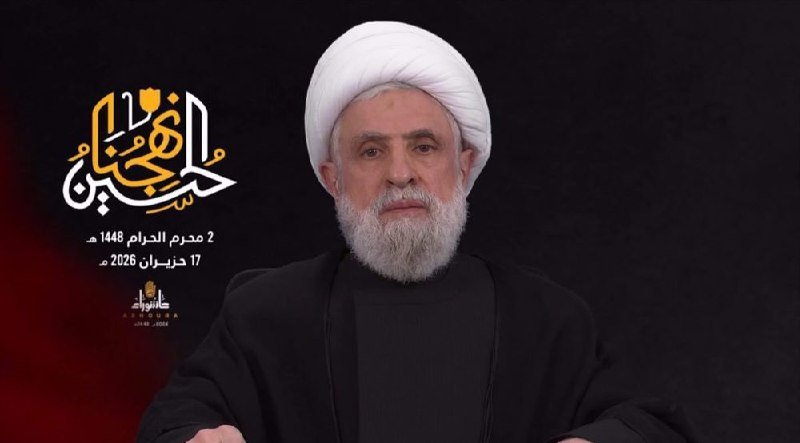
On 16 June 2026, a senior Hezbollah source told Al-Araby TV that Iran had given the movement a written assurance: no memorandum of understanding with Israel would be signed unless it included an Israeli withdrawal from Lebanese territory. The claim, circulated in real time by Hezbollah-aligned channels including The Cradle and relayed through open-source monitors at 13:22–13:24 UTC, is the clearest public framing yet of Tehran's negotiating floor — and of the role Hezbollah is being asked to play inside it.
The statement is best read not as a leak but as a position paper dropped into the diplomatic record. By routing it through a Beirut-based satellite channel and letting it propagate through regional outlets, the Iranian–Hezbollah axis is signalling, in advance of any announced framework, the single condition under which it will accept the file being closed.
What was actually said
The Cradle, summarising the Al-Araby TV report, quoted the Hezbollah source as saying Iran had "assured us that the agreement will not be signed unless it includes an Israeli withdrawal from Lebanon." The same formulation was echoed within minutes by the open-source channel Intelslava and by War Monitors, two accounts that aggregate but do not originate regional reporting. None of the three added sourcing beyond the Al-Araby interview; all three flagged the report with the urgency emoji treatment reserved for breaking developments.
Two things follow. First, this is not a unilateral Hezbollah position — the framing is that the demand comes from Tehran, with Hezbollah functioning as the carrier. Second, it is being aired before any agreement has been put in writing, which is precisely the point: it sets a veto in public.
The counter-narrative: who benefits from a frozen file?
Read against the Western wire line — that a deal is "close," that mediators are shuttling between capitals, that a framework is weeks away — the Hezbollah source's account is awkward. It suggests that the public optimism around a near-term Israeli–Lebanese understanding is, at best, premature. The sources in this cluster do not address that optimism directly; the mainstream wires have not, in the material available, published a contradictory claim that an Israeli withdrawal is off the table.
But the counter-narrative is internally coherent. Israeli security demands — including the dismantling of Hezbollah's remaining military infrastructure south of the Litani and a credible enforcement mechanism — sit on the same table as the Lebanese state's insistence on full territorial sovereignty. A withdrawal commitment is, in practice, the diplomatic language through which the latter is asserted. What the Hezbollah source is doing is converting a sovereign-state demand into a movement-level red line backed by a regional patron.
A structural read: who gets to end the war
The larger pattern is familiar. Across the Middle East in 2026, the visible negotiations — the public anchors that media describes as "the file" — are increasingly downstream of parallel conversations between three sets of actors: the regional state sponsors, the armed movements they back, and the great-power guarantors (Washington above all). The Lebanese government, which would be the formal party to any agreement, is the most exposed and the least empowered in that geometry.
That is what makes the Al-Araby report worth taking seriously even on thin sourcing. The signal it sends — that Iran reserves the right to veto a deal — is consistent with the negotiating architecture as it has been described in regional coverage over the past year: Tehran as the senior partner, Hezbollah as the disciplined instrument, Beirut as the place where the agreement would, formally, be signed. If a withdrawal from Lebanese territory is the published red line, the next question — whether Israel can accept a deal whose guarantor is effectively Iran — is the one the public framing has so far avoided.
Stakes and what remains uncertain
If the trajectory holds, Lebanon is the principal loser: a country that does not control the terms of its own de-escalation, and that absorbs the economic cost of a war its government did not start and cannot, on this account, end. Israel gains a more honest map of the negotiating terrain. Iran retains the file as leverage. The United States, the implicit mediator, faces the harder version of the same question it has faced on every adjacent front: whether a deal is preferable to a frozen conflict that a regional patron can thaw at will.
What the sources do not specify is the timing of any prospective agreement, the text of the alleged Iranian assurance, or whether the Hezbollah source is speaking for the movement's political wing, its military command, or both. The Al-Araby report is a single-channel account; the mainstream wires have not yet matched it. That uncertainty is the point of the exercise — and the reason the claim itself is news, regardless of whether every word of it holds up under closer scrutiny.
This piece treats the Hezbollah source's account as a position paper, not as a confirmed diplomatic fact. The Western wire narrative, where it exists, has not been contradicted — but neither has it been corroborated. Monexus will update as primary sourcing becomes available.
Wire provenance
This editorial synthesis draws on the following public wire/social posts:
- https://t.me/thecradlemedia
- https://t.me/WarMonitors
- https://t.me/intelslava
Follow the event.
These dated source records provide context. They do not retrospectively verify this archive article.
Separate what the nuclear watchdog reported from what it could not determine after the June 2025 strikes.