A stadium in Los Angeles and the choreography of Iranian legitimacy
Iran's 2-0 win over New Zealand at SoFi Stadium was a sporting result and a piece of state performance. The choreography off the pitch mattered as much as the goals on it.
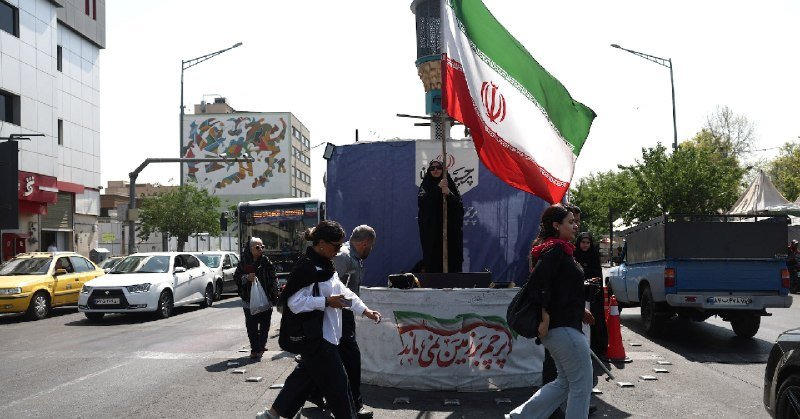
At 00:59 UTC on 16 June 2026, the Iranian and New Zealand national football teams walked out onto the pitch at SoFi Stadium in Los Angeles. The national anthem of Iran was played; a giant Iranian flag was unfurled on the turf; supporters inside the stadium chanted "Iran, Iran." Roughly 73 minutes later, the referee's whistle confirmed a 2-1 result that the official Iranian outlets framed as a victory for the team in green, and a smaller, quieter kind of victory for the Republic that travels with them.
The match was, of course, a football match — a Group-stage fixture on the road to the 2026 FIFA World Cup, played on American soil. But the cameras in Los Angeles were not only filming the goals scored by Ramin Rezaian in the 32nd minute and by Just in the 7th and 54th minutes. They were filming a piece of carefully rehearsed state performance, broadcast home in near-real time by Iranian state outlets, in which the Islamic Republic projects normalcy, sovereignty, and belonging onto a global stage that has spent the better part of two years trying to marginalise it.
The pitch is also a podium
Iran's state media does not treat friendly football as incidental. The pre-match choreography is part of the package: the flag spread across the centre circle, the anthem played at full volume, the diaspora chanting in a stadium thousands of miles from Tehran. Each of these moments is a small rebuttal to the argument — advanced in Western capitals and in Israeli and Saudi commentary for years — that the Islamic Republic is isolated, brittle, and diplomatically homeless. A national team walking out under its own flag at a packed American stadium, with a national anthem no one in authority is willing to skip, is the visual inverse of that thesis.
There is a long precedent here. Sporting events have functioned as low-cost soft-power instruments for most of the post-war period, from the 1980 Moscow Olympics to the 2008 Beijing Games. Iran has used football particularly aggressively, because the men's national team is one of the few Iranian institutions that retains genuine domestic legitimacy, and because FIFA's insistence on political neutrality at the federation level gives Tehran a venue in which the symbols of statehood travel cheaply. SoFi Stadium is not neutral ground in the diplomatic sense — it sits in a city whose mayor until recently made a habit of restating American hostility to the regime — but it is neutral ground in the sporting sense, and that is what matters when the cameras are rolling.
What the goals settled, and what they did not
On the field, the result was unspectacular by Iran's standards. Rezaian's opener, confirmed by the Tasnim News feed in the 32nd minute, was the kind of composed finish that the team has produced routinely in qualifying. New Zealand's two goals — Just in the 7th and 54th minutes, the second of which Iranian outlets noted had earlier been in doubt after a disallowed Iranian effort for offside — gave the Kiwis a lead they could not hold. A 2-1 Iranian win, recorded by both Mehr News and Tasnim News as the final whistle went, with state outlets emphasising the home crowd's chanting of "Iran, Iran" throughout the second half.
It is the framing, not the scoreline, that does the political work. Mehr News and Tasnim News both led their rolling coverage with the pre-match symbolism — the flag, the anthem, the diaspora's chant — before the ball was kicked. In a media environment in which most of the footage that reaches Iranian audiences is either state-produced or filtered through hostile editors abroad, owning the opening minutes of a global broadcast is its own form of leverage. The state is not merely reporting on the match; it is curating what its domestic audience sees first.
A stadium as a refutation of the sanctions argument
The deeper question is what Los Angeles proves. The conventional Western framing — articulated most consistently by US and Israeli commentators, and echoed in European chancelleries — holds that financial isolation, secondary sanctions, and diplomatic pressure will over time force the Islamic Republic to recalibrate, or to crack. The choreography at SoFi suggests a different reading, at least at the level of optics: the Republic can still fill a stadium with its flag, still send a competitive team to a global tournament, still get its anthem played on the field of a venue named for a corporation. None of that refutes the sanctions argument on its merits, but it complicates the easy claim that isolation is total.
The structural fact is that sport is one of the few domains in which Iran's engagement with the West is hard to revoke. FIFA member status is binary, and the federation's rules on anthem and flag are written to constrain politicisation, not to enable it. A government that wants its symbols on American television cannot get them more cheaply than by fielding a good football team. It is a small thing, but small things add up when the rest of the diplomatic channel is jammed.
What the footage cannot tell us
There are real limits to what can be read off ninety minutes of football. The chant of "Iran, Iran" inside SoFi is evidence of a diasporic presence and a willingness of American authorities to permit a contested symbol to be voiced in a public space; it is not evidence of policy change in Washington. The result itself is genuinely uncertain — a New Zealand side that has improved markedly across the last qualifying cycle is no pushover, and the disallowed Iranian goal for offside suggests the margin was narrow. The state outlets covering the match have an editorial interest in emphasising the symbolic moments and the result, and a corresponding lack of interest in the parts of the broadcast that cut against the line.
The honest read is that the Islamic Republic has bought itself a stage, used it competently, and will try to repeat the trick. Whether the stage itself remains open — whether the United States, host of the 2026 tournament, continues to admit Iranian players under their own flag, with their own anthem, in cities whose elected leaders have argued the contrary — is a question for the State Department and FIFA rather than for a referee at SoFi. For one evening in Los Angeles, the answer was yes.
This publication notes that the wire coverage of this fixture, in the West, has tended to lead with the scoreline and the sporting stakes, and to treat the pre-match symbolism as colour. The Iranian state outlets covered here — Tasnim News and Mehr News, both affiliated with the establishment — inverted that order. Both choices are editorially defensible; neither is innocent.
Wire provenance
This editorial synthesis draws on the following public wire/social posts:
- https://t.me/tasnimnews_en
- https://t.me/mehrnews