Iran's Strait of Hormuz card: how a 33-kilometre chokepoint became a permanent Western headache
A US intelligence assessment relayed by CNN concludes Iran can shut the Strait of Hormuz at will and that no realistic military operation can reopen it — a verdict that recasts Tehran's leverage well beyond its nuclear file.
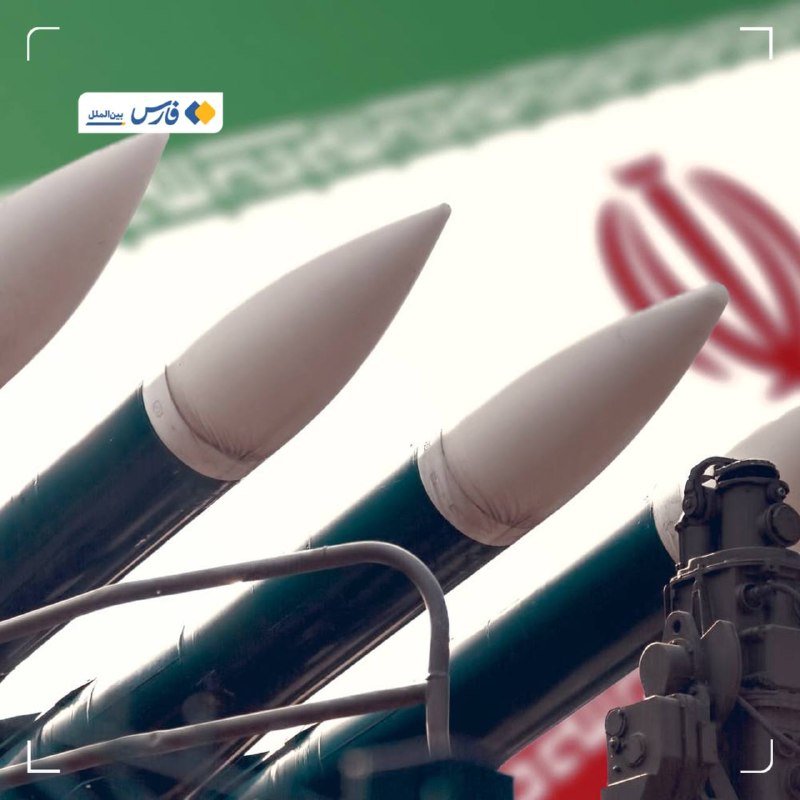
On 16 June 2026, CNN reported, citing three informed sources, that US intelligence agencies have concluded Iran now possesses the capability to effectively block the Strait of Hormuz "at will," and that the United States military has no realistic method to reopen the waterway by force. The assessment, relayed through Israeli and Iranian-affiliated Telegram channels within minutes of the cable's appearance, was framed by one source in stark terms: the chokepoint option is "a weapon more powerful than nuclear" — language that, if it holds up, recasts the entire Iran file in Washington and the Gulf.
The single most consequential line in the assessment is not about Iranian missiles. It is about what the US military cannot do once the strait is closed. A closure of the 33-kilometre-wide corridor between Oman and Iran, through which roughly a fifth of globally traded crude transits, would not be a siege that aircraft carriers could break. According to the three sources cited by CNN, American planners have run the options and concluded the geography now favours Tehran.
What the assessment actually says
The cable's two claims travel together. The first is operational: Iran, drawing on a layered arsenal of shore-based anti-ship missiles, fast-attack craft, naval mines and the irregular swarm tactics rehearsed by the Islamic Revolutionary Guard Corps Navy for two decades, can deny passage through the strait on a timeline of its own choosing. The second is structural: no plausible US response — a carrier strike group, mine-countermeasure assets, airstrikes on coastal batteries — can reliably restore free navigation in a timeframe measured in days or even weeks.
That second claim is the one that shifts the strategic balance. Closing a strait and reopening one are not symmetric problems. A closure buys Iran leverage continuously; reopening is a slow, casualty-accepting maritime operation conducted in a narrow, defended sea lane. The CNN-sourced assessment, in effect, tells the White House that any decision to escalate against the Iranian nuclear programme carries an immediate, structural cost: oil flows from the Gulf, on which Asian allies depend, would be interrupted for as long as Tehran chose to maintain the closure.
The Israeli and Gulf reaction
Within an hour of the CNN report, the assessment was being circulated and discussed across the regional ecosystem. Israeli military and intelligence commentators — through channels monitored by amitsegal and other Israeli Telegram feeds — treated the report as confirmation of a long-standing Israeli concern: that the conventional-military balance in the Gulf had shifted further than Western publics understood, and that the United States had been slow to absorb the implications. Israeli coverage has long argued that Iran's ability to hold the strait at risk is the principal reason any military strike on the nuclear programme carries prohibitive cost.
Iranian state-adjacent media, including Fars News International, distributed the CNN reporting in English with a one-line summary that the strait is now, in practice, an Iranian asset. The framing in those channels is the inverse of the Israeli one: not a threat to be deterred, but a capability to be respected. Both readings agree on the underlying fact. They diverge on what to do about it.
The structural frame, in plain terms
What the assessment describes is the unwinding of a security guarantee. For decades, the American position in the Gulf rested on a simple proposition: that the United States could keep sea lanes open because its naval dominance was overwhelming. That proposition is no longer self-evident. The proliferation of cheap, accurate anti-ship missiles, the maturation of Iranian minelaying and drone tactics, and the geography of the strait itself — narrow, shallow on the Iranian side, and within range of coastal batteries — mean that the cost of keeping the corridor open has risen while the cost of closing it has fallen.
This is a textbook case of an offensive-defensive reversal: a domain that once rewarded the side with the largest platforms now rewards the side with the densest, cheapest and most redundant fires. The same dynamic has reshaped the Black Sea since 2022, where coastal anti-ship missiles have denied naval dominance to a fleet that once operated freely. The strait is, in this sense, a familiar problem in unfamiliar geography. The intelligence community, according to CNN's three sources, has simply accepted what the hardware has been saying for years.
What we verified, and what we could not
The single underlying claim — that US intelligence has produced an assessment concluding Iran can close the strait at will and that reopening by force is not realistic — is sourced to a CNN report relayed through three Telegram channels of different editorial alignment: an Israeli security feed, a regional monitor, and Fars News International, which is itself Iranian state-adjacent. That triangulation is not a substitute for the underlying US government document, which remains classified, and CNN's published reporting refers to "three informed sources" without naming agencies.
What this publication could not verify from the available thread material: the specific agencies that produced the assessment, the precise date of the underlying estimate, the exact wording of the "more powerful than nuclear" characterisation (which appears in one channel's gloss rather than in CNN's published text), and whether the assessment reflects a change from prior US intelligence community judgments or a restatement of an existing view. The phrase "at will" also deserves care: it is being used in the regional Telegram ecosystem to mean "without external permission," not necessarily "on zero notice." Monexus is treating that distinction as material.
The most important uncertainty, however, is doctrinal. The assessment, as relayed, is about capability, not intent. Iran has historically treated the strait as a deterrent asset rather than an active instrument; the question of whether Tehran would use it remains a political decision that no intelligence estimate can resolve.
Stakes
If the assessment holds, three trajectories become more likely. First, any future US-Israeli decision on the nuclear programme is now decisively weighted toward non-military options, because the conventional alternative carries a built-in energy shock. Second, Asian energy importers — China, India, Japan, South Korea — gain leverage in any negotiation, since they hold the demand that a closed strait would strangle. Third, the Gulf states' own hedging strategies, including the diplomatic reopening with Tehran that several have pursued since 2023, look less like ideological flexibility and more like the rational response to a security guarantee that no longer covers the waterway their economies depend on.
The 33-kilometre strait has always been a place where geography outranks technology. The new intelligence assessment, in effect, confirms that the geography has finally won.
— Monexus framed this against the Israeli and Iranian-aligned Telegram channels that surfaced the cable, treating both as primary indicators of regional interpretation while holding the underlying US document at one remove.
Wire provenance
This editorial synthesis draws on the following public wire/social posts:
- https://t.me/WarMonitors
- https://t.me/amitsegal
- https://t.me/Middle_East_Spectator
- https://t.me/FarsNewsInt
Follow the event.
These dated source records provide context. They do not retrospectively verify this archive article.
Separate what the nuclear watchdog reported from what it could not determine after the June 2025 strikes.