Drone-by-drone, Iran tests the post-deal perimeter in the Strait of Hormuz
Iranian fast-boats and one-way drones have probed commercial traffic every night since a US-Iran memorandum was announced, while Tehran insists the traffic is 'ordinary management' and an oil price whipsaw watches from the sidelines.
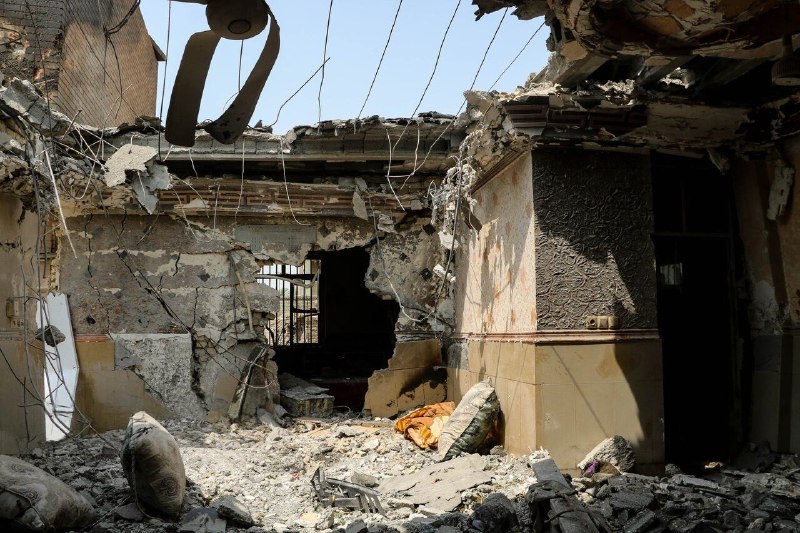
On the night the deal was announced, the drones started flying. Between Sunday 14 June 2026 and Tuesday 16 June, Iranian forces launched multiple one-way drones toward commercial vessels transiting the Strait of Hormuz on at least three successive nights, according to NBC News reporting circulated by war-monitoring channels and verified by US Central Command on-the-record acknowledgements that American naval assets have shot down the incoming aircraft. By Tuesday morning UTC, Iran's foreign ministry was describing the activity as "ordinary management procedures" — a phrasing so bland that it has done almost nothing to calm the oil complex, where traders are now pricing a chokepoint that may or may not be open depending on whose Telegram channel one reads.
The pattern is the story. Within hours of a memorandum of understanding being announced between Washington and Tehran, Iran began probing the very shipping lane the deal is supposed to keep open. The activity is small in volume — drones, not missile salvos — but its repetition is the point. Each successful approach is a data point; each intercepted drone is a calibration of how the US Fifth Fleet will react when the rules of the post-deal water are not yet settled. The Strait of Hormuz handles roughly a fifth of global seaborne oil. A sustained pattern of nightly harassment, even at the nuisance level, is enough to widen insurance war-risk premia, lengthen voyage routing around the Cape of Good Hope, and force Gulf state customers into spot-tanker premiums they cannot budget for.
What the sources actually show
The thread of reporting that Monexus reviewed on 16 June 2026 UTC converges on three claims and diverges on a fourth. First, NBC News, as relayed by the Telegram channels Middle East Spectator, War Field Witness, and the Twitter account @TheWarMonitor, reports that Iran has fired drones at commercial ships in the Strait of Hormuz each night since the MoU was signed. Second, US forces have shot down at least some of those drones — the language used by the Telegram channels is "shot down," which is consistent with the public posture of the Fifth Fleet but is not, in the materials we reviewed, paired with a confirmed intercept count. Third, Iran publicly described the activity as "ordinary management procedures, nothing to worry about," a line that originated with Iranian state media and was echoed by Tehran-based diplomatic readouts on 16 June 2026.
The fourth claim is the contested one. By Tuesday 14:37 UTC, the X account @unusual_whales reported that "Iran has said that the blockade of the Strait of Hormuz is easing." That framing — a blockade that is easing — is materially different from the framing in the NBC-derived reports, which describe nightly drone launches against commercial shipping. Both cannot be fully true at the same time. The likeliest reconciliation is that the Iranian government is signalling de-escalation at the rhetorical level while its naval and IRGC-Navy units are testing the operational level, a posture that has precedent in earlier rounds of Gulf tension. But the wire reporting available to Monexus on 16 June 2026 does not resolve which framing is operative, and a reader is entitled to know that.
The Vance framing: what's actually in the deal
The financial subtext of the MoU has been badly garbled in the early coverage. Reports claiming Iran is "receiving $300 billion from the new agreement," circulated widely across aggregator channels on 16 June 2026, miss the operative detail. According to comments attributed to Vice President JD Vance and relayed through the Telegram-curated feed, Iran would only gain access to funds already owed to it — frozen Iranian assets held abroad — rather than receive a fresh transfer of US or allied money. The distinction matters. Unfrozen Iranian revenue, repatriated through compliant banking channels, sits inside a sanctions architecture that can be re-tightened. A new $300 billion transfer would not.
That detail shapes the leverage calculus. If Iran is unlocking existing receivables rather than receiving new funds, then the deal's enforcement mechanism is conditional access to its own money — a structural lever that gives Washington a recurring opportunity to ratchet pressure back up if nightly drone activity continues, and gives Tehran an incentive to dial down provocations that risk having the spigot closed again. Whether that incentive is operative is the empirical question the next 72 hours will answer.
Counter-narrative: what the Iranian framing actually is
Western wire framing of Iranian behaviour in the Gulf has, over the last decade, tended to collapse a wide range of operational activity — IRGC-Navy fast-boat harassment, drone overflights, electronic jamming, seizure of commercial tankers — into a single category of "Iranian provocation." The Iranian counter-frame, as expressed in Foreign Ministry readouts and carried by Iranian state-aligned outlets, is that routine IRGC-Navy activity inside Iranian territorial waters and the country's declared exclusion zone is legitimate coastal management, that the Strait's traffic separation scheme places significant portions of the transit corridor inside Iranian-claimed waters, and that US naval activity in the same waters is itself the escalatory variable. That framing is not adopted uncritically here; the routine-management line is plainly incompatible with the NBC-sourced reports of repeated drone launches against commercial traffic. But the structural point — that the legal status of the Strait's edges is contested, and that Iranian forces have a doctrinal claim to operate in the waters they are now probing — is real, and it is part of why the post-deal perimeter is so hard to police.
A second counter-narrative worth naming is the oil-market framing. The same nightly drone activity that is being read in Washington as a violation of the spirit of the MoU is being read in several Gulf state capitals as a signal that the deal is, in fact, holding — that Iran is extracting maximum signalling value from its residual coercive capacity precisely because the financial relief is now flowing. From that vantage point, the drones are a price of admission rather than a breach. Monexus does not endorse this read; we note it because it is held by analysts in the region and because it is the operative assumption behind the relatively muted Brent reaction on 16 June 2026.
The structural frame: chokepoints, dollar politics, and the cost of a narrow deal
What this episode exposes is the recurring problem of narrow deals between the United States and Iran. Each round of de-escalation since 2015 has produced an agreement that resolves the specific irritant on the table — nuclear enrichment in 2015, hostage-release plus sanctions-release in 2023, the current memorandum — and leaves untouched the wider architecture of contested behaviour that runs through the IRGC-Navy, the regional proxy network, and the missile and drone programmes that have only grown since the JCPOA's collapse. A deal that opens the financial tap but does not constrain nightly operational activity in the world's most important oil chokepoint is a deal that contains the seeds of its own re-escalation.
There is also a dollar-politics layer. The mechanism by which frozen Iranian assets would be repatriated runs through the international banking system, which is to say through correspondent relationships denominated in dollars or dollars-cleared. Each tranche that moves is a political decision taken under the eye of US Treasury, and is therefore reversible on a political timeline measured in days, not years. The leverage is real; the durability of any specific de-escalation window is correspondingly shorter than the headline text of the memorandum would suggest. That is why the nightly drone activity is being read so carefully by operators inside the corridor. It is not, at this stage, a war. It is a price discovery on the new equilibrium.
Stakes: what happens if the nightly flights continue
If the pattern of nightly drone approaches continues through the end of June 2026, three things follow. First, war-risk insurance premia for tankers transiting the Strait will widen materially — they are already wider than the same period a year ago, and Lloyd's-listed underwriters will reprice within days rather than weeks. Second, several major charterers will pre-route cargoes around the Cape of Good Hope, adding roughly ten days of voyage time and tightening Atlantic Basin availability. Third, the political bandwidth inside Washington for follow-on negotiations — the kind of secondary talks that turn a memorandum into something durable — will contract. Each night that an Iranian drone forces a US ship-to-ship engagement is a night that the next round of talks becomes harder to schedule.
On the Iranian side, the countervailing stakes are the reverse of those in 2023 and 2024. Tehran now has a financial channel that is open, however conditionally, and a leadership that has invested significant political capital in securing it. The cost-benefit calculation on a single provocative night is asymmetric: a single successful interception by a US destroyer and the loss of an Iranian drone is bearable; a sustained pattern that triggers a US-or-allied decision to re-freeze Iranian assets is not. The structural pressure inside Tehran, then, is toward a managed de-escalation even as IRGC-Navy operators continue to probe.
What remains genuinely uncertain — and where the available wire reporting does not yet give a clean answer — is whether the nightly activity is the tail-end of an old operational tempo or the leading edge of a new one. The Iranian framing of "ordinary management" is incompatible with the NBC-sourced reporting of repeated launches; the @unusual_whales report of an "easing" blockade is partially compatible with the same reporting only if one accepts that the blockade was, until the MoU, more intensive than publicly disclosed. Monexus's read, on the evidence available at 16 June 2026 UTC, is that the operational tempo is real, that US forces are intercepting, and that the political signal from Tehran is bifurcated between a foreign-ministry line of de-escalation and an operational line that has not yet changed gear. The next forty-eight hours will tell whether the memorandum holds.
Desk note: Monexus has framed this piece around the operational pattern — nightly drone activity inside an announced de-escalation window — rather than around the financial headline of the deal itself. The dollar-flow architecture is the deal's most-covered feature; the chokepoint behaviour is its least-covered test.
Wire provenance
This editorial synthesis draws on the following public wire/social posts:
- https://twitter.com/TheWarMonitor/status/2067024814892536190
- https://t.me/Middle_East_Spectator
- https://t.me/wfwitness
- https://t.me/AngelList
- https://t.me/producthunt
- https://en.wikipedia.org/wiki/Strait_of_Hormuz
- https://en.wikipedia.org/wiki/United_States_Fifth_Fleet