Drones in the Night: What Iran's Strait of Hormuz Provocations Reveal About the U.S.–Iran Memorandum
Iranian drones have buzzed commercial tankers in the Strait of Hormuz every night since Washington and Tehran signed a memorandum of understanding. The pattern, and the White House response, suggest the deal is more ceasefire than settlement.
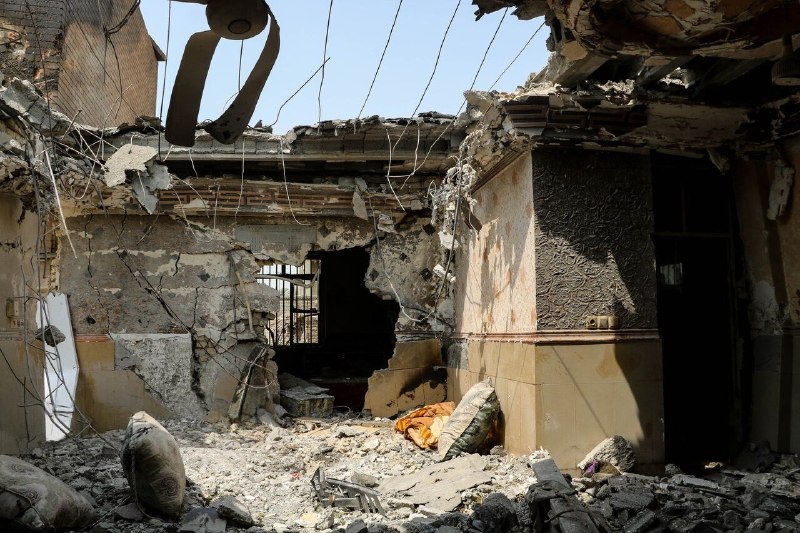
For every night since the United States and Iran signed a memorandum of understanding, Iranian-launched drones have sortied toward commercial ships in the Strait of Hormuz. The pattern, first reported by NBC and amplified through the regional war-monitoring channels on 16 June 2026, turns what officials in Washington have described as a de-escalation into something closer to a managed harassment campaign. Tankers are not being struck. Mariners are not being killed. But they are being buzzed, repeatedly, by an air force that, on paper, has just agreed to stand down. The distinction matters, and it is the entire story.
The memorandum that Iran and the United States signed in mid-June was sold to markets and allies as a framework for winding down a cycle of strikes, seizures, and shadow-war killings that has rattled the Gulf for the better part of two years. Iranian drone activity in the days since suggests the framework is thinner than the press releases. Either Tehran is testing Washington's red lines in real time, or the agreement itself codified a level of nightly harassment that the White House is now pretending is normal. Neither reading is reassuring for a chokepoint that carries close to a fifth of the world's traded oil.
A chokepoint under nightly pressure
The Strait of Hormuz is twenty-one miles wide at its narrowest point, with two-mile-wide shipping lanes in each direction. There is no realistic alternative for the roughly 20% of global oil supply that transits it every day. Iran's geography — its coastline on the north shore of the Gulf of Oman — gives it an asymmetric advantage that no sanctions regime, no carrier strike group, and no memorandum of understanding has ever fully neutralised.
On 16 June 2026, the war-monitoring account WarMonitorIran reported that multiple Iranian drones had been launched toward commercial ships in the strait since the MoU was signed. The regional aggregator Middle East Spectator framed the nightly activity as a routine feature of the post-deal environment, paraphrasing an Iranian framing that the sorties are "part of ordinary management procedures, nothing to worry about." That framing is doing a lot of work. Iranian state media, including Mehr News, has used the same window to publicise a striking piece of off-the-record colour: former U.S. president Bill Clinton, appearing in audio reported by Mehr on 16 June 2026, claimed that Donald Trump told him after the U.S. attack on Iran that "no one told me that the Iranians could close the Strait of Hormuz." The quote, regardless of its provenance, captures the asymmetry the memorandum was meant to paper over: the U.S. struck, and then discovered that the country it struck retained a chokepoint veto.
The U.S. response, as telegraphed by the president himself in the days surrounding the deal, is to declare the strait "toll free" when it reopens permanently. That formulation, posted to X by the account Unusual Whales on 16 June 2026, does not address the drones. It addresses a different threat — the long-standing Iranian demand for leverage over the tolls, insurance, and escort fees that govern passage. The drones are a separate file. So is the speedboat swarm doctrine that the IRGC Navy has rehearsed for two decades. So is the mine-laying capability that any serious planning scenario for the strait has to assume Tehran retains.
What the memorandum actually settled
It is worth being precise about what the U.S.–Iran MoU did and did not do. The text, as described in regional coverage of the deal, is a framework rather than a treaty. It commits both sides to a set of understandings about de-escalation, the release of certain frozen funds, and a partial unwind of the nuclear sanctions architecture. It does not, on the public record, dismantle any Iranian capability that matters for the strait. The drone fleet is intact. The missile batteries along the coast are intact. The fast-attack craft are intact.
This is not an accident. Iran has spent two decades building what its own strategists call "passive defence" in the Gulf — a layered set of capabilities that, even when degraded by sanctions or strikes, retains the capacity to make the strait expensive to use. The U.S., for its part, has spent two decades learning that escalation against those capabilities is politically toxic. A tanker collision, a mine strike, or — worst of all — a U.S. sailor killed in a firefight produces an immediate demand for response, and a slippery slope toward a war that neither the White House nor the Iranian foreign ministry wants. The MoU sits inside that equilibrium. It is not a step away from it.
The nightly drone activity is the equilibrium's visible edge. The drones are not striking ships. They are forcing ships to alter course, to activate defences, to make radio calls, to file incident reports. They are producing a steady drip of insurance premium pressure, of naval task-force deployments, of headlines. They are reminding every commercial operator in the Gulf that the Iranian option remains live.
The counter-read: this is what 'managed' looks like
There is a defensible Iranian reading of the same evidence, and it deserves airtime. From Tehran's vantage point, the drone sorties are a show of force inside a deal that Washington extracted under pressure. The U.S. struck Iranian assets, and Iran absorbed the blow, and now Iran is reminding Washington that the cost of any follow-up strike is paid in the strait, in real time, in twenty-one-mile increments. The "ordinary management procedures" framing is the diplomatic equivalent of a shrug: this is what a compliant Iran looks like. The alternative is what the U.S. saw in the days before the MoU — a strait that goes dark, a tanker market that spikes, and a White House that has to explain to voters why gas is six dollars a gallon.
The structural argument on the Iranian side runs like this: the United States has demonstrated, twice in this decade, that it is willing to use military force against Iranian assets, but it has not demonstrated a willingness to absorb the cost of a sustained Iranian response. The drone campaign is the response calibrated to that asymmetry. It does not require Tehran to fire a missile, sink a ship, or kill a sailor — the threshold that the U.S. has historically treated as casus belli. It just requires Tehran to be present, every night, in the airspace above the world's most important oil chokepoint. That is a deliberate doctrinal choice, and it is one that the memorandum, as currently written, does not constrain.
The U.S. counter — that this is precisely the kind of slow-motion coercion the MoU was meant to end — is also defensible. The argument runs that a deal under which Iran can continue to menace commercial shipping at will is not a deal, it is a license fee. That is the position that hawks in Washington, in Riyadh, and in the Israeli defense establishment are now taking. They have a point. The MoU's silence on the drone campaign is not a drafting oversight; it is a concession to Iranian leverage that the deal's supporters have not yet been willing to defend in public.
What the sources do and do not tell us
The reporting on the nightly drone activity rests on a thin base. NBC, the primary wire, is referenced by Middle East Spectator and by WarMonitorIran, both of which are aggregators rather than primary reporters. The underlying NBC story has not been published in the materials available to this publication. Mehr News's report of the Clinton quote is single-sourced to a Clinton appearance, and Clinton's own role in the deal is not clear; he is a former president, not a negotiator, and the framing — Trump admitting strategic surprise about the strait — is the kind of claim that requires a second source before it should anchor analysis. The "toll-free strait" formulation from the White House comes via an X post, not a press transcript, and the operative question of what "permanently" means in that sentence has not been defined on the record.
What the sources do establish is the existence of a pattern. Iranian drones in the strait, every night, since the MoU. Iranian state-media framing of that pattern as routine. A White House formulation about tolls that does not address the drones. A former U.S. president's recollection, in a venue controlled by Iranian state media, that the sitting president was caught off-guard by Iran's strait leverage. That is enough to write a coherent picture. It is not enough to declare that the MoU has failed, or that it has succeeded, or that the drones are a deliberate Iranian policy choice rather than the autonomous behaviour of regional IRGC commands. The honest reading is that the picture is sharp at the edges and soft in the middle.
What it would take to break the equilibrium
The structural frame here is the one that has governed the Gulf for two decades: a regional power with an asymmetric chokepoint veto, a global power that has the military capacity to remove the veto and the political incapacity to pay the price of using it. The memorandum is the latest attempt to manage that gap with words. The nightly drones are the reminder that the gap is still there.
Breaking the equilibrium would require one of three things. First, a U.S. administration willing to absorb the cost of a sustained campaign to neutralise Iranian coastal missiles and drone bases — a campaign that would last weeks, spike oil to levels that would be politically fatal, and almost certainly draw Iranian retaliation against Israeli and Gulf targets. Second, an Iranian leadership willing to accept a deal that constrains the drone fleet and the IRGC Navy's harassment doctrine in exchange for sanctions relief — a deal that the IRGC has every institutional reason to refuse. Third, a multilateral architecture that puts a serious naval presence in the strait under a flag other than the U.S. — an architecture that neither Beijing, which buys Iranian oil, nor the European Union, which lacks the force structure, has shown any appetite to build.
None of those conditions is visible on the horizon. The memorandum, in other words, is a holding action, and the drones are the visible cost of holding. The next time a White House spokesperson describes the deal as a success, the honest question is: success measured against what, exactly? The drones are still flying. The tankers are still being buzzed. The strait is, for the moment, toll-free in the U.S. framing, but it is not, by any honest definition, free.
This publication framed the nightly drone activity as a deliberate Iranian signalling campaign rather than a routine patrol pattern, on the strength of the frequency and timing of the sorties reported since the MoU was signed. The wire services have so far been cautious about characterising intent; the Iranian state-media framing of "ordinary management" has been quoted, not endorsed, and the question of whether the IRGC's regional commands are acting on a national-level directive or on their own initiative remains genuinely open on the available record.
Wire provenance
This editorial synthesis draws on the following public wire/social posts:
- https://twitter.com/TheWarMonitor/status/2067024814892536190
- https://t.me/Middle_East_Spectator
- https://t.me/mehrnews
- https://t.me/Middle_East_Spectator/2067024814892536190
Follow the event.
These dated source records provide context. They do not retrospectively verify this archive article.
Separate what the nuclear watchdog reported from what it could not determine after the June 2025 strikes.