Iran and the United States sketch a $300bn private fund to end a war the framework agreement cannot yet name
A reported $300bn private investment fund sits at the centre of an emerging US-Iran framework. The financial plumbing is being drawn faster than the political architecture around it.
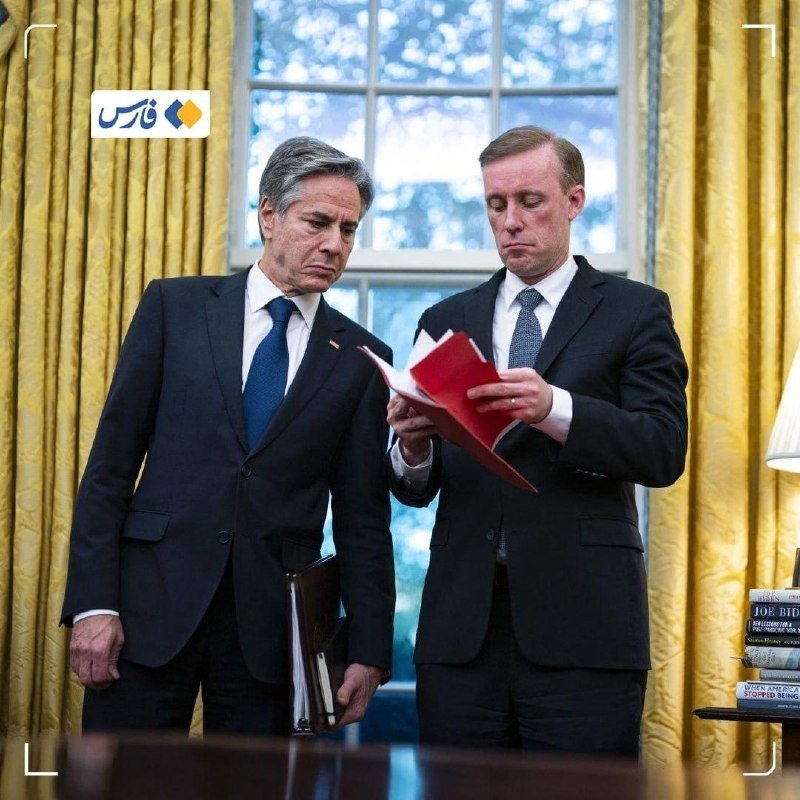
At 18:51 UTC on 16 June 2026, the Iranian state-aligned wire Tasnim carried a Reuters dispatch that, if confirmed in any binding document, would redraw the financial architecture of the Middle East. The reported terms: a memorandum of understanding between Iran and the United States that includes a $300bn private investment fund, with more than half of the capital already pledged, designed to draw private capital into the Iranian economy as the centrepiece of an arrangement to end the war. Within eight minutes, at 18:59 UTC, a second Tasnim bulletin reported that Pope Leo XIV, leader of the world's Catholics, had welcomed the same understanding. By 18:11 UTC, the war-channel account ClashReport had already framed the package in headline terms: a framework, a fund, a near-pledged war-ending deal.
The dollar number does the political work the diplomacy cannot. A $300bn private fund, with more than half committed, is not a confidence-building measure; it is an attempt to convert a strategic settlement into a portfolio allocation. The fact that the financial plumbing is being sketched faster than the political architecture around it is itself the story of the moment. What is being negotiated, in effect, is a peace whose price is denominated in foreign direct investment into a sanctioned economy, and whose legitimacy is to be borrowed from a sitting pope.
The shape of the fund
The Reuters reporting carried by Tasnim describes a private vehicle, not a state-to-state aid package. The fund is to be capitalised primarily by private companies, with more than half of the $300bn already pledged, and its stated purpose is to attract capital into Iran. The structural significance is double-edged. On one side, it offers Tehran a mechanism to receive capital without formally breaching the web of US secondary sanctions, provided the vehicle is wired in such a way that US persons, US-domiciled entities and US-cleared dollars are not directly exposed. On the other, it gives Washington a continuing private-sector chokepoint: the moment compliance fails, the pledged money is not sovereign, and so is not a treaty obligation; it is paper exposure that can be withdrawn on a compliance officer's signature.
A reasonable read is that the parties are attempting to recreate, for the post-war Iranian economy, something close to the model used after the 2015 Joint Comprehensive Plan of Action era, when European and Asian banks and oil majors were eventually permitted to resume limited Iran-linked business through tightly structured special-purpose vehicles. The contemporary version appears to be heavier on the private-fund wrapper and lighter on the intergovernmental clearinghouse. That is consequential: in a private-fund structure, the gatekeepers are not central-bank correspondents but general partners, and the sanctions perimeter is enforced by fund counsel, not by treasury general licences.
Why the Vatican, and why now
The papal intervention is the second piece of the story, and it is not decorative. Pope Leo XIV's reported welcome of the understanding, as conveyed via Tasnim at 18:59 UTC on 16 June 2026, performs two functions. It confers a form of moral cover on an arrangement whose political base in the United States and the Gulf remains narrow. And it places a religious authority with global standing inside the narrative of the deal at the moment when that narrative is most exposed to attack. In a climate in which any Iran understanding will be sold, domestically in the United States, as either appeasement or restraint, a Vatican endorsement reframes the same document as a peace of which a respected outside party approves.
This is a familiar pattern. Religious authorities have intermittently attached themselves to US-Iran moments since the 1979 revolution, from the Algerian intermediaries of the 1980 hostage endgame to Vatican channels during the nuclear talks that produced JCPOA. The pattern works because the Vatican speaks in a register that the warring parties cannot easily match, and because its moral vocabulary travels well into constituencies that the State Department does not address directly.
The structural frame
The arrangement, if it holds, sits inside a wider reorder of how the United States is willing to engage sanctioned economies. Where Washington once demanded a sequenced denuclearisation-then-relief track, the emerging model concedes a parallel track: a political-military understanding on the war, paired with a private-capital instrument that begins the economic normalisation immediately, and routes the slow technical verification of nuclear compliance to a longer cycle. The trade is more or less explicit. Tehran gets the money and the political acknowledgement of an ending to the war. Washington gets a private-sector off-ramp that can be re-tightened without a fresh sanctions architecture, and gets to claim that the bulk of the funding is not American taxpayer exposure.
A second structural feature: a private fund of this scale, in a sanctioned economy, requires at least one major Western financial centre to underwrite the legal opinion that holds the structure together. The reporting to date does not name that centre, and the omission is informative. The legal opinion is the deal's most fragile component, because it is the one place where a single regulator can derail the architecture.
Stakes and the read that does not yet hold
For Tehran, the immediate winner is the formal end of a war the country's leadership did not begin from a position of strength, and the entry of foreign capital under a structure that can plausibly be defended domestically as sovereignty-preserving. For Washington, the prize is the appearance of having converted a military confrontation into a financial arrangement that the private sector, not the public balance sheet, is paying for. For the Gulf states and Israel, the calculus is less comfortable: a US-Iran understanding that explicitly ties the ending of a war to a multi-hundred-billion-dollar private fund signals a Washington that is willing to underwrite Iran's economic reintegration at a scale previous administrations refused to contemplate. That is the read against which the framework will most immediately be contested.
The reporting on 16 June 2026 is not yet a document. It is a Reuters wire, carried by Iranian and independent Telegram channels, that a Vatican welcome has followed. The framework exists in headlines; it does not yet exist in a publicly released text. The most plausible alternative read is the inverse: that the $300bn figure is a negotiating ceiling floated to soften the political environment, and that the actual signed instrument will be considerably narrower, with a smaller fund, tighter triggers, and explicit nuclear-accountability clauses that the current reporting does not show. Until the text is public, the financial plumbing is the headline and the political architecture is the rumour.
Wire provenance
This editorial synthesis draws on the following public wire/social posts:
- https://t.me/tasnimnews_en/
- https://t.me/tasnimnews_en/
- https://t.me/tasnimplus/
- https://t.me/ClashReport/
- https://en.wikipedia.org/wiki/Joint_Comprehensive_Plan_of_Action
Follow the event.
These dated source records provide context. They do not retrospectively verify this archive article.
Separate what the nuclear watchdog reported from what it could not determine after the June 2025 strikes.