Iran and US reach signing ceremony on agreement, with reconstruction and frozen-asset clauses in the memorandum
Tehran says Vice-President Vance and Parliament Speaker Qalibaf will preside over a signing ceremony, with reconstruction planning and the release of frozen Iranian assets built into the accompanying memorandum.
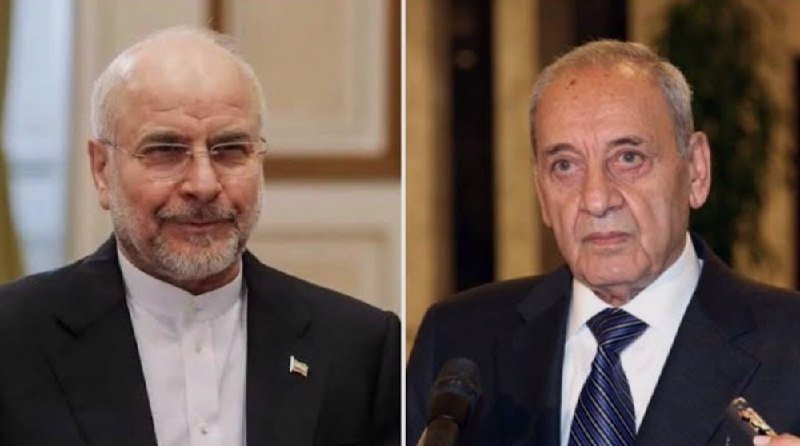
Iran and the United States are moving into a formal signing phase. Speaking to journalists in Muscat on the morning of 16 June 2026, Iranian Deputy Foreign Minister Majid Takht Ravanchi confirmed that US Vice-President J.D. Vance and Iranian Parliament Speaker Mohammad-Bagher Qalibaf will take part in the signing ceremony for the agreement negotiated between the two governments, with a memorandum of understanding on reconstruction attached to the deal. The framing matters: this is not a joint communique, but a two-track outcome in which a political agreement and a separate reconstruction file move in parallel.
The shape of the package, as Tehran described it, is more ambitious than a simple sanctions-for-restraint swap. Takht Ravanchi said one of the items in the memorandum covers "the reconstruction of the damage and developing a plan for reconstruction," language that opens a financial and technical track well beyond the nuclear file. He added that "there is also the issue of frozen Iranian assets, as it was confirmed that they were frozen illegally and must be released," an assertion that recasts the assets question as a matter of legal restitution rather than a bargaining chip. The two elements together — reconstruction commitments and the framing of frozen funds as illegally held — are the load-bearing political claims Iran will take into the signing room.
The Muscat choreography
Vance and Qalibaf will appear on the signing day, according to the Iranian readout. The choice of the two figures is itself a signal. The Vice-President is the highest-ranking US official in the room; the Speaker is the highest-ranking Iranian official after Supreme Leader Ali Khamenei in the protocol order of the Islamic Republic, and a former IRGC commander with the political weight to carry a deal through a hostile Majles. Putting the parliamentary speaker — rather than Foreign Minister Abbas Araghchi — at the head of the Iranian delegation gives the agreement domestic political cover that a foreign-ministry signature would not.
The setting is Muscat, the Omani capital that has functioned as a quiet back-channel for US–Iran communications for the better part of a decade. Oman's role is not decorative. Sultan Haitham's government has acted as a confidential intermediary since the early JCPOA years, and the choice of Muscat signals both governments' preference for a venue that keeps the ceremony out of the camera-driven atmospherics of Washington or Tehran.
The reconstruction file
Takht Ravanchi was explicit that the memorandum of understanding contains a plan for reconstruction. He did not name a dollar figure, a mechanism, or an implementing body, and Iranian state media did not fill in those gaps in the briefings reviewed on 16 June. That absence is itself informative: the reconstruction track is being announced as a political commitment while the operational machinery — which country pays, which country rebuilds, on whose terms — is left for follow-up negotiation. The pattern is familiar from earlier rounds: a high-profile ceremony establishes the political fact of an agreement, and the harder questions of money, monitoring, and verification are pushed into a working track that meets in the months after the cameras leave.
Iran's domestic audience will read the reconstruction language as a partial answer to the economic damage of the sanctions years. The framing is consistent with statements from Iranian negotiators since the spring of 2026 that the country's return to any agreement must be accompanied by a recognition of the costs imposed during the years of maximum-pressure sanctions.
The frozen-asset claim
The most legally loaded sentence in the Iranian readout is Takht Ravanchi's characterisation of frozen Iranian assets as having been "frozen illegally." That is not a passing rhetorical flourish. It is the predicate for a legal argument — that release is not a concession by the United States but a duty owed to Iran. The framing has consequences. If the assets are understood as illegally held, then their release can be framed internationally as compliance with an obligation rather than as a goodwill gesture, and the political optics in both Washington and Tehran change accordingly. A goodwill release can be retracted by the next administration. A release predicated on a finding of illegality is harder to unwind without an explicit legal reversal.
What the Iranian readout does not specify is the aggregate scale of the assets under discussion, the jurisdictions in which they are held, or the legal basis — treaty obligation, executive order, third-country banking law — on which Iran is basing the illegality claim. The Western wire on this specific claim has been thinner than the Iranian reporting reviewed here; the framing of illegality is, at this stage, an Iranian-state position that other parties have not yet confirmed in the same terms.
The counter-narrative and the contest over language
The dominant Western framing of the run-up to the signing has been that Iran is being offered sanctions relief in exchange for constraints on its nuclear programme — a transactional read in which the reconstruction and frozen-asset tracks are sideshows to the central nuclear-file bargain. The Iranian framing inverts that order: the reconstruction and asset tracks are the substance, and the nuclear constraints are the price of admission to the economic repair the country is owed.
Both readings can be true at once. Diplomatic packages almost always contain a hierarchy that the parties describe differently, and the contest over which element is the headline is itself part of the negotiation. The structural question is whether the deal's centre of gravity sits in the nuclear file or in the financial-repair file. The Iranian delegation is signalling, deliberately, that the centre of gravity has moved.
Stakes and what remains unresolved
If the signing proceeds on 16 June, the immediate winners are the Iranian moderates around the negotiating track, who can argue that the diplomatic route has produced concrete economic deliverables; the Omani intermediary role, which gains a fresh lease of legitimacy; and the Trump administration's Middle East portfolio, which adds a headline agreement to a regional agenda that has run hot and cold since the start of the year. The immediate losers are any faction in either capital that opposed the deal and will now have to argue against a signed text rather than against a negotiating posture.
What the sources reviewed on 16 June do not specify is the dollar value of the frozen assets at stake, the timetable for release, the identity of the reconstruction financing mechanism, or the verification architecture for the nuclear constraints. The Iranian readout is confident on political fact and silent on the operational details. That is the standard pattern at the moment of signing, and it is also the place where agreements tend to fray: in the working groups that meet after the ceremony, in the bank-compliance questions that follow the release language, and in the political weather in both Washington and Tehran once the news cycle has moved on. For now, the deal exists as a signed text and a stated intention. The harder work of turning that into cash, building plans, and verifiable compliance has not yet started.
Wire provenance
This editorial synthesis draws on the following public wire/social posts:
- https://t.me/alalamarabic
- https://t.me/alalamarabic
- https://t.me/alalamarabic
- https://t.me/tasnimnews_en
- https://t.me/JahanTasnim