Iran's World Cup lifeline masks a deeper crisis: a team, a flag, and a fractured diaspora
A 2-2 draw in Group G spared Iran's blushes on the pitch. Off it, a stadium stunt with the pre-revolutionary flag laid bare the fault line the squad cannot outrun.
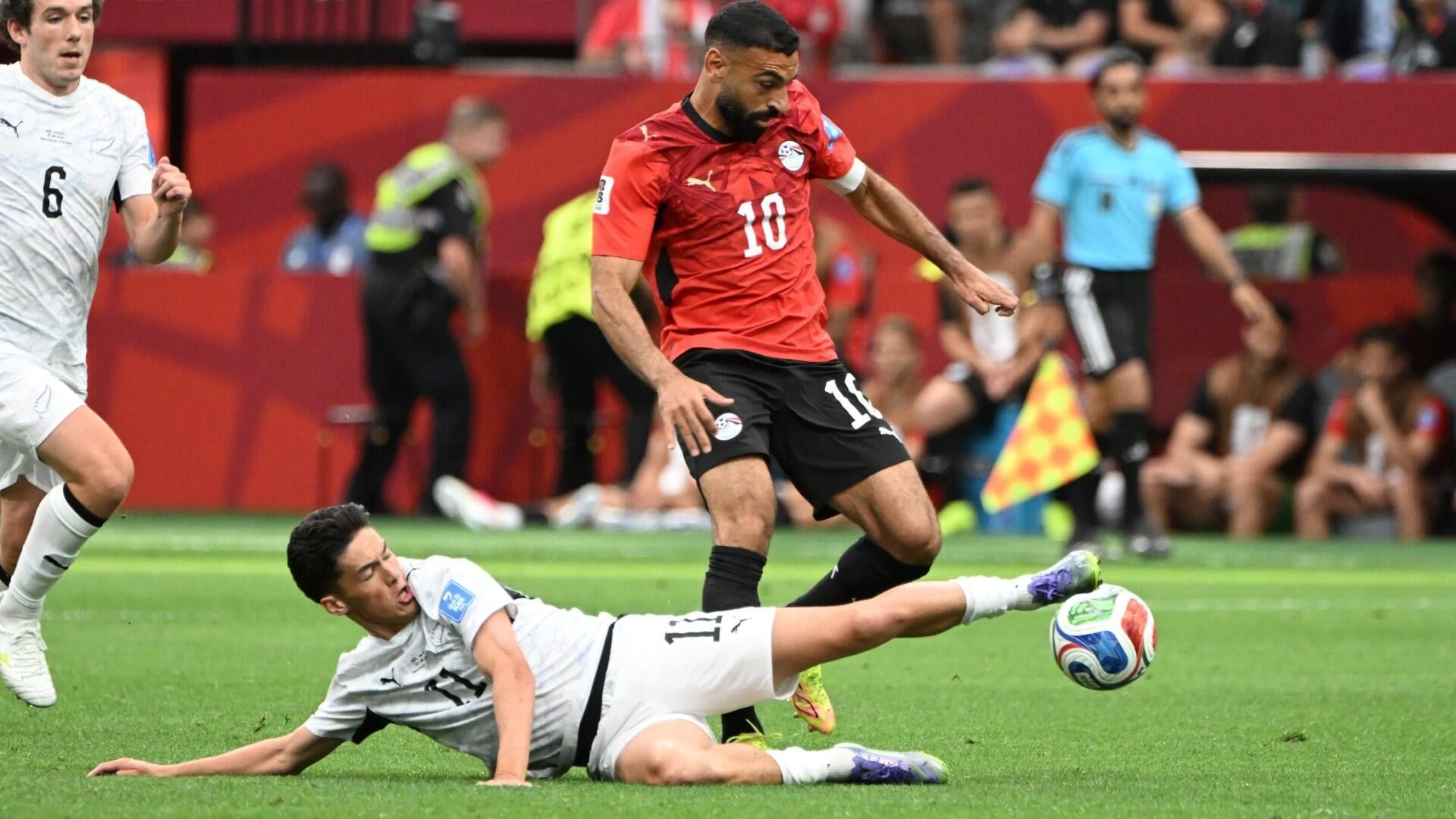
At full-time in the Group G opener on 16 June 2026, the numbers on the scoreboard read 2-2, and for a few minutes that was the headline. Iran had trailed twice against New Zealand, fought back twice, and left the pitch with a point that keeps their World Cup campaign alive. The margin between relief and elimination, however, was always going to be smaller than the margin between football and politics at this tournament.
The result, secured in the kind of match Sky Sports described as "the game of the tournament so far," papers over a more uncomfortable truth. Iran's players arrived at the World Cup in the wake of a turbulent build-up — internal selection rows, public criticism of the squad from conservative quarters, and the unresolved question of what, exactly, a national team is meant to represent when the nation is split. The draw in Group G buys time. It does not buy unity.
A draw that buys a week, not an answer
For ninety minutes the football did what football is asked to do: it distracted. New Zealand, appearing in their first World Cup since 2010, took the lead, were pegged back, surged again, and were pegged back again. Iran's two equalisers — the second deep in the closing stages — turned a potential opening-night loss into the kind of comeback managers cite for the rest of the campaign. According to Sky Sports' report, the performance was enough to put "their turbulent build-up" behind them, at least until the next fixture.
The tactical read is straightforward. Iran's defensive structure creaked when New Zealand pressed high, but the side retained the counter-attacking threat that has long been their stock-in-trade at major tournaments. The midfield, frequently the weak link in the recent past, held shape well enough in the second half to give the forwards something to work with. For neutrals, it was a watchable, end-to-end contest. For Iranian fans — wherever they sit on the political map — it was a holding pattern.
The flag that was not on the pitch
Off the field, the match produced an image that travelled faster than the goals. A Telegram channel posting under the IRIran_Military handle on 16 June 2026 circulated a clip showing a spectator placing a pre-revolutionary Pahlavi flag — the lion-and-sun banner associated with the dynasty overthrown in 1979 — back in a stadium bin during the Iran–New Zealand fixture. The accompanying text framed the act as a small piece of housekeeping: returning the flag to "its proper place — the stadium trash bin."
Read on its own, the post is a piece of partisan mockery. Read in context, it captures the diaspora-versus-state standoff that has trailed this team for decades and intensified in the years since the 2022–23 protests. Inside the stadium, supporters of the Islamic Republic unfurl the tricolour adopted after the revolution; critics, both at home and abroad, wave the older banner as a symbol of the alternative they imagine. The flag is a Rorschach test: what a viewer sees depends entirely on which Iran they are hoping for.
Football as a proxy, again
There is nothing novel about Iranian politics playing out around the national team. The squad has been a stage for factional fights for as long as the current order has existed — players' families pressured, friendly matches cancelled, social-media posts by athletes audited for signs of disloyalty. What the 2026 cycle adds is the diaspora dimension. With Iranian communities large and politically vocal in the United States, the geography of this World Cup makes the team a permanent target for demonstrators who otherwise have no platform inside the country.
The structural pattern is familiar: a state that treats the national team as a diplomatic asset, an opposition that treats the same team as a megaphone, and a group of players caught in the middle, contractually obliged to represent a flag that does not represent them all. Coverage of Iran at major tournaments routinely defers to whichever side is shouting loudest on the day. The quieter story — the footballers themselves, the choices their families make, the cost of pulling on the shirt — rarely makes the front page.
What a point actually means
Iran's next group fixtures will determine whether the 2-2 becomes a launchpad or a footnote. The draw keeps qualification in their hands; defeat in either of the next two matches would almost certainly send them home. But the harder contest, the one that does not appear on any fixture list, is the political one. Every goal scored, every error made, every player who smiles or fails to smile during the anthem will be catalogued by partisans on both sides and weaponised within hours.
The flag-in-the-bin clip is a useful framing device precisely because it is small. It is not a revolution, a boycott, or even a serious protest — it is one supporter, one flag, one bin. But the fact that the moment was filmed, posted, and amplified within minutes of full-time tells its own story about the speed at which Iranian political theatre now moves. A team that came to the World Cup needing a win got a draw, and a country that came to the World Cup needing cohesion got another reminder that it does not have it.
Monexus framed this around the gap between sporting result and political signal, declining to treat the draw as either a recovery or a collapse. The wire coverage led on the football; the Telegram post led on the flag. Both are part of the same match.
Wire provenance
This editorial synthesis draws on the following public wire/social posts:
- https://t.me/IRIran_Military