Iran's World Cup exile and the geography of who gets to play
Indian Express's dispatch from a tournament without Iran is less about football and more about which federations FIFA is willing to expel, and which it never quite does.
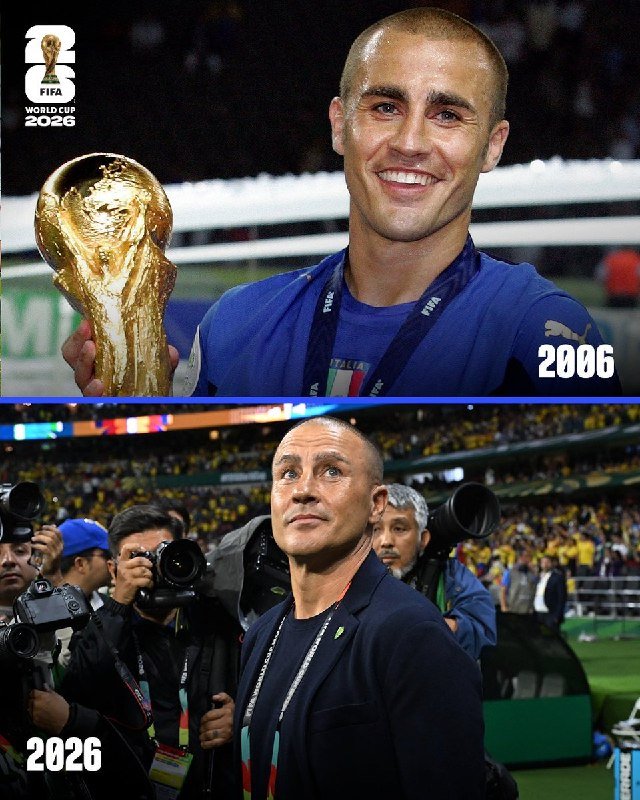
On 16 June 2026, with kick-off approaching across the United States, Canada and Mexico, the most striking absence from the World Cup roster belongs to a country that has not lost a qualifier: Iran. The Indian Express filed its dispatch under the headline 'A disaster': Iran at the World Cup — expelled, oppressed and still standing, treating the team's non-appearance as a story in its own right rather than a footnote to the fixtures list.
The Iranian federation's suspension by FIFA is, on the surface, an administrative matter — the kind of governance dispute that the federation handles in Zurich and Cairo rather than on the pitch. Read at any depth, it is also a referendum on who gets to play the world's game, and on what terms.
The immediate story
Indian Express's reporting frames Iran's absence as the result of a federation-level suspension tied to the broader political environment in Tehran, rather than to results on the field. The team would, on sporting merit, have been in the conversation to qualify from the AFC. Instead, the federation's status has become the story, and the players have become the faces of a stand-in that never quite materialised.
The piece's emotional register — expelled, oppressed and still standing — is sharper than the usual tournament-preview prose. It treats the Iranian squad as a national symbol under duress, and frames the suspension as something imposed on rather than earned by the side.
The counter-narrative
FIFA's official line on suspended member associations is procedural. The federation invokes its statutes, points to interference concerns, and notes that normalisation criteria typically require control by a recognised football body, transparent governance, and the ability to field teams in competition. Read that way, Iran's situation is a routine enforcement of rules applied unevenly elsewhere — to federations in Africa, Asia and the Caribbean, with varying degrees of political fallout.
The counter-position, advanced by Iranian-aligned outlets and by sympathetic voices inside the Asian game, is that the rules are being applied selectively, and that a Western-aligned federation in a similar state of governmental entanglement would have received a longer runway. The Indian Express piece sits closer to the second framing without quite endorsing it.
A structural read
Strip the politics away and a basic pattern emerges. International football's disciplinary machinery is most decisive when it is pointed at smaller, sanctioned, or diplomatically isolated member associations, and most elastic when it is pointed at wealthy, commercially central ones. Iran falls into the first category. So, historically, have Iraq, Syria and Libya, all of whom have spent years on the wrong side of FIFA's compliance ledger. So has Zimbabwe, intermittently. So have Russian clubs and, more recently, the Russian national setup, in response to the invasion of Ukraine. The through-line is not football; it is geopolitics, mediated by a federation that insists it is above the fray.
This is the same federation, after all, that awarded the 2026 tournament to a North American triumvirate, that has spent three decades navigating the Gulf and Qatari politics from its Zurich headquarters, and that has learned to read a press release from Washington or Riyadh as fluently as one from a confederation. The Iranian case is not an aberration from the rule. It is the rule, in slow motion.
Stakes and forward view
For Iran's players, the stakes are concrete. A generation that came up watching the 2014 and 2018 World Cups has now been told that the next edition, hosted in countries that do not recognise their government, will be played without them. Some will retire into the domestic league, where attendances and budgets are a fraction of what they were before the suspension took effect. A few, with the right paperwork and the right political cover, will surface in European second divisions. The national team will continue to exist on paper.
For FIFA, the stakes are reputational. A federation that administers the global game while inheriting the foreign-policy preferences of its most powerful members is, by definition, political — but one that admits it is political is forced to defend its choices in political terms. The Iranian case, in this sense, is a stress test. The federation's preferred outcome is quiet administration: keep the group stage looking full, keep the broadcasters satisfied, keep the rights cycle stable. The players' preferred outcome is to be on the pitch. Those two preferences are not reconcilable in 2026, and Indian Express's framing — disaster, oppression, standing — captures the gap.
What remains uncertain, and the sources do not resolve, is the timeline. Federation suspensions in similar cases have lasted from a single competitive cycle to nearly a decade. The Iranian Football Federation's status is a moving target, and FIFA's public statements give no precise date by which the matter will be settled. Indian Express, for its part, treats the moment as a portrait rather than a forecast — still standing rather than on the way back.
Desk note: Monexus treats the Iranian case as a governance story first and a football story second. The Indian Express dispatch from 16 June 2026 anchors the piece; readers looking for match previews will find those elsewhere. The argument is that the World Cup's most consequential result this cycle is the one that did not happen on the field.
Wire provenance
This editorial synthesis draws on the following public wire/social posts:
- https://en.wikipedia.org/wiki/2026_FIFA_World_Cup
- https://en.wikipedia.org/wiki/Iranian_Football_Federation
- https://en.wikipedia.org/wiki/FIFA_suspension_of_Russia