The Buffer Zone That Won't Budge: How a Lebanon Frontline Became the Stress Test for the US-Iran Deal
Tehran wants Israeli troops out of southern Lebanon. Jerusalem says it is staying. The dispute is now the most concrete fault line inside the interim US-Iran arrangement, and Naftali Bennett is trying to turn it into an election issue at home.
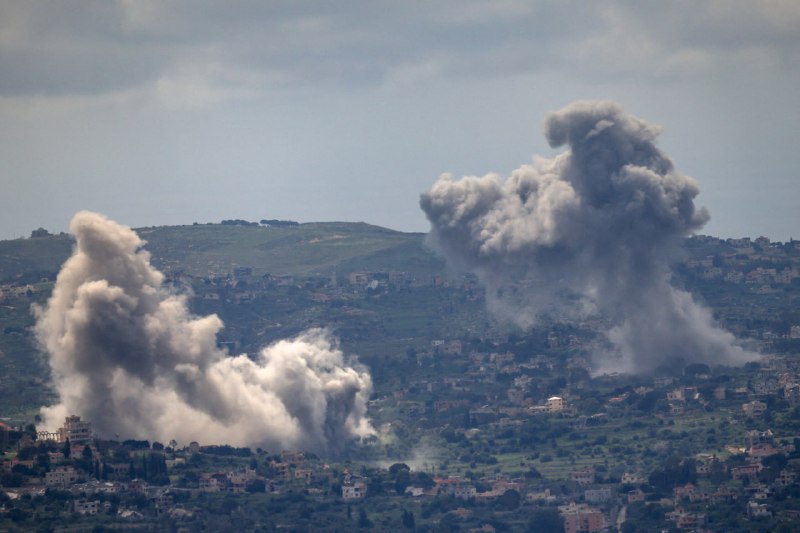
On the afternoon of 15 June 2026, Israeli Prime Minister Benjamin Netanyahu sat before cameras and made the disagreement plain. Iran, he said, had pushed during negotiations for an Israeli withdrawal from the buffer zone inside southern Lebanon. "That didn't happen," Netanyahu added, in remarks captured by the prediction-market account @polymarket and amplified across financial wires. Hours later, the same account logged Netanyahu's posture in starker terms: Israel would remain in the buffer zone "as long as we need to." The framing matters. What had been a quiet implementation question buried inside the interim US-Iran arrangement is now, in the space of a single news cycle, the most visible stress fracture in a deal designed to wind down a war.
The dispute is not abstract. It concerns roughly a strip of Lebanese territory south of the Litani River that Israeli forces have held under a security arrangement tied to the war with Hezbollah, and that Iran's negotiators have made central to any claim that the United States delivered on its end of the bargain. Tehran's foreign minister said on 16 June that any continued Israeli presence in Lebanon would constitute a violation of the interim deal, according to Deutsche Welle's reporting on the same day. The position is binary on both sides, the geography is fixed, and the political costs on each end are already measurable.
What the buffer zone actually is
The buffer zone is a security corridor Israeli forces established inside southern Lebanon during the most recent phase of hostilities with Hezbollah, anchored along the line that separates Lebanese towns like Naqoura and Yaroun from the Galilee. It is not the same as the Blue Line proper, the UN-demarcated boundary Israel and Lebanon have both formally recognised since 2000. The buffer zone sits north of it, inside Lebanese sovereign territory, and its legal status is precisely what the dispute now contests.
Israeli officials have framed the presence as a temporary security necessity tied to the dismantlement of Hezbollah infrastructure near the border. Netanyahu's argument on 15 June — that Israel will stay as long as needed — reads in Israeli domestic politics as a security-first position consistent with his coalition's base. Read from Beirut, the same posture is an open-ended occupation of sovereign Lebanese land. Read from Tehran, it is a piece of leverage the United States was supposed to extract in exchange for the concessions Iran made to reach the interim deal. Each of these framings is internally consistent, and none of them gives the others an inch.
The mechanics of the dispute are unusually clean. There is a defined piece of ground. There are two governments asserting incompatible claims over it. There is a third government — the United States — that brokered the agreement which is supposed to govern this exact question. The substantive question is whether the interim deal's text, which neither side has published in full, treats Israeli withdrawal from the buffer zone as a precondition, a parallel track, or a non-binding aspiration.
Why Bennett sees an opening
Into this argument stepped former Israeli prime minister Naftali Bennett on 16 June, with the most pointed domestic challenge Netanyahu has faced on Iran war policy since the conflict ended. "The current government is no longer capable of advancing Israel," Bennett said in an interview relayed by The Jerusalem Post's Telegram channel, framing his critique as a question of strategic competence rather than a quarrel over tactics. Bennett has positioned himself for a return to office; the election-year timing is not incidental.
Bennett's argument is sharper than a routine opposition broadside. He is not contesting Netanyahu's right to insist on a buffer zone, and he is not calling for an unconditional Israeli withdrawal. He is arguing that Netanyahu's management of the war and its aftermath has produced a result in which Israel is simultaneously blamed for civilian harm in Lebanon, locked into an open-ended ground presence, and dependent on American diplomacy that has not delivered the verifiable, time-bound exit that Bennett argues a more competent negotiator would have secured. The critique targets execution, not direction.
That distinction is the one that makes the Bennett move politically dangerous for Netanyahu. A policy challenge of direction can be dismissed as naive; a policy challenge of execution lands inside the prime minister's core competence and forces him to defend specifics. The buffer-zone dispute gives Bennett that opening: a defined commitment, an outcome that is now publicly contested by the other principal signatory to the deal, and a US administration that has not forced a public clarification of what the text actually requires.
The structural fault line
The pattern here is familiar. When a great-power brokered ceasefire holds most of its lines, the disputes that follow are almost never about the broad principles. They are about a specific tract of ground, a specific list of names, a specific asset that one side wanted unfrozen and the other side refuses to touch. The buffer zone in southern Lebanon has now become that tract of ground. It is the kind of dispute a deal survives only if both principals want it to survive; it is also the kind of dispute a deal collapses over if the political cost of conceding it rises faster than the cost of walking away.
This is the structural reality underneath the daily headlines. The interim US-Iran arrangement was constructed on the assumption that both governments needed the headline achievement more than they needed any specific clause to be honoured to the letter. That assumption is being tested. Tehran's foreign minister has now put on the public record that continued Israeli presence is a violation. Netanyahu has now put on the public record that Israel is staying. The United States has not, as of 16 June, been drawn into specifying which reading of the text it considers correct.
The political economy of that silence is straightforward. Washington wants the deal held together; specifying the buffer zone's status in a way that satisfies Iran would infuriate the Israeli government and a substantial share of the US Congress. Specifying it in a way that satisfies Israel would tell Tehran that the United States' mediation was a softer instrument than advertised. The default American position is to keep the question technical, the language conditional, and the negotiations continuous. That posture works until one of the principals decides the cost of ambiguity has become higher than the cost of rupture.
Stakes and a contested horizon
If the buffer zone holds, the deal holds. The remaining items on the US-Iran interim track — sanctions sequencing, nuclear rollback verification, prisoner files, the disposition of regional militias — are technical enough that competent diplomacy can move them if the political foundation is intact. A standing dispute over a defined piece of ground in southern Lebanon is the kind of thing that bleeds into all of them, because every subsequent negotiation becomes an opportunity for either side to re-litigate the precedent.
If the buffer zone collapses, the question is whether the collapse is orderly or disorderly. An orderly failure would see the United States formally acknowledge that the deal's terms are unfulfilled on the Israeli side, give Iran a face-saving suspension rather than a rupture, and buy time for a renegotiation. A disorderly failure would see an incident on the ground produce a chain of retaliation that pulls the entire regional architecture back toward open conflict. The probability of each is not knowable from public reporting; the existence of both as live possibilities is.
The Bennett gambit adds a domestic Israeli variable. If Bennett's critique gains traction, Netanyahu has an incentive to harden his position on the buffer zone rather than soften it, because a unilateral withdrawal now would be read at home as a capitulation forced by a failed negotiating posture. The same dynamic tightens Iran's position: a visible Israeli political incentive to stay is, from Tehran's vantage, exactly why the leverage must be applied. Both sides have reasons to escalate the rhetoric. Neither has yet had to escalate the kinetic posture.
What remains uncertain
The central unknown is the text of the interim deal itself. Neither Tehran, Jerusalem, nor Washington has published a complete version, and the public accounts differ on whether Israeli withdrawal from the buffer zone is a binding commitment, a parallel track, or a piece of aspirational language carried over from a previous arrangement. Reporting from Deutsche Welle on 16 June and from the Jerusalem Post and Polymarket accounts on 15 June describes positions and statements, not document contents. The honest assessment is that the dispute is real, the geography is fixed, the political incentives are legible, and the legal substrate is opaque. The next move belongs to the United States, and the question is whether Washington chooses to clarify the text or to let the ambiguity continue to do the work of holding the deal together.
This publication framed the buffer zone as the live stress test of the US-Iran interim deal, rather than as a peripheral implementation question. The wire reporting on 15-16 June increasingly treats it that way too; the editorial choice here is to lead with Bennett's domestic critique only after establishing that the dispute has already migrated from the diplomatic to the political register on all three sides.
Wire provenance
This editorial synthesis draws on the following public wire/social posts:
- https://t.me/The_Jerusalem_Post
Follow the event.
These dated source records provide context. They do not retrospectively verify this archive article.
Separate what the nuclear watchdog reported from what it could not determine after the June 2025 strikes.