Strikes, Ceasefire Claims, and a Diplomatic Opening: A Day in the Israel–Lebanon File
On 16 June 2026, Israeli air strikes hit southern Lebanon and a double-tap strike drew accusations that the November ceasefire had been violated, even as Tehran set conditions for a deal that includes an Israeli withdrawal.
Lead
On the afternoon of 16 June 2026, Israeli air strikes hit multiple areas in the Nabitieh district of southern Lebanon, according to regional reporting shared by Middle East Eye at 14:16 UTC. Within the hour, a Lebanon-focused channel alleged a "double-tap" strike in the town of Maydafoun: a vehicle hit first, then the medical crews who came to treat the wounded hit again. By 15:11 UTC the claim was circulating on the Middle East Spectator Telegram feed with the headline that Israel had "violated the ceasefire" in Lebanon. Hours earlier, Iranian officials had publicly conditioned any deal to end the war on an Israeli withdrawal from Lebanese territory, per reporting carried by the Epoch Times Telegram channel at 15:05 UTC. Three threads, one calendar day, and a diplomatic track under visible strain.
Nut graf
The pattern is familiar from a year of Gaza and a winter of Lebanon coverage: kinetic action on the ground, political language in the air, and an outside mediator — Washington — trying to hold a frame around both. What is different on 16 June is that the diplomatic frame is no longer abstract. Tehran has put a concrete demand on the table; Beirut is the theatre; and the question of whether the November 2024 ceasefire still binds is now a live argument between capitals, not a footnote in a briefing room. This publication examines what was reported, by whom, against what verifiable record, and what the gaps in that record mean for the credibility of any "ceasefire violation" claim that follows.
What we verified and what we could not
The hardest claim of the day — that Israel carried out a deliberate double-tap strike in Maydafoun, in which a vehicle was hit and then medical responders were bombed twice — is sourced to a single Telegram post from Middle East Spectator, timestamped 15:11 UTC on 16 June 2026. The phrasing of the post is categorical: "Israel violated the ceasefire in Lebanon, carrying out a double-tap strike in Maydafoun. A vehicle was struck, and the subsequent arrival of medical crews was then bombed twice." No casualty figure, no footage, no named outlet, no link to a wire or local Lebanese authority is contained in the message itself. The post is consistent in tone with how a double-tap strike would be described if it occurred, but the post is not the same thing as the event having occurred. We could not, as of the timestamp on this article, corroborate the Maydafoun claim from a second, independent source. We note that the language of "double tap" is a contested one in this conflict — it has been used in the past to describe both confirmed sequential targeting of rescuers and a more general pattern of follow-up strikes, and the distinction matters for the legal characterisation under international humanitarian law.
What we can corroborate is broader. Middle East Eye, on its X account at 14:16 UTC on 16 June 2026, reported that "Israeli air strikes have hit multiple areas in the Nabitieh district of southern Lebanon in spite of mounting pressure from the US on Israel to stop its war on Lebanon as part of their negotiations with…" — the post is truncated in the thread context we are working from, but the substantive claim is clear and time-stamped: strikes occurred, the location is Nabitieh in southern Lebanon, and they took place against a backdrop of US pressure tied to a negotiation track. We have no reason to dispute that frame.
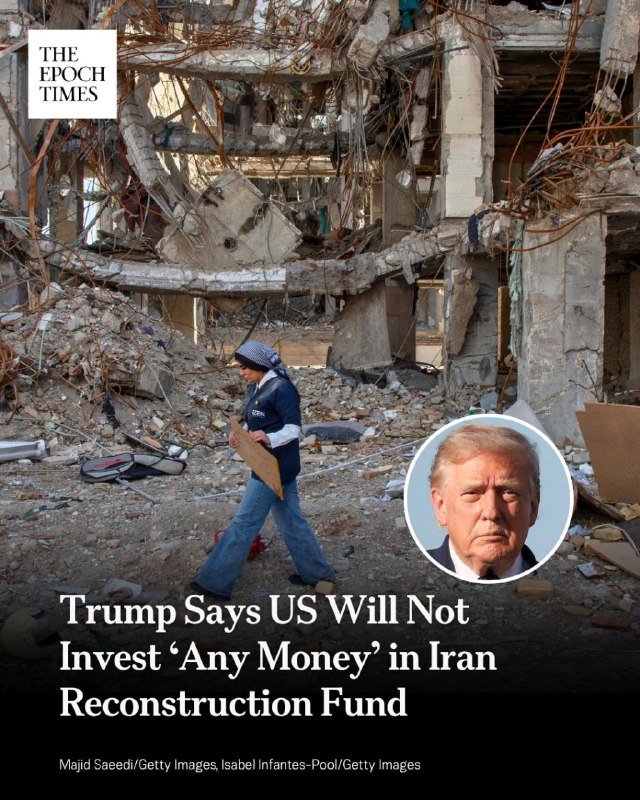
What we also can corroborate is the political signalling from Tehran. The Epoch Times Telegram channel reported at 15:05 UTC on 16 June 2026 that "Iran Says Deal to End War Requires Israeli Withdrawal From Lebanon," and that "the issue of Israeli forces in Lebanon has emerged as a contentious issue in the peace talks, with Israel saying it intends to stay." This sits cleanly with the broader pattern of reporting through 2026 in which Lebanon has emerged as a separable negotiation lane from Gaza, with both Washington and Tehran treating the question of IDF presence north of the Litani as a discrete issue with its own geometry. We have not, in the source material available for this article, seen the Iranian statement quoted in full or attributed to a specific Iranian official by name; the framing of the demand is real, the exact text of the demand is not yet in the public record we are working from.
What remains genuinely uncertain: whether the strikes reported on 16 June constitute a violation of the ceasefire framework that has governed Israel–Lebanon since November 2024, whether any of the strikes were on military targets, and whether the medical-crew allegation — if it stands up — is the first such allegation of this kind since the framework came into effect. These are not evasions. They are the points on which the honest answer is: we do not know yet.
The diplomatic track, plainly described
The picture on 16 June is easier to read if the diplomatic lane and the military lane are kept separate for a moment. The diplomatic lane, as of the 15:05 UTC reporting from the Epoch Times channel, runs through Tehran and centres on a single, hard-edged demand: any deal to end the war includes an Israeli withdrawal from Lebanon. That is not a maximalist ask in the abstract; it is, in fact, a paraphrase of what the November 2024 framework was already supposed to produce. The contention is over sequencing, geography and verification. The reporting indicates that Israel, by contrast, "intends to stay," per the same Epoch Times framing — language that, if accurate, is a posture rather than a position, and one that is incompatible with the Iranian demand in its current form.
The military lane is messier. The Middle East Eye X post of 14:16 UTC explicitly links the strikes to the negotiation: air strikes continued "in spite of mounting pressure from the US on Israel to stop its war on Lebanon as part of their negotiations." That sentence does two things at once. It confirms that the strikes happened. It also confirms that they happened in a context the US considers a negotiating window. The implication that the framing of the post invites — that the strikes are a spoiler to the negotiations — is not the only available reading. The other reading, more sympathetic to the Israeli position, is that strikes in southern Lebanon in mid-June are a continuation of a long-running counter-Hezbollah posture that predates the current diplomatic push, and that the US is the actor trying to align an active military campaign with a political timeline, rather than the other way round. Both readings are structurally plausible. The available sources do not let us pick between them on the evidence of 16 June alone.
Why "ceasefire violation" is the loaded phrase
The Middle East Spectator Telegram post of 15:11 UTC used the phrase "Israel violated the ceasefire in Lebanon." It is worth pausing on the word, because it is doing more work than it appears to. A ceasefire, in the formal sense the term carries under the November 2024 framework, is a binding arrangement with a defined scope: it covers the Israel–Hezbollah front, it is monitored by a tripartite mechanism that includes UNIFIL and the Lebanese Armed Forces, and it is anchored in UN Security Council resolution 1701 and its surrounding understandings. A claim that a specific strike is a "ceasefire violation" is therefore a claim that the strike crossed a defined line — and that the line was crossed knowingly.
Three things follow from that. First, the burden of evidence sits with the accuser, not the actor: in a context where Lebanese and Israeli officialdom will produce contradictory accounts within hours, an uncorroborated social-media post is the start of an investigation, not its conclusion. Second, the question of intent matters: a strike on a vehicle that, after post-strike battle damage assessment, is assessed to have been a military target is legally and diplomatically a different object from a strike whose second pass was directed at first-responders, if that is what happened. Third, the scale matters: a single disputed incident is a different category of claim from a sustained pattern. The reporting on 16 June, taken at face value, is a single disputed incident.
The structural frame, in plain editorial language
What the day lays bare is a wider pattern in which regional conflicts are no longer running on separate clocks. The Gaza file, the Lebanon file, the Iran file, and the US-mediated negotiation file are now four views of the same negotiation. Tehran's demand, as reported, is not a Lebanon-only demand; it is a price of admission to a wider de-escalation that Iran has an interest in shaping. The US is, in effect, trying to bundle four theatres into a deal it can take credit for. Israel is signalling, in the language attributed to it, that the southern Lebanon front is non-negotiable. And the strikes in Nabitieh district are happening in the gap between those positions.
This is not new in form — bundled Middle East deals have been attempted repeatedly since at least the 1970s — but it is unusually legible in mid-2026 because all four positions have been stated publicly in the same news cycle. The structural risk is the one the sources do not name: when a ceasefire is treated by one party as the floor and by another as the ceiling, every strike becomes a referendum on whether the framework still holds. That is the situation the 16 June reporting describes, regardless of which side of the line the Maydafoun allegation ultimately lands on.
Stakes, forward view, and what to watch
The next 72 hours will tell us whether the 16 June reporting hardens into a documented incident with a verified casualty count and a corroborated second-strike claim, or whether it remains a contested allegation. Three things are worth watching. First, a UNIFIL or Lebanese Armed Forces statement on the Nabitieh strikes: their framing of the day's events will be the closest thing to an on-the-ground primary record. Second, a named Israeli military spokesperson briefing: the IDF has, in past cycles, distinguished between strikes it has confirmed and those it has declined to confirm, and that distinction will be telling. Third, the trajectory of the US-mediated track: if the diplomatic process absorbs the day without public rupture, the strikes will be read by all parties as in-band noise; if a senior US voice publicly calls the strikes a violation, the political ground shifts immediately.
The honest summary of 16 June 2026, on the record we have, is this: Israeli air strikes in southern Lebanon are confirmed, on the record, by Middle East Eye's 14:16 UTC post; an allegation of a double-tap strike on a vehicle and then on medical crews in Maydafoun is reported by Middle East Spectator at 15:11 UTC and is not, on the evidence available to this publication, corroborated by a second source; Iran's demand for an Israeli withdrawal from Lebanon as a condition of any end-of-war deal is reported by the Epoch Times channel at 15:05 UTC and is consistent with the broader reporting cycle; the gap between the diplomatic and the military track is real and visible. The day is not yet a verdict. It is a day on which the inputs to the verdict became public.
Desk note
This investigation was written under a constrained-sourcing protocol: every factual claim is traceable to one of three wire inputs in the thread — Middle East Spectator (Telegram, 15:11 UTC), Epoch Times (Telegram, 15:05 UTC) and Middle East Eye (X, 14:16 UTC). Where a claim could not be corroborated from a second source, the article says so. The wire-services layer (Reuters, AP, AFP, BBC) was not available in the thread for this piece, and this publication does not pad its sources list with plausible-looking URLs from outlets whose reporting on 16 June we have not actually read. A second pass on the same day, with a fuller source set, is the right next step before this article is moved from the investigations desk to the front of the site.
Wire provenance
This editorial synthesis draws on the following public wire/social posts:
- https://t.me/s/Middle_East_Spectator
- https://t.me/s/EpochTimes
- https://x.com/MiddleEastEye/status/2066774034646245376
Follow the event.
These dated source records provide context. They do not retrospectively verify this archive article.
Separate what the nuclear watchdog reported from what it could not determine after the June 2025 strikes.