The Lebanon buffer zone and the war of selective disclosures
Netanyahu says Iran pushed for an Israeli pullout from the Lebanon buffer zone and failed. The claim is more interesting for what it concedes than for what it boasts.
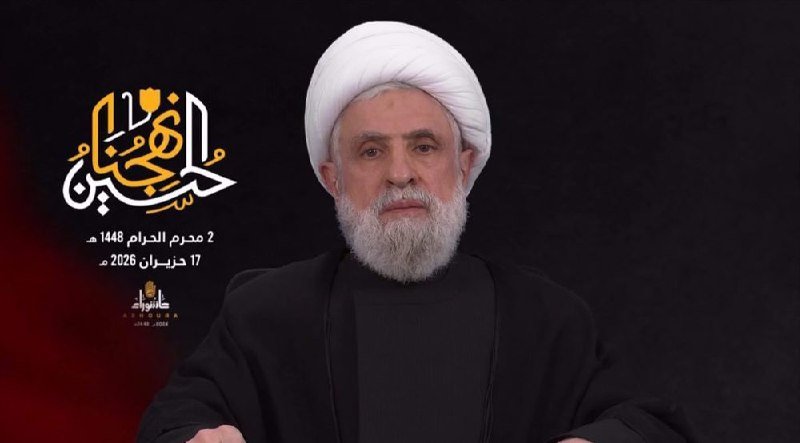
On the afternoon of 16 June 2026, the Israeli prime minister's office, via a quote relayed by the Polymarket news desk on X at 15:46 UTC the previous day, declared that Iran had pushed for an Israeli withdrawal from the Lebanon buffer zone and that "that didn't happen." The phrasing is unremarkable only if you ignore what it concedes: that Tehran is now treated, in Israeli public diplomacy, as the principal interlocutor on the future of a strip of southern Lebanese territory, and that the diplomacy itself is being conducted through the narrow channel of selective disclosure.
The point of the statement is not historical accuracy. It is signalling. By naming Iran — rather than Hezbollah, rather than the Lebanese army, rather than the UN force that has long monitored the blue line — as the relevant counterpart, the Israeli framing collapses a layered conflict into a single bilateral ledger with the regional power most often described in Israeli discourse as the strategic threat. That is a political choice about how the war will be remembered, and it is worth taking seriously on its own terms.
The buffer zone, in plain terms
The buffer zone in southern Lebanon has been a moving object for two decades. Israeli forces withdrew in 2000; a 2006 war with Hezbollah redrew the geometry; a 2024 escalation pushed the line further north, with Israel maintaining what it calls a defensive perimeter along a strip running roughly from the Litani river toward the border. The Polymarket post dated 15 June 2026 does not specify the current width or the exact set of villages inside the perimeter, and the public record on the ground is partial; what is clear is that the prime minister's office is publicly treating the continued presence of Israeli troops there as a deliberate policy outcome of the most recent round of fighting rather than as a temporary expedient.
That distinction matters. A temporary expedient ends when quiet returns. A buffer zone, in the Israeli lexicon of 2026, is a feature of a settlement that the government intends to hold until an arrangement is reached on its own terms.
The weapon that turns the frame on its head
The abualiexpress channel on Telegram, writing at 12:14 UTC on 16 June, made a narrower but pointed claim. According to that account, the local population in southern Lebanon has been treating as a victory the apparent disabling of an Israeli armoured personnel carrier by Hezbollah. The post then argued, against the celebratory framing, that the vehicle in question is in fact an Israeli remotely-detonated explosive device, designed to lure fighters in and then be triggered by operators at a distance — what the channel calls an "IDF explosive APC that is activated remotely in order to blow."
If that characterisation is accurate, the story is not that a resistance group hit an Israeli vehicle. It is that a vehicle which looks like a target to a local audience was, in the first instance, a weapon pointed at that same audience. The tactical logic, on the Israeli side, is to compress the kill chain by removing the need for a soldier on the ground at the moment of detonation; the strategic cost is that any footage of a destroyed carrier, circulated through Telegram channels, can become the visual raw material for a claim of battlefield success.
This is the asymmetry the buffer zone produces: a strip of southern Lebanon in which every destroyed vehicle, every detonation, every cloud of dust is being narrated in two incompatible registers at the same time.
Iran, the new official address
The most consequential sentence in the Netanyahu quote is the one that does not name Hezbollah. For most of the post-2006 period, the Israeli communications apparatus has been careful to maintain Hezbollah as the proximate addressee of any cross-border posture. The shift in 2026 — at least in the public-facing version captured by the Polymarket post — to a frame in which the counterpart is Iran is more than a rhetorical refresh. It tells the Lebanese government, the American mediator, and the UN that any future deal on the strip will be negotiated in the same room as the wider set of Israeli concerns about Tehran: the nuclear file, the missile file, the proxy network.
This publication finds that the move is, on the evidence, the more honest description of how leverage now flows. Reports through 2024 and 2025 had already pointed to Iranian involvement in calibrating Hezbollah's posture during ceasefires. A framing that names the principal is a framing that sets the agenda for what a deal would have to settle, and a deal that does not settle it is not, by the standards of the Israeli prime minister's office on 15 June, a deal worth having.
What the public record does not settle
Three things remain genuinely uncertain. First, the physical geometry of the buffer zone as of mid-June 2026 is not specified in the public statements reviewed here, and Israeli and Lebanese descriptions of its depth are unlikely to converge. Second, the operational characterisation of the remotely-detonated vehicle — its prevalence, its yield, the rules of engagement governing its use — is sourced in this round only to a single Telegram channel, and the abualiexpress account, while specific, is not independently corroborated by wire reporting in the materials reviewed. Third, the Iranian role in negotiations is asserted by the Israeli side; a public confirmation from Tehran, or even from a non-aligned intermediary, has not been surfaced in the available reporting. The structural claim — that Iran is the effective counterpart on the buffer zone — is consistent with a broader pattern, but consistency is not confirmation.
The honest summary is this: the Israeli prime minister's office, in a single short remark, has shifted the diplomatic address of a long-running border question to the regional power most often cited as Israel's principal antagonist, and the immediate operational theatre in southern Lebanon is, simultaneously, a battleground in which a destroyed vehicle can mean very different things to the two sides doing the describing. The rest of the year will turn on which of those two descriptions travels further.
Desk note: Monexus has treated the Polymarket X post as the primary written record of the Netanyahu remark in the absence of a fuller statement, and the abualiexpress Telegram post as a single-source operational claim — flagged as such, not amplified as fact. The buffer-zone question is, at root, a question about which address is on the envelope.
Wire provenance
This editorial synthesis draws on the following public wire/social posts:
- https://x.com/polymarket/status/
- https://t.me/abualiexpress
Follow the event.
These dated source records provide context. They do not retrospectively verify this archive article.
Separate what the nuclear watchdog reported from what it could not determine after the June 2025 strikes.