Lebanon's mounting toll: what three months of Israeli strikes reveal about the war's widening arc
Lebanon's health ministry has logged 3,826 dead and 11,851 wounded since 2 March, a toll that places the campaign among the deadliest episodes of the broader Middle Eastern war. The numbers, and the politics of counting them, matter for what comes next.
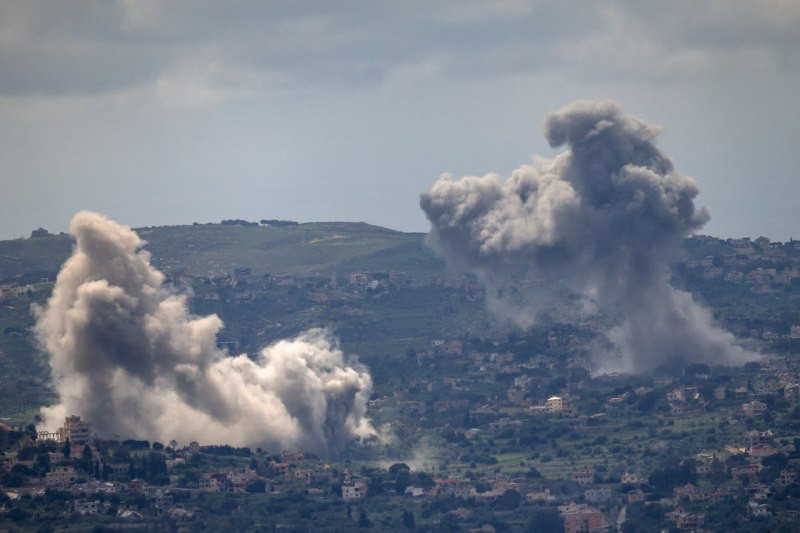
On the afternoon of 16 June 2026, the Lebanese Ministry of Health released a figure that, for the first time, gave the war a numerical shape rather than a series of fragmentary reports. Since 2 March, the ministry said, 3,826 people had been killed and 11,851 injured in Israeli strikes across the country. The numbers travelled quickly through regional Telegram channels, including Al-Alam, Fars News International and The Cradle, all of which relayed the ministry's tally within a two-hour window. The headline figure, 3,826, appeared in Al-Alam's 13:41 UTC wire and was echoed almost identically by Fars News at 13:16 UTC and by The Cradle at 13:06 UTC. The 11,851 injury figure was consistent across the three relays, with one minor discrepancy in the earliest Al-Alam version, which carried 11,826 before being corrected to 11,851 in the same channel's later updates.
The number does not just describe a body count. It describes the cumulative shape of a three-month campaign that has moved from the southern border districts into the southern suburbs of Beirut, into the Bekaa Valley and along the Syrian frontier. It is the figure around which every other claim about the war — its legality, its proportionality, its strategic logic, its diplomatic viability — is now being argued.
This publication will not at this stage endorse or reject the precise figure. The Lebanese Ministry of Health, like any health ministry operating inside a country at war, inherits a particular set of incentives and constraints. Its reports are the only systematically produced casualty record available in real time. International agencies have not yet produced a parallel count for the 2 March–16 June window that diverges publicly from the ministry's tally in a way the wire services have carried. The figure, in other words, is the operational baseline for every actor in the conflict — Israeli, Lebanese, Iranian, American, European — and that is precisely why it must be read carefully rather than assumed.
The shape of the campaign
The 2 March date is not arbitrary. It marks the resumption of large-scale Israeli air operations against Hezbollah infrastructure in southern Lebanon after a ceasefire arrangement that had held, in a fragmented form, since late 2024 collapsed under accumulated strikes and counter-strikes. The Lebanese health ministry's window, beginning on that date, corresponds to the period during which Israeli forces have, in reporting carried by The Cradle and Fars News, conducted what both outlets describe as "US-backed" operations across multiple theatres inside Lebanese territory. The qualifier matters: the framing positions the campaign as one with an external enabler, not a bilateral dispute. Israel has historically rejected the characterisation of US backing as direct operational support, preferring to describe American involvement as diplomatic, intelligence-sharing and matériel resupply rather than as targeting assistance. The Lebanese, Iranian and pan-Arab press generally elide the distinction. The point is not adjudicating the dispute but noting that the framing is itself a piece of the war.
Inside the 106-day window, three broad geographical patterns have been visible. First, the southern border districts — the traditional Hezbollah strongholds in the Bint Jbeil, Tyre, Marjeyoun and Hasbaya areas — have absorbed the largest share of reported strikes. Second, the southern suburbs of Beirut, the Dahiyeh, have been struck repeatedly in what Israeli statements have described as operations against what the IDF spokesperson has called senior Hezbollah figures and weapons storage. Third, the eastern Bekaa, including the area around Baalbek-Hermel, has been hit in operations that Lebanese and Iranian outlets describe as strikes on what they characterise as logistics and training sites.
The Lebanese Ministry of Health's tally does not break down casualties by district. It also does not distinguish between combatants and civilians. The figure of 3,826 dead and 11,851 wounded is a flat, undifferentiated count. The wire services that have so far carried the number have not amended it with a parallel civilian-versus-combatant breakdown. That gap will become the most consequential source of dispute in the coming weeks, because the ratio of civilian to combatant casualties is the single statistic that drives the most important international-law judgements about the campaign, including the proportionality assessments of international courts and the political reactions of European Union member states, which have been notably sharper on civilian-protection language than the United States in the same window.
What the framing wars look like
The three Telegram wires that carried the 16 June figure diverge in ways that are more revealing than they appear at first glance. Al-Alam, a Lebanese outlet with a long-standing alignment with Hezbollah's political base, framed the figure inside the explicit language of "the Zionist regime" and described the dead as "martyrs". Fars News, the Iranian state-aligned English wire, used a closely related register, translating the ministry's figure within minutes and adding a beat of Iranian foreign ministry commentary that has historically been a touchstone for the Iranian framing of the war. The Cradle, a Beirut-based outlet that has positioned itself as an alternative to the Western wire services and that explicitly rejects what it calls the "Anglo-American" framing of the Middle East, used the strongest framing of the three, describing the strikes as "US-backed Israeli attacks" and tying the casualty figure explicitly to American political responsibility for the campaign.
The three framings are not, on closer inspection, the same framing. Al-Alam places the moral and political weight on the Israeli state as the direct actor. Fars News adds a layer of Iranian-state framing, in which the war is a theatre of a larger contest between Iran and the United States in which Lebanon is the immediate site and Israel the proximate instrument. The Cradle pushes further: the casualty figure is a piece of evidence in a structural argument about American power in the region, and the number is meant to be read as a verdict on the entire architecture of US-Israeli cooperation, not merely on the air campaign that produced it.
All three outlets agree on the number. None of them is independent of the Lebanese Ministry of Health, which is the original source. The political packaging, however, varies considerably, and the reader who watches only one of the three will get a substantively different picture of what the figure means. This publication's own read, on the present evidence, is that the underlying count is the most defensible figure currently available while the political framings should be treated as advocacy rather than as descriptive fact. The structural critique embedded in The Cradle's framing — that the war is being prosecuted with an external enabler — has empirical force; the rhetorical packaging around it does not add rigour and at times substitutes for it.
The structural frame, in plain language
The most important point about the 16 June figure is what it says about the trajectory of the war, not about its instantaneous state. From 2 March to 16 June is 106 days. The health ministry's reported toll over that period is 3,826 dead and 11,851 injured. The arithmetic — about 36 dead per day, and about 112 injured per day, sustained over more than three months — places the campaign inside the band of major air operations of the last two decades, comparable in scale if not in tactical profile to the early weeks of other regional air campaigns that have been the subject of subsequent international inquiry.
The structural pattern, plainspoken, is this. The current phase of the Israel–Hezbollah war is being prosecuted as a sustained air campaign against a non-state actor that has its own political and territorial base, integrated into a country with a functioning state and a health ministry that is producing real-time data. That is a different war from a counter-terrorist operation; it is closer in form to what international humanitarian law has historically treated as an international armed conflict, even if the legal classification remains contested. The presence of the health ministry's data, even with all the caveats that attach to it, is itself an artefact of the fact that one of the parties to the war is a state with reporting obligations.
The corollary, less often stated, is that the absence of a comparable public data set from Israeli sources — disaggregated by district, by date, by target category, with a civilian-combatant breakdown — leaves the Lebanese ministry's figure as the default working number for journalists, diplomats, UN agencies and humanitarian NGOs. This is not because the Lebanese figure is more credible than any other; it is because no other figure exists in the public domain. That asymmetry will only resolve when one of three things happens: an independent international mission produces a parallel count, an Israeli or US authority publishes its own internal estimates on the public record, or the war ends and a longer-form retrospective assessment becomes possible. None of those is imminent.
The diplomatic stakes, six weeks into a longer arc
The diplomatic consequences of the 16 June figure are still being absorbed. European foreign ministries have, over the last fortnight, shifted from conditional language about "restraint" and "proportionality" to direct calls for a halt to operations in the southern suburbs of Beirut, where the density of the displaced population is by any account the highest of any theatre in the war. The Lebanese government, which has limited operational control over the south and over Hezbollah's arsenal but is the channel through which ceasefire negotiations and humanitarian access arrangements are being negotiated, has in the same window leaned more visibly into the public framing of "mass civilian harm" in its diplomatic communications. Iran has continued to provide political, and reportedly matériel, support to Hezbollah through the period the figure describes, while the United States has continued to provide political, intelligence and matériel support to Israel through the same period, with the latter characterised in the Iranian-aligned wires as direct and in Israeli and American public statements as enabling rather than directive.
The 3,826 figure will be referenced in every subsequent diplomatic exchange about the war. It will be cited by European foreign ministers, by UN secretary-general statements, by OCHA situation reports, by the ICRC's own quiet diplomacy and by the parliamentary debates of countries that have so far been supportive of the Israeli campaign. The number is, in a sense, the campaign's new minimum unit of political currency. That is why its provenance matters, and that is why this publication treats the figure as the most defensible count available while flagging, plainly, that the underlying source is a national health ministry inside the country being struck, that the figure is undifferentiated by combatant status, and that international corroboration has not yet arrived.
What remains genuinely uncertain
The most consequential open question is the civilian-combatant split. Lebanese and pan-Arab outlets have implied or asserted a high civilian ratio; Israeli statements have implied a high combatant ratio. Neither claim is supported by a public, named, methodology on either side. A second open question is the post-strike humanitarian state in the districts the figure covers: shelter capacity, hospital functionality, water and electricity access, the trajectory of internal displacement. The Lebanese Ministry of Public Health has not yet released a district-level breakdown of damage to medical infrastructure in the 2 March–16 June window in a form that has travelled beyond the Lebanese wire. A third open question is the financial and logistical cost of the campaign in the aggregate, which has not been published by the Israeli Ministry of Defence in a public, dated estimate for this phase of the war.
A fourth, less technical question is the political horizon. The campaign's tempo has not visibly slowed. The diplomatic tempo has not visibly accelerated. The figure of 3,826 dead is, on any historical baseline, large enough to drive a political reconsideration; the political system around the war has, so far, not visibly responded. This publication does not have a basis on the present evidence to forecast when or whether it will.
What can be said with confidence, and what this publication is willing to assert, is narrower than the framing wars suggest. The Lebanese Ministry of Health's figure of 3,826 dead and 11,851 injured is the most systematically produced casualty number currently in the public domain for the 2 March–16 June 2026 period. The figure has been relayed, with broadly consistent numbers, by Al-Alam, Fars News and The Cradle, three regional outlets that differ sharply in political alignment and therefore have independent reasons to scrutinise it. The figure does not yet have a parallel international count. The figure is the working baseline for every subsequent judgement about the war's proportionality, legality and diplomatic future — and the figure is, on the available evidence, credible as a working baseline while remaining provisional as a final accounting.
This publication's framing prioritises the undifferentiated count while flagging the absence of a parallel international tally. The wire services have so far carried the Lebanese ministry's figure without independent verification; this article treats that as an open data gap rather than as a defect in the underlying count.
Wire provenance
This editorial synthesis draws on the following public wire/social posts:
- https://t.me/alalamfa/
- https://t.me/FarsNewsInt/
- https://t.me/thecradlemedia/
- https://t.me/TheCradleMedia/
- https://en.wikipedia.org/wiki/2024_Israeli_invasion_of_Lebanon
- https://en.wikipedia.org/wiki/Hezbollah
- https://en.wikipedia.org/wiki/Israeli%E2%80%93Hezbollah_conflict_(2023%E2%80%93present)
- https://en.wikipedia.org/wiki/Dahiyeh
- https://en.wikipedia.org/wiki/Bekaa_Valley
- https://en.wikipedia.org/wiki/Lebanese_Ministry_of_Public_Health
- https://t.me/alalamfa/
- https://t.me/FarsNewsInt/
- https://t.me/thecradlemedia/
- https://t.me/TheCradleMedia/
- https://en.wikipedia.org/wiki/2024_Israeli_invasion_of_Lebanon
- https://en.wikipedia.org/wiki/Hezbollah
- https://en.wikipedia.org/wiki/Israeli%E2%80%93Hezbollah_conflict_(2023%E2%80%93present
- https://en.wikipedia.org/wiki/Dahiyeh
- https://en.wikipedia.org/wiki/Bekaa_Valley
- https://en.wikipedia.org/wiki/Lebanese_Ministry_of_Public_Health