A truce on paper, a war in the hills: Lebanon's quiet is doing the work diplomacy cannot
A US-brokered ceasefire has quieted Lebanon's front line, but Israel still occupies villages in the south, Hezbollah says disarmament is a non-starter, and a Trump-era proposal to make Syria responsible for disarming the militia is sitting unanswered.
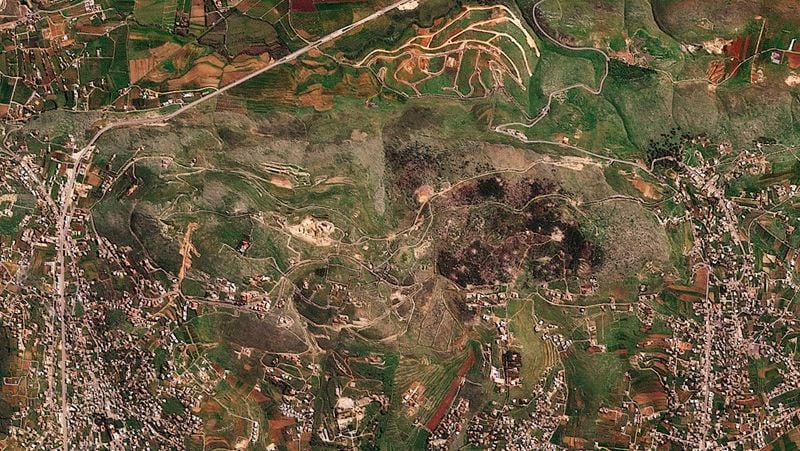
On a single afternoon in mid-June 2026, the same news cycle carried two contradictory pictures of Lebanon. One was a BBC report, timestamped 16:20 UTC, describing a "fragile quiet" on the ground — a pause in the fighting between Israel and Hezbollah that, for the first time in months, was holding in plain sight. The other, from the Beirut-based outlet The Cradle, carried at 15:58 UTC, ran a Hezbollah statement warning that no nuclear deal between Iran and the United States could proceed while Israel continued to occupy Lebanese villages and fire across the border. Add to that a third data point — an Israeli public broadcaster report, picked up at 17:15 UTC, that the Trump administration had quietly circulated, roughly six weeks earlier, a proposal under which Syria itself would take responsibility for disarming Hezbollah — and a sharper picture emerges. The truce is real. The conflict is not over. And the diplomatic architecture being assembled to end it is one in which the Lebanese state's role is, in effect, to be bypassed.
What is unfolding is not a peace process in the conventional sense. It is a layered arrangement in which a US-Iran détente, an Israeli-Lebanese security understanding, and a Syrian-managed disarmament track are being stapled together by a single great-power broker. Each layer has its own logic, its own counter-claims, and its own failure mode. Read together, they suggest that the loudest diplomacy of 2026 in the Levant is being conducted in languages the people most affected by it are not being asked to speak.
The ceasefire that is not a ceasefire
The "fragile quiet" reported by BBC correspondents in Lebanon on 16 June is, in operational terms, a reduction in tempo, not a settlement. Israeli airstrikes and artillery shelling, the subject of the Hezbollah statement carried by The Cradle on the same day, have not been described as having stopped in the source material — only that they are continuing after a ceasefire announcement. Lebanese civilians quoted in the BBC report are described as doubtful that the agreement "could finally mean the end of the fighting." That doubt is well-founded: a halt in the headline tempo of combat is not the same as a halt in combat, and the distinction matters for the villages in southern Lebanon that the BBC and others have documented as remaining under Israeli control.
The official architecture is a US-Iran understanding. The informal architecture, the piece most often missing from Western wire coverage, is the Israeli military footprint. Israeli forces have not withdrawn from the southern Lebanese territory they moved into during the most recent escalation; The Cradle's reporting on 16 June puts the number at "dozens of Lebanese villages" still under Israeli occupation. A ceasefire that leaves an invading force in place is, by any plain-language reading, a partial ceasefire. The fact that Lebanese civilians are sceptical about its durability is less a matter of mood than of geography.
The structural problem is older than this round of fighting. Lebanon has not exercised effective sovereignty over its southern border in living memory. A truce between Israel and Hezbollah that depends on external enforcement — by Iran, by the United States, by Syria, or by all three — is structurally exposed the moment any one of those enforcers turns its attention elsewhere. The current arrangement relies on the alignment of US and Iranian interests in a way that cannot be assumed to last beyond the immediate negotiation. The clock on it is not specified in the public reporting, but the existence of the clock is the story.
The Trump proposal: Syria as the disarmament agent
The most under-reported element of the package is the proposal attributed to the Trump administration, first disclosed in Israeli media and carried by the Telegram channel of the Israeli public broadcaster Kan on 16 June at 17:15 UTC. Under this proposal, presented formally to Israeli and Lebanese representatives roughly six weeks before publication, Syria would take responsibility for disarming Hezbollah. The proposal was reportedly revisited in subsequent contacts, suggesting the Trump team sees it as a live option rather than a placeholder.
Two things are notable. First, the design. Asking Damascus — a government that spent more than a decade as the central conduit for Iranian arms and fighters to Hezbollah — to be the hand that disarms the militia inverts the regional logic of the last fifteen years. It only makes sense under a single set of assumptions: that the new Syrian authorities have decisively broken with the Iranian axis, that they have the capacity to project force into the Lebanese borderlands, and that they are willing to use that capacity against a former ally. None of these conditions is asserted in the available reporting; they are inferred from the structure of the proposal itself.
Second, the bypass. Lebanon's own government, whatever its domestic standing, is the internationally recognised sovereign. A plan in which the disarmament of a Lebanese militia is entrusted to a neighbouring state is a plan in which Beirut is a recipient of arrangements rather than a maker of them. Lebanese doubt about the durability of the ceasefire, as reported by the BBC, is partly doubt about whether their own state is even at the table.
The structural frame here is a recurring one in 2026 diplomacy: small and medium states in the Middle East being managed by larger ones, with the deal written over their heads and the implementation handed to actors who themselves have a stake in the outcome that may not be neutral. It is efficient. It is also fragile in a way that efficiency cannot fix.
The Iranian dimension: a nuclear deal as a hostage to the south
Hezbollah's statement on 16 June, as carried by The Cradle, draws a direct line between the US-Iran nuclear track and the situation in southern Lebanon. The framing, in the militia's own words, is that no Iran-US nuclear deal is possible while Israel continues to occupy Lebanese villages and continues to strike from the air. This is a negotiating posture, but it is also a substantive claim about the sequencing of the regional settlement. It says, in effect, that the file the United States most wants to close — the nuclear file — cannot be closed while the file Iran most wants closed — Lebanon's territorial integrity — remains open.
The US-Iran understanding that produced the current quiet in Lebanon is therefore not just a Lebanon file. It is a confidence-building measure for a much larger negotiation, and the terms of trade on it have now been made explicit by the Iranian-aligned side. The structure of the deal being offered to Tehran in 2026 is: constrain your nuclear programme, accept limits on your missile and proxy architecture, and in return the United States will lean on Israel to withdraw from southern Lebanon. Whether the United States has the leverage, or the appetite, to deliver on that second half is the open question on which the entire arrangement pivots.
The Cradle's reporting is a primary source for the Hezbollah position and should be read as such. It is the clearest articulation in the available thread of the militia's terms for accepting a political settlement — and those terms are explicitly not just about Hezbollah. They are about the territorial integrity of the Lebanese state and the legitimacy of armed resistance to a continuing foreign occupation. A piece of analysis that treats this as mere posturing misses the political audience inside Lebanon to which the statement is also addressed: Shia constituents who have lost homes, livelihoods, and family members in the recent fighting and who are being told, by their own political-military leadership, that the price of any future quiet is the return of those villages.
The Lebanese view: between relief and refusal
The BBC's reporting, the only major Western wire in the available thread to put Lebanese voices in the foreground, captures a population that is not rejecting the quiet but is refusing to mistake it for peace. The phrase "fragile quiet" is doing a lot of work in the BBC's framing. It concedes what is real — fewer strikes, fewer funerals, more children in school — while naming what is missing: a horizon.
Lebanese scepticism has a structural basis. The country has been here before, in 1996, in 2006, in the understandings that followed the 2006 war and that gradually eroded. Each time, the international architecture was presented as durable, and each time it frayed. The reporting does not specify the exact casualty figures or displacement numbers from the most recent round of fighting — that material is not in the available source items — but it does establish the qualitative picture: a population that has paid heavily, that wants the quiet to last, and that has good institutional reasons to doubt that it will.
This is the part of the story most often under-told in Western coverage. The Lebanese position is not unified — it never has been — but the mainstream of it, as represented in the BBC's reporting, is closer to conditional acceptance than to either celebration or rejection. That is a politically usable posture for a state that has not been given ownership of its own file.
What the available reporting does not yet resolve
The source material in this thread is narrow: two Telegram-channel reports, a BBC piece, and a parallel BBC Telegram post. It supports a structural reading of the situation but not a granular one. The reporting does not specify the exact terms of the Trump proposal beyond the Syria-as-disarmer idea; does not give casualty figures for the most recent fighting; does not name the Lebanese or Syrian officials who have been engaged in the contacts; and does not state the duration or the enforcement mechanism of the US-Iran understanding. The most consequential claim in the available material — that the United States proposed making Syria responsible for disarming Hezbollah — is sourced to Israeli public broadcaster reporting and has not, in the available thread, been independently confirmed by Reuters, AP, or a US administration source. That is a fact about the evidence, not a fact about the world, and it should shape how confidently the proposal is described as a real option rather than an exploratory ask.
What can be said with the evidence at hand is this. A US-brokered process is under way that aims to tie together an Iran nuclear understanding, an Israeli-Lebanese security track, and a Syrian-managed disarmament of Hezbollah. The Lebanese population is, at best, a recipient of the arrangements. The Israeli occupation of southern villages is continuing. And the main counter-claim in the regional system — Hezbollah's linkage of any nuclear deal to a full Israeli withdrawal from Lebanese territory — has been made explicit, on the record, on the same day that Western wires were reporting a fragile quiet. The two stories are not in tension. They are the same story, told from two ends of a negotiation that has not yet closed.
Monexus framed this as a structural piece on how a great-power-managed settlement is being constructed over the heads of the affected state, rather than as a wire-style roundup of the latest truce. The thread's narrow source base is acknowledged in the final section; readers seeking casualty figures, official readouts, or the text of the Trump proposal will need to wait for follow-up reporting.
Wire provenance
This editorial synthesis draws on the following public wire/social posts:
- https://t.me/BBCWorldoffl
- https://t.me/thecradlemedia
- https://t.me/TheCradleMedia
- https://t.me/wfwitness
Follow the event.
These dated source records provide context. They do not retrospectively verify this archive article.
Separate what the nuclear watchdog reported from what it could not determine after the June 2025 strikes.