McIlroy's case against the new PGA Tour: a 'false economy' and a quiet bet on the old way
On the eve of the US Open at Oakmont, Rory McIlroy has chosen a fight most of his peers have avoided: questioning whether the PGA Tour's two-track future is really an improvement on the past.
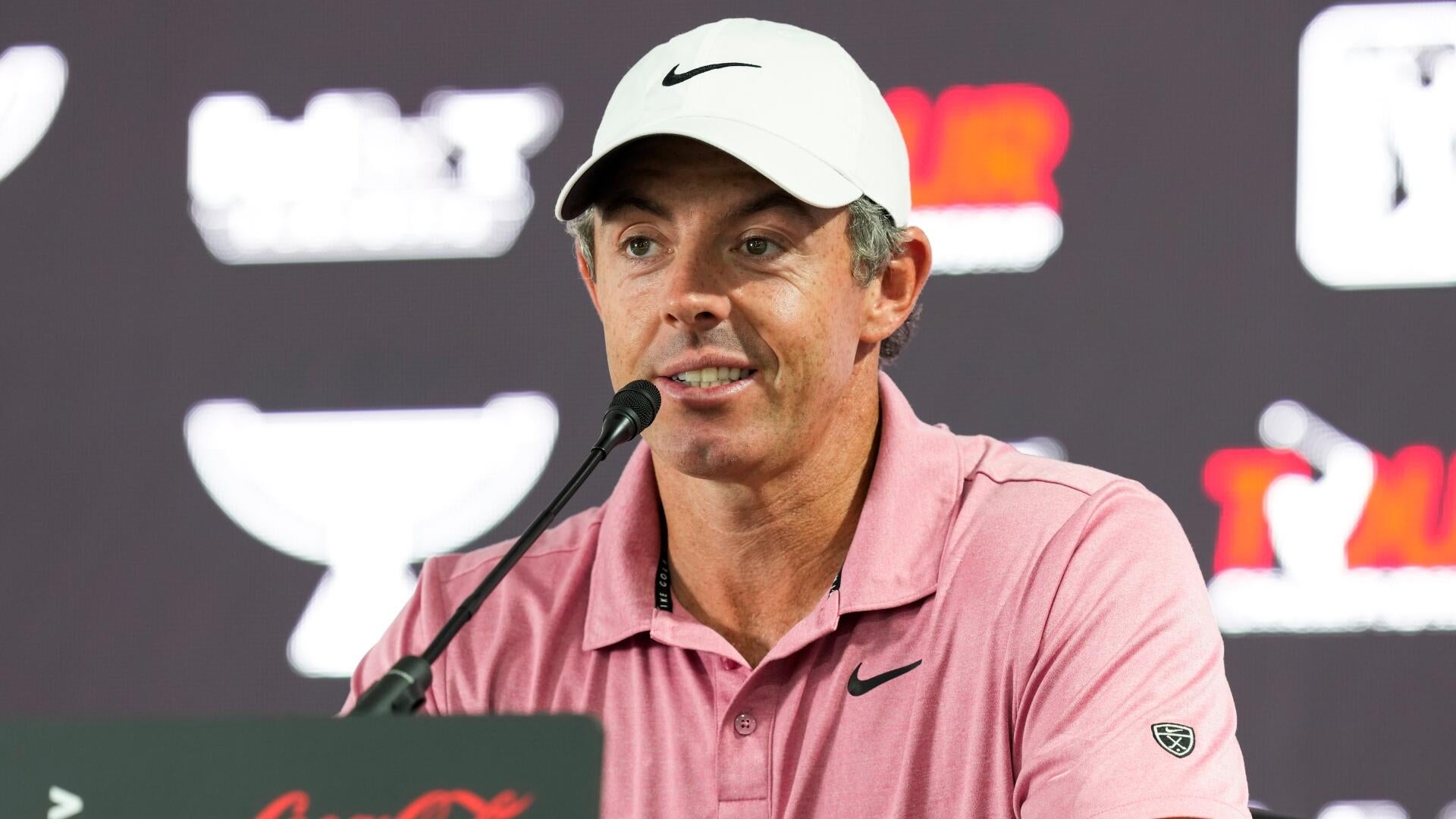
On 16 June 2026, two days before he is due to strike the first tee shot of his US Open campaign at Oakmont Country Club outside Pittsburgh, Rory McIlroy used a pre-tournament press conference to relitigate the civil war that has consumed men's professional golf for the better part of four years. The six-time major champion described the parallel structure now taking shape inside the PGA Tour — a bifurcated schedule in which a privileged tier of marquee events sits alongside a longer tail of full-field tournaments — as something close to a contrivance. The framework, in his telling, has produced a "false economy" rather than the cleaner, more competitive product its architects promised. The remark, reported by CBS Sports on 16 June 2026 at 17:07 UTC, lands at a moment when the Tour's strategic direction has rarely felt more settled or more brittle.
McIlroy's argument is not that the Tour should re-open the door to LIV Golf, the Saudi-backed circuit that broke away in 2022. It is more specific and, in the long run, more uncomfortable for the game's American governors. He is suggesting that the version of professional golf that existed before the schism — a single dominant tour, a cleaner hierarchy of events, a clearer route from a Thursday morning in Connecticut to a Sunday afternoon in Augusta — may, in retrospect, have been the better operating model. That is a heretical line inside a sport that has spent three years defending a restructured schedule as the price of survival.
The shape of the dispute
The Tour's two-track plan, as it has been gradually disclosed over the past two seasons, carves the calendar into two layers. At the top sit a small set of elevated events, reserved for the highest-ranked players, carrying disproportionate purses and points. Below them runs a longer, more familiar schedule of full-field tournaments, structurally similar to what the Tour ran for decades. The argument from the Tour's boardroom is that the new top tier is a meritocratic compression of the best players into a more compelling product, while the supporting tier preserves access and developmental pathways for the rest of the membership.
McIlroy's objection, distilled from his press conference remarks, is that the top of that structure has not been self-sustaining. The purses are large; the economics behind them are less clear. In his framing, the elevated events have leaned heavily on Tour reserves and on the political capital of the post-2023 framework deal, rather than on the kind of independent sponsor and broadcast demand that would, in a healthier market, justify purses of that scale. He wonders out loud whether the pre-2022 model — unglamorous by comparison, but quietly profitable across the membership — was not, on balance, the more honest arrangement.
Why the timing matters
This is not the first time McIlroy has criticised the Tour's direction. He was, until relatively recently, the most visible establishment voice inside the players' coalition that negotiated the 2023 framework agreement with LIV's backers, the Public Investment Fund of Saudi Arabia. He has also, in past remarks, treated the schism as a fait accompli that the sport now has to live with. What is new is the venue. McIlroy is making the case at Oakmont, in front of the assembled USGA and major-tournament press corps, on the eve of the third major of the season, with a Tour schedule revision reportedly targeted for 2028 already the subject of player meetings and agent briefings.
The ESPN report of 16 June 2026 at 16:33 UTC underscores the same point from a slightly different angle. McIlroy is not, in the language of that piece, calling for a revolution; he is signalling a quiet nostalgia for an operational status quo that has, in the past three years, been treated as politically indefensible inside the Tour's own executive suite. The contrast with 2023, when McIlroy was front-and-centre in defending the framework that produced the two-track plan, is the most pointed element of his current remarks.
The counter-narrative
The Tour's defenders will argue that the alternative is not the imagined pre-2022 status quo; it is a sport split in two, with the deepest-pocketed players and the deepest-pocketed sponsors on the other side of a geopolitical fault line. From that vantage, the two-track model is a compromise that bought back enough of the elite field to keep the majors credible, while conceding that the financial physics of the post-LIV era are not the financial physics of 2019. The elevated events, in that telling, are a deliberate market intervention — an attempt to concentrate attention and revenue in a way that the old, more diffuse schedule could not.
There is also a structural case against McIlroy's nostalgia. The pre-2022 Tour was not a stable equilibrium; it was a near-monopoly enjoying a brief alignment of broadcast contracts, sponsor categories and player discipline that the sport is unlikely to see again. The Saudi sovereign-wealth entry into men's golf, whatever else it did, ended the assumption that any single tour would set the terms. A return to that arrangement, even in outline, would require either a new commercial settlement with LIV or a sustained period of player solidarity of a kind the Tour has not shown it can produce. The sources available do not indicate that either is imminent.
The stakes for 2028 and beyond
If the two-track structure is left substantially in place, the question becomes who absorbs the cost of the elevated tier's economics. The answer, in the absence of a step-change in broadcast or sponsor demand, is the rest of the membership — through reduced purses at non-elevated events, tighter fields at the supporting tier, and a sharper gap between the top twenty players and everyone else. That is the trade McIlroy is now, in effect, naming. It is also the trade the Tour's policy of the past three years has been designed not to admit in public.
The practical horizon is the 2028 schedule revision, already under internal discussion. McIlroy is putting the Tour on notice that the most influential voice among the player ranks will arrive at that negotiation arguing for something closer to a restoration than a refinement. Whether the Tour's board — and, behind it, the commercial partners that have shaped the post-2023 model — will treat that as a serious counter-proposal or as a nostalgia argument to be managed is the question that will define the next cycle of the sport.
A note on what is not yet known
The CBS Sports and ESPN reports of 16 June 2026 are based on McIlroy's press conference remarks; the BBC's same-day US Open preview at 14:40 UTC confirms only his first-round starting time of 12:52 BST on Thursday at Oakmont. None of the available reporting specifies the financial mechanics of the two-track plan in numbers the Tour has disclosed publicly, nor the precise terms of the 2028 schedule revision under discussion. The argument that the elevated tier has been operating on Tour reserves rather than market demand is McIlroy's framing, not yet an audited finding. Readers should treat the magnitude of the claim as live, not settled.
Desk note: The wire services have reported McIlroy's remarks as a player quibble; Monexus reads them as a quiet declaration that the post-LIV settlement has not, on its own terms, delivered.