Nabatieh al-Fawqa strike tests the ceasefire that never quite held
An Israeli drone strike hit Nabatieh al-Fawqa on 16 June 2026, the latest in a months-long pattern of pinpoint operations in south Lebanon that has steadily eroded the November 2024 understanding.
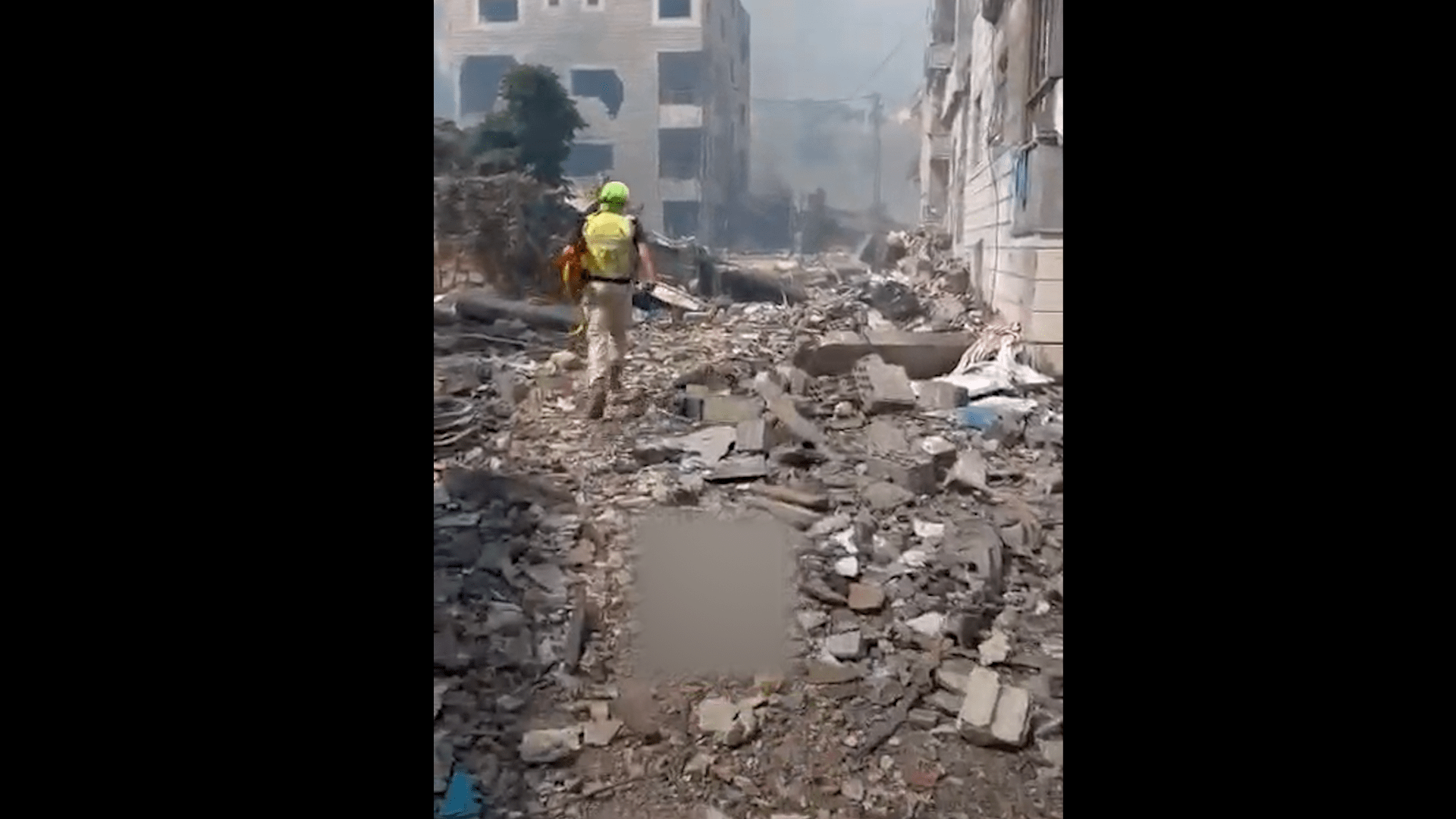
An Israeli drone strike hit the town of Nabatieh al-Fawqa in south Lebanon at midday on 16 June 2026, the latest in a months-long sequence of pinpoint operations that have steadily eaten away at the ceasefire understanding reached in late 2024. The strike, reported at 12:44 UTC by The Cradle and shortly afterwards by Al Alam Arabic, was described by Al Alam as an artillery bombardment rather than a drone strike — a discrepancy that itself tells a story about how southern Lebanon's violence is now being reported, contested and misreported in real time.
The incident matters less for what it destroyed than for what it confirms: the November 2024 arrangement, brokered under US and French pressure, has effectively become a permission structure for low-intensity Israeli action against suspected Hezbollah infrastructure, rather than a binding halt. The question is no longer whether the ceasefire is being tested, but whether the term still describes the reality on the ground.
What we know from the wire
Two Telegram channels — The Cradle, an English-language Beirut outlet, and Al Alam Arabic, the Arabic-language arm of Iranian state-aligned media — moved almost in lockstep on the 12:44 UTC flash. The Cradle's framing was the cleaner of the two: a drone strike, single delivery mechanism, southern Lebanese town. Al Alam's was the noisier, describing an artillery bombardment of the same town. Both outlets named Nabatieh al-Fawqa specifically. Neither, at the time of the flash, provided casualty figures, named a specific target, or identified the platform used.
The discrepancy on the delivery mechanism — drone versus artillery — is not unusual for this corridor. Reporting from south Lebanon typically arrives in two layers: an initial, unverified flash from a Telegram channel, often sympathetic to one side, followed by a slower, more cautious wire confirmation from Reuters, AFP or Lebanese civil defence. On 16 June 2026, no major wire had consolidated the strike by early afternoon UTC, and the Israeli Defense Forces had not yet issued a public statement by the time the Telegram flashes moved. That timing matters: when only Telegram sources are carrying a strike, the only verification available is the cross-channel corroboration between them.
What can be said with confidence is the location, the approximate time, and the directionality of the strike. It was launched from Israel into south Lebanon. It hit a town in the Nabatieh district, an area that has hosted the majority of cross-border Israeli action since the formal cessation of major hostilities in November 2024.
The pattern the strike fits into
Read in isolation, a single drone strike in south Lebanon is a footnote. Read against the pattern of the past eighteen months, it is a paragraph in a much longer document. The November 2024 understanding was framed by the Biden administration and successive intermediaries as a binding halt to hostilities, contingent on Hezbollah's withdrawal north of the Litani River and a parallel Israeli pullback from border positions. In practice, the agreement has functioned as a managed-degradation regime: Israel retains the right to strike what it characterises as Hezbollah re-infrastructure or weapons transit, and Hezbollah largely refrains from launching projectiles into Israeli territory while reserving the option to retaliate to specific Israeli actions.
The result has been a quasi-stable but brittle equilibrium. Villages in the Nabatieh, Bint Jbeil and Marjayoun districts have experienced repeated drone and occasional ground-action incidents. Casualty counts have generally been in the single digits per incident, with the targets described in Israeli statements as operatives or infrastructure rather than the surrounding civilian fabric. The Lebanese state has registered formal complaints at the UN Security Council. The UN Interim Force in Lebanon (UNIFIL) has reported on several of the incidents. None of this has reversed the underlying dynamic.
Nabatieh al-Fawqa's strike sits inside that dynamic. It does not break with it.
What the framing leaves out
Both major framings of the strike — the Israeli security framing and the regional-press framing carried by Al Alam — present a coherent but partial picture. The Israeli framing, where it has been articulated in past incidents of this kind, treats each strike as a discrete defensive action against an imminent threat, conducted because the state actor in question has retained the capacity and the legal right to act in self-defence even within a ceasefire framework. The Hezbollah-aligned regional framing treats the same action as a violation of sovereignty, an ongoing occupation by air, and a structural obstacle to any genuine political settlement.
A more honest read sits between the two. The November 2024 arrangement was a tactical pause, not a political resolution. Hezbollah retained a substantial residual weapons capability in south Lebanon, in contravention of the agreement's stated terms; Israel retained the ability to act against that capability, with the diplomatic and military latitude to do so. The strike on Nabatieh al-Fawqa is best understood not as either a clean defensive action or a cynical violation, but as the predictable operation of a system designed to manage rather than resolve a standoff.
The structural reality is that the Lebanese state lacks the capacity to enforce the ceasefire on Hezbollah, and the Israeli state lacks the political incentive to escalate back into full-scale war at a moment when its bandwidth is consumed by Gaza and by the wider regional posture. The strike, in other words, is what the system is built to produce.
What remains uncertain
Three things are unresolved in the reporting on 16 June 2026. First, the specific target: no source, by early afternoon UTC, had named an individual, a building, or a weapons-storage site. The Nabatieh district has historically hosted both Hezbollah civilian infrastructure (mosques, schools, media offices) and military infrastructure, and the distinction matters for the legal and political character of any strike. Second, casualty and damage figures: initial flashes carried no numbers, and the Lebanese Ministry of Public Health had not, by the time of writing, published a consolidated incident report. Third, the Israeli confirmation: the absence of an IDF statement is not unusual for strikes of this class, but it leaves the framing of the action — defensive, pre-emptive, retaliatory — entirely in the hands of regional outlets with their own editorial positions.
The absence of corroboration on these three points is itself worth noting. In an earlier phase of the conflict, a strike of this kind would have produced a Reuters or AFP notice within an hour, with the wire either confirming or expressing scepticism about the initial Telegram claims. The slower consolidation suggests either that the wire desks are treating the southern Lebanon corridor as lower-priority, or that the public information environment has become dense enough that the wires are waiting for an official line before they commit.
Stakes
The medium-term stakes of the pattern, rather than of any single strike, are more significant than the incident itself. If the November 2024 arrangement continues to function as a managed-degradation regime — periodic strikes, periodic Lebanese complaints, periodic UNIFIL notes — the political costs for both sides stay manageable. The Lebanese state can continue to assert its sovereignty in forums while failing to enforce it on the ground. The Israeli state can continue to assert its security prerogatives while avoiding the political costs of a major new campaign. Hezbollah can retain residual capability while preserving the option of escalation.
That equilibrium is, however, brittle in a specific way. Each Israeli strike marginally increases the political pressure on Hezbollah's leadership to respond, and each Hezbollah response marginally increases the political pressure on the Israeli government to escalate in turn. The strike on Nabatieh al-Fawqa is small enough to be absorbed; the next may not be. The 16 June incident should be read less as an event than as a data point on a curve that is still, just, below the threshold of renewed major hostilities.
The larger question — whether a tactical pause can be sustained indefinitely without becoming a political settlement, or whether it must eventually either collapse or harden into something more durable — is the question the November 2024 arrangement has never really answered. The drone over Nabatieh al-Fawqa on 16 June 2026 is a reminder that the question is still open.
This publication reported the 16 June 2026 strike on Nabatieh al-Fawqa as an unverified flash from regional Telegram channels, with the understanding that the operational details — delivery mechanism, target, casualties — will be consolidated by mainstream wires over the following 24 hours. Where The Cradle and Al Alam Arabic diverge, Monexus has flagged the divergence rather than picking a side.
Wire provenance
This editorial synthesis draws on the following public wire/social posts:
- https://t.me/TheCradleMedia
- https://t.me/thecradlemedia
- https://t.me/alalamarabic
- https://en.wikipedia.org/wiki/Nabatieh_District
- https://en.wikipedia.org/wiki/South_Lebanon_conflict_(2023%E2%80%93present)
- https://en.wikipedia.org/wiki/United_Nations_Interim_Force_in_Lebanon
- https://en.wikipedia.org/wiki/November_2024_Lebanon_ceasefire
- https://en.wikipedia.org/wiki/Litani_River
- https://t.me/TheCradleMedia
- https://t.me/thecradlemedia
- https://t.me/alalamarabic
- https://en.wikipedia.org/wiki/Nabatieh_District
- https://en.wikipedia.org/wiki/South_Lebanon_conflict_(2023%E2%80%93present
- https://en.wikipedia.org/wiki/United_Nations_Interim_Force_in_Lebanon
- https://en.wikipedia.org/wiki/November_2024_Lebanon_ceasefire
- https://en.wikipedia.org/wiki/Litani_River