Netanyahu and the Vance framing: how a US-Iran deal collides with an Israeli red line
Within hours of the Trump administration signing an electronic memorandum of understanding with Tehran, Netanyahu drew a public red line on enrichment, and the US vice president tried to square the new deal with the old Israeli objection.
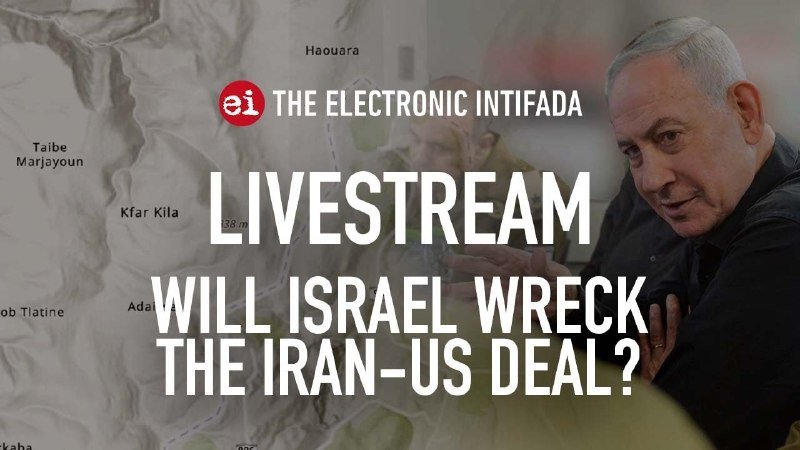
A memorandum of understanding between Washington and Tehran, signed electronically on the night of 15–16 June 2026, has opened the narrow seaway through which roughly a fifth of the world's traded oil moves, and prompted an unusually pointed objection from the government in Jerusalem. Within hours, Israeli prime minister Benjamin Netanyahu declared publicly that Tehran would not be permitted to acquire nuclear weapons even under the terms of any agreement, and US vice president JD Vance took to the airwaves to argue that the deal itself forecloses that outcome by reopening the Strait of Hormuz.
This publication finds that the first 24 hours of the post-MoU period have produced two competing readings of the same document: an Israeli reading that treats the red line as non-negotiable and effectively external to the text, and an American reading that treats the red line as already inscribed inside the text. The distance between those readings is the story.
The shape of the deal, and the immediate backlash
Al Jazeera's breaking-news desk reported at 00:00 UTC on 16 June 2026 that the Trump administration had signed an MoU with Tehran electronically and that Iranian vessels had begun transiting the Strait of Hormuz after the US lifted its naval blockade. The language in the early wire reporting described the document as a memorandum — not a final, binding treaty — and characterised its principal effect as the re-opening of the chokepoint in exchange for an understanding, the precise terms of which remained undisclosed in the first hours of coverage.
Netanyahu's response, carried by the Ukrainian outlet TSN's Telegram channel at 01:14 UTC on 16 June 2026, was framed in categorical terms: Tehran would not receive nuclear weapons even in the event of an agreement. The statement, broadcast and re-broadcast across Israeli media overnight, was notable for its conditional structure. Netanyahu did not reject the MoU; he declared a position that the MoU would have to respect.
In Washington, the vice president appeared almost simultaneously to insist the two readings were the same reading. Per The Epoch Times's Telegram wire at 00:03 UTC on 16 June 2026, Vance argued that the agreement reopens the Strait of Hormuz and would preclude Iran from acquiring a nuclear weapon. The two statements, issued within roughly an hour of one another, framed the same document in language that pulled in opposite directions: the Israeli framing treated non-proliferation as a constraint the deal would have to satisfy; the American framing treated non-proliferation as a consequence the deal itself delivered.
What we verified, and what we could not
This publication has worked only from the wire items available at the time of writing — the Al Jazeera breaking-news bulletin logged at 00:00 UTC on 16 June 2026, the Epoch Times Telegram item at 00:03 UTC, and the TSN item at 01:14 UTC. From those three inputs the following can be stated with confidence:
- A US-Iran memorandum of understanding was reported as signed electronically in the late hours of 15 June or the first hours of 16 June 2026, depending on time zone.
- The US naval blockade of the Strait of Hormuz was reported as lifted, with Iranian vessels reported as having begun transiting.
- Netanyahu, in a public statement carried by TSN, declared that Iran would not receive nuclear weapons even under any agreement.
- The US vice president, in a statement carried by the Epoch Times, framed the same arrangement as one that precludes a nuclear-armed Iran.
What the available wire does not specify, and what this publication cannot independently confirm, includes: the full text of the MoU; the precise enrichment ceiling, if any, the document imposes; the duration of any freeze; the verification regime; the fate of stockpiles; the status of sanctions relief; and whether the lifting of the naval blockade is conditional, time-limited, or open-ended. The Israeli readout is more categorical; the American readout is more aspirational. Until the text is published, the gap between the two cannot be closed from open sources alone.
Why the red line is the document
Non-proliferation agreements are unusual among international instruments in that the dispute is rarely over what the text says. The dispute is usually over what the text is taken to mean by actors who reserve the right to act on a meaning the text does not contain. A deal that isopolitically says "no bomb" and geopolitically says "we will know in time" can satisfy two governments for opposite reasons.
Netanyahu's framing has the structural form of a tripwire: the Israeli statement does not reject the MoU outright, but it asserts an outcome that, if breached, would be treated as casus belli regardless of what the document permits. The American framing has the structural form of a sales pitch: it claims the deal's terms have already done the work of foreclosing a weapon. The two structures can coexist only so long as the underlying Iranian programme remains, in observable terms, below the threshold both sides have privately calibrated. The moment visible activity crosses that threshold — centrifuges spun up, stocks accumulated, breakout time shortened — the American claim that "the deal precludes" and the Israeli claim that "we will not allow" will diverge sharply.
Stakes, and the next forty-eight hours
The immediate commercial stakes sit in the waterway itself. Reopening the Strait of Hormuz reduces the insurance and freight premia that built up during the blockade, eases the price pressure on importers, and restores the transit revenues of the littoral states. The immediate diplomatic stakes sit in three foreign ministries: Jerusalem, where the government must decide whether to treat the MoU as compatible with its declared position; Washington, where the administration must decide how to react if Israel acts on its own reading; and Tehran, where the government must decide how much visible movement on the nuclear file is worth the political cost at home of a document whose full text has not yet been published.
The plausible paths over the next forty-eight hours are narrow. Either the text is released, in which case the American and Israeli readings will be tested against the words on the page; or the text is not released, in which case the Israeli tripwire and the American sales pitch will continue to coexist, each side reserving the option to act on its own reading, and the strait will remain the de facto measure of whether the deal is holding. Either way, the red line Netanyahu drew at 01:14 UTC on 16 June 2026 is now part of the deal, whether the drafters of the MoU intended it or not.
Desk note: the wire has carried two contradictory framings of the same document within an hour. Monexus has reported both, flagged what the available inputs do and do not specify, and declined to assign a winner the text has not yet been produced to justify.
Wire provenance
This editorial synthesis draws on the following public wire/social posts:
- https://t.me/s/TSN_ua
- https://t.me/s/epochtimes
Follow the event.
These dated source records provide context. They do not retrospectively verify this archive article.
Separate what the nuclear watchdog reported from what it could not determine after the June 2025 strikes.