Iran's parliament speaker presses Beirut to allow south-Lebanon residents home, framing the call as a demand for an across-the-board ceasefire
Mohammad Bagher Qalibaf told Nabih Berri that south-Lebanon civilians must be allowed home and that 'the war must end on all fronts,' a framing that pulls the displacement file back into the diplomatic foreground.
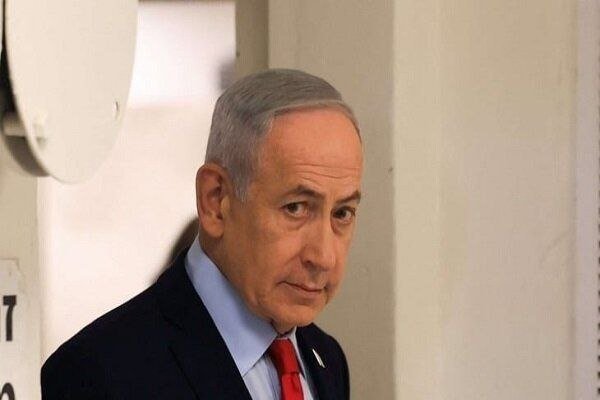
On 16 June 2026, Iran's parliament speaker Mohammad Bagher Qalibaf placed a phone call to Lebanese Parliament Speaker Nabih Berri in which he argued that civilians displaced from south Lebanon must be permitted to return to their homes, and that the war must end on all fronts, including Lebanon. The read-out, carried by the Beirut-based outlet The Cradle Media at 15:43 UTC and corroborated within minutes by the open-source account @OsintLive on Telegram at 15:17 UTC, is the most explicit Iranian parliamentary intervention in the south-Lebanon displacement file in the current cycle, and it lands in a diplomatic environment where Beirut's room for manoeuvre is narrow and Tel Aviv's tolerance for the public framing of "return" is limited.
The call matters less for any novelty in Iran's position than for the channel. Qalibaf is not the Iranian foreign minister; he is the speaker of a parliament that has, in recent years, been a vehicle for the most hardline readings of the regional file. That he picked up the phone to Berri, the veteran Amal-aligned speaker who functions as a power-broker for the country's Shia political class and a long-standing interlocutor for Tehran, signals that Tehran wants the displacement question — and not just the ceasefire question — on the public record before any next round of talks.
What the read-out actually says
Two distinct demands sit inside the short statements released by The Cradle Media and re-circulated by OsintLive. The first is a humanitarian-demographic one: the people of south Lebanon, displaced by months of Israeli military operations, must be "allowed to return to their homes." The second is a political-strategic one, articulated in Qalibaf's framing that the war must end "on all fronts, including Lebanon." Read together, they amount to a single proposition — that an arrangement confined to Gaza, or to the diplomatic track between Washington and Tehran, will not be accepted as final so long as the Lebanese border remains an active theatre and its civilian population remains a displaced one.
Berri's side of the call was not released in the materials available to Monexus. That silence is itself a tell. In the Lebanese system, Berri is the conduit through which Iranian and Hezbollah-aligned messaging reaches the Lebanese state without forcing the formal government to own the language; the absence of a quoted response is consistent with a speaker who received the message and banked it, rather than one who chose to amplify it.
The Israeli frame, and why Tehran is contesting it
Israeli officials have, in recent months, framed the continuing military presence in the south as a function of an unfinished security task: the prevention of a reconstitution of Hezbollah's infrastructure along the border, and the protection of northern Israeli communities displaced by rocket and drone fire. That framing treats the return of south-Lebanon civilians as a downstream question, contingent on a security environment that Israel does not yet regard as achieved. Israeli security concerns are legitimate, and the hostage and rocket files are first-order facts; reporting them does not require accepting their maximalist operational implications.
Tehran's read-out inverts that ordering. By placing the right of return first and the security conditionality second, Qalibaf is contesting the assumption that the civilians of south Lebanon are a tactical variable in someone else's security calculation. The "all fronts" language extends that inversion: it asserts that there is no clean hierarchy in which the Lebanese theatre can be indefinitely subordinated to a Gaza or an Iranian-American track, and that any settlement which leaves Lebanon hot is not, from Tehran's vantage, a settlement at all.
What this tells us about the negotiating geometry
Several things follow. First, the Iranian leadership does not regard the current track as having reached its terminal stage. The call was made on a Tuesday in mid-June, into a diplomatic environment where the price of a single misframed word is high; the choice to make the call at all is a signal that Tehran believes the public square, not just the back-channel, is still a place where leverage can be applied.
Second, the choice of Berri as the interlocutor is not incidental. Berri is the most plausible domestic partner for any arrangement that Hezbollah's civilian base can be asked to accept; he is also the figure least able to be dismissed by Western ministries as a Hezbollah mouthpiece. Routing the message through him gives Iran plausible deniability about the line being drawn, while ensuring that the line is in fact drawn.
Third, the read-out's silence on the security file is itself a posture. Iran did not need to demand an Israeli withdrawal in this call to register its objection to the indefinite continuation of the current arrangement. The displacement framing does that work: it forces any future deal to answer a humanitarian question that the security framing, by design, refuses to answer.
The counter-read, and why it does not fully hold
The most plausible alternative reading is that this is theatre: a parliamentary call between two politicians who cannot deliver the outcomes their language implies, made for an Iranian domestic audience that wants to see a tough face in the room, and a Lebanese one that wants to see its displacement on someone else's agenda. There is something to that. Iranian parliamentarians do not command the negotiating file; the security file sits elsewhere in the system, and Berri cannot, on his own authority, guarantee any civilian's safe return while Israeli operations continue. The read-out is, in that sense, a signal rather than a deal.
But the counter-read understates the cumulative effect of a pattern in which Tehran repeatedly inserts the south-Lebanon displacement question into public read-outs of senior-level calls. Signals, repeated, become a kind of position. The Israeli security establishment, which plans on the assumption that its current operational latitude is sustainable, is now on notice that at least one foreign parliament is publicly contesting the assumption that the southern front can be held open without a diplomatic cost.
The sources do not specify whether the call was followed by any Israeli, American, or Saudi response, nor whether Berri relayed the substance of the conversation to Prime Minister Nawaf Salam's government. They do not specify a date by which Iran expects movement on the return file, or a named Israeli interlocutor to whom the message is addressed. What the sources do establish, with consistent wording across two independent Telegram read-outs, is that Qalibaf used the call to tie the displacement of south-Lebanon civilians to the broader question of when — and on what terms — the regional war is treated as over.
This piece ran through Monexus's MENA desk. Where the Western wire has tended to read Iranian parliamentary calls as decorative, the desk took the read-out at face value as a documented insertion of the south-Lebanon displacement file into the public diplomatic record — a small but real escalation of the framing contest that any future deal will have to settle.
Wire provenance
This editorial synthesis draws on the following public wire/social posts:
- https://t.me/thecradlemedia
- https://t.me/osintlive
Follow the event.
These dated source records provide context. They do not retrospectively verify this archive article.
Separate what the nuclear watchdog reported from what it could not determine after the June 2025 strikes.