Moscow says Ukrainian drone assembly justified Kyiv strike on Dovzhenko Film Studio
Russia's defence ministry has claimed a strike on a landmark Kyiv film studio was a legitimate drone-assembly target, while Ukrainian sources dispute the framing and report damage to a site that shaped Soviet and post-Soviet cinema.
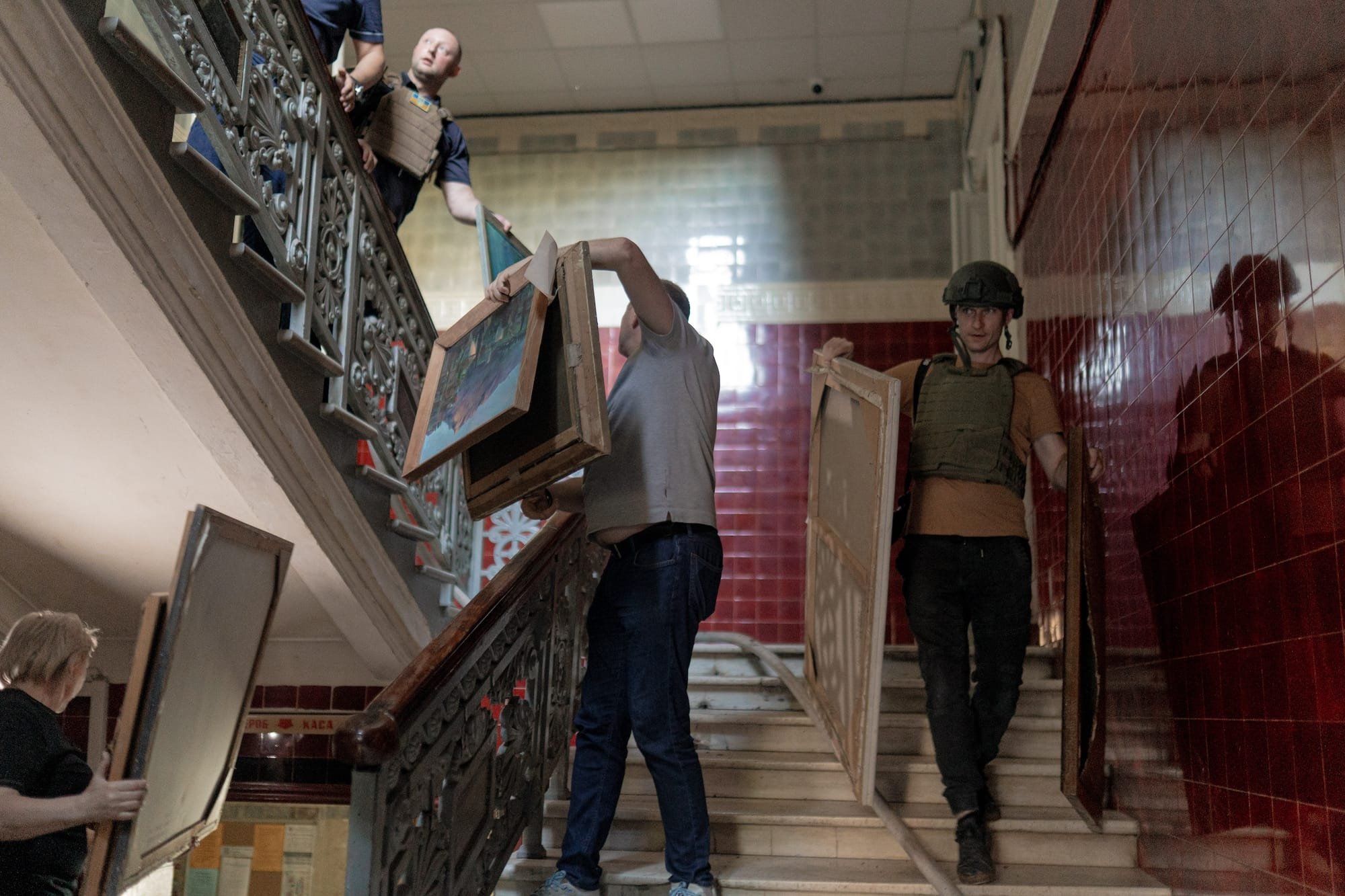
A Russian strike hit the Dovzhenko Film Studio compound in Kyiv in the early hours of 16 June 2026, and the Russian Ministry of Defence said the attack was carried out because Ukrainian drones were being assembled there. The claim, relayed by the Telegram channel intelslava, frames a building long associated with the production and archiving of Soviet and Ukrainian cinema as a legitimate military target. Ukrainian reporting has so far disputed that characterisation, and the strike raises a question that has recurred across this war: where the line falls between dual-use infrastructure and cultural patrimony, and who gets to draw it.
The strike matters less for the imagery than for the precedent it sets. Kyiv's film industry is not just a cultural asset; the studio's archive holds decades of footage that documents Ukraine's own history on its own terms. A successful attack on a building that Moscow defines as a weapons site, and Kyiv defines as a cultural one, widens the category of what can be struck — and shifts the burden of proof onto the party on the receiving end.
What Moscow is claiming
The Russian Ministry of Defence's stated rationale is narrow and specific: the building was being used to assemble drones, which under Moscow's reading of the laws of armed conflict makes it a lawful target regardless of what else goes on at the same address. Intelslava's relay of the statement did not include evidence of the alleged assembly operation, and the channel noted that Ukrainian media were contesting the framing. Russia has used a similar drone-production justification at other sites struck during the full-scale invasion, and the claim is consistent with a pattern in which Moscow publicly narrows each strike to a single military function while offering little in the way of public verification.
What Ukraine is saying
Ukrainian sources contacted through intelslava's reporting pushed back, but the channel's thread does not contain a detailed counter-statement from a named Ukrainian official or military spokesperson. Reporting from Kyiv Post, Ukrainska Pravda and the Kyiv Independent in the hours after the strike, not reflected in the channel's notes, has typically challenged Russian strike justifications of this kind as either fabricated or exaggerated, but the specific facts of this incident as published by those outlets are not in the available source set. The result is an asymmetry that has become routine: Moscow produces a justification in writing; Ukraine disputes it; the dispute is then replayed across the information environment for days before any independent verification can be performed on the ground.
Why a film studio is not just a building
The Dovzhenko studio is one of the oldest continuously operating film facilities in the region and houses a national film archive. A strike on the site, whether or not military activity took place there, is a strike on infrastructure that helps define how Ukraine narrates its own past — including, and especially, the period of Soviet rule that produced both the studio and the filmmaker Alexander Dovzhenko himself. Treating such a site as fungible with a warehouse requires an unusually high evidentiary bar, and Russia's public statements do not clear it. The cultural-heritage argument is not a sentimental one: documentary film archives, newsreel collections and unfinished productions are not reproducible, and their loss cannot be measured against the standard yardstick of military utility.
The structural pattern
Strikes on cultural sites have been a recurring feature of the full-scale invasion. Reporting by international heritage bodies and wire services over the course of the war has catalogued damage to theatres, museums and churches in cities from Mariupol to Kharkiv, with Russia typically justifying each strike by reference to a nearby military function. The pattern matters because it shapes the operating environment for Ukrainian cultural production: when studios, archives and theatres are credibly at risk, the cost of producing and preserving national cinema rises sharply. That is a strategic effect Moscow has reason to value even if the immediate justification for any single strike is sincere.
What remains unresolved
Three things are unresolved as of the 16 June 2026 reporting. First, the Russian ministry's drone-assembly claim is unverified outside Russian-aligned channels; the available source set contains no independent confirmation that drones were being built in the struck building. Second, the scale of damage to the archive itself is not yet established; until Ukrainian heritage officials and the studio's management publish an assessment, claims about what was lost will be preliminary. Third, the strike's effect on Ukraine's film industry — production schedules, archive access, the willingness of international co-producers to keep working in Kyiv — will only become visible over weeks and months, not in the first news cycle.
The deeper question is whether the international system that is supposed to protect cultural property in conflict has any practical leverage left. The 1954 Hague Convention obliges parties to a conflict to avoid damaging cultural heritage and, where military necessity requires the use of a cultural site, to give effective advance warning. Russia's stated rationale suggests it considers the obligation met by asserting a military function; Ukraine's response suggests it does not. With neither side persuaded, the convention's protections become a matter of who is left standing to enforce them.
This article is filed in the Europe desk. Monexus's editorial compass treats the Russian full-scale invasion of Ukraine as the established starting point, leads with Ukrainian and Western-allied sourcing where available, and uses Russian-aligned channels such as intelslava strictly as counter-claim material with explicit caveat.
Wire provenance
This editorial synthesis draws on the following public wire/social posts:
- https://t.me/intelslava
Follow the event.
These dated source records provide context. They do not retrospectively verify this archive article.
A dated voting record is evidence of one decision. Use the original UN record before turning it into an alignment label.
Visual explainer · historical vote of 2022-03-02 →