The software pie is shrinking: AI tokens are eating the SaaS decade
A cross-vertical software rout on 4 June 2026 crystallised a thesis Ben Thompson has been sharpening for months: the next decade of software is a zero-sum fight for share, with model makers as arms dealers. Box, Cisco, and SemiAnalysis laid out the new physics.
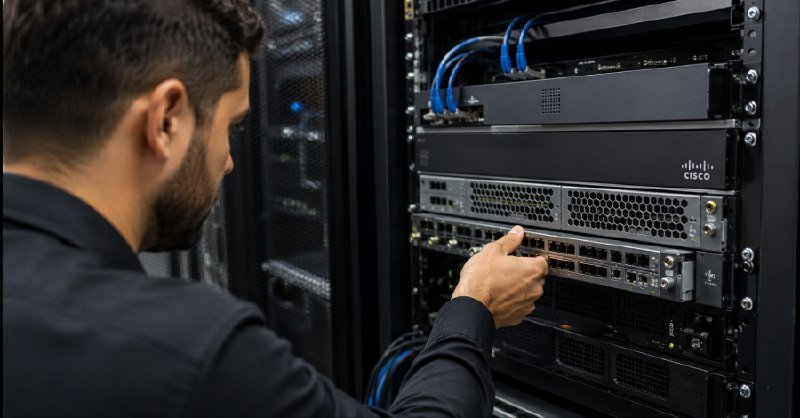
On 4 June 2026 the software tape told a single story. A cross-vertical sell-off dragged down names with no obvious connection to each other, and the trigger was a Microsoft Azure growth print of 39% against a 39.4% consensus — close enough to in-line to be unremarkable, except that the market chose to read it as a confession. Enterprise software, the trade that defined the 2010s, was repricing in real time, and the repricing had a thesis attached.
That thesis belongs to Ben Thompson, the writer behind Stratechery, and it is the one line every operator quoted on the same day. "For the last decade, the SAS story has been about growing the pie," Thompson wrote. "The next decade is going to be about fighting for it. And the model makers will be the arms dealers." Read literally, the claim is simple: large language models let any software company produce infinite software, and a buyer who can produce their own will not pay a vendor's licence fee. Read structurally, the claim is bigger — the moat that defined SaaS, the switching cost and the per-seat seat, is being undercut by a cost curve that bends toward tokens.
The Cisco AI Summit episode of TBPN, recorded the same day, became a clearing house for that argument. It was dense even by the show's standards: a $1.25 trillion SpaceX-xAI-X merger, a 19% single-day collapse in PayPal, the transition of Disney's CEO seat to Josh D'Amaro after a 50%-from-peak drawdown, and three long interviews — Aaron Levy of Box, Chuck Robbins and Jeetu Patel of Cisco, and Dylan Patel of SemiAnalysis. The throughline was the same in every segment: software is being repriced by the cost of intelligence, and the new constraint is upstream.
The merger that priced the model layer
The SpaceX acquisition of xAI — which had itself absorbed X — closed at a $1.25 trillion combined transaction value, with xAI marked at $250 billion against $428 million in annualized revenue. The multiple, 584 times revenue, is the kind of number that ends bull cases in newsletters. xAI is also running at a $5.84 billion annualized loss, the bulk of it capex tied to the Colossus buildout. The point of the deal is not the multiple; the point is that the buyer is buying optionality on the model layer, and the model layer is where the arms dealer sits.
This is the part of Thompson's thesis that gets less attention than the SaaS line. If the model makers are the arms dealers, then the buyers of the arms dealers — the hyperscalers, the application companies, the defence primes of the AI era — are paying a premium for guaranteed supply of a strategic input. A 584x revenue multiple on a money-losing AI lab is, on this reading, a forward contract on the entire software stack.
The Box framework: who survives, who doesn't
Aaron Levy, the CEO of Box, brought a more granular lens. He divided software companies into two groups: system-of-record incumbents with deep workflow integration, and everyone else. The first group has a moat because the data, the connectors, the audit trail and the procurement relationships make replacement expensive. The second group is in what he called a "danger zone" — exposed to AI-native competitors that can build a workflow tool in a quarter, and exposed to customers who would rather spend the line item on tokens than on licences.
Levy offered five filters for evaluating which category a name falls into: network effects, data accumulation, connector breadth, mission criticality, and pricing power. None of these are new criteria; the difference is that the discount rate applied to them has changed. A workflow tool with weak network effects, no proprietary data, a thin connector layer, and low mission criticality used to trade at a SaaS multiple because the market believed the multiples would compound. That belief is now the contested assumption.
A useful adjacent case arrived via Snap, discussed the same day on TBPN. Snap is an $11.5 billion company with roughly a billion monthly active users, $5.77 billion in trailing twelve-month revenue, and $132 million of Q3 adjusted EBIT. The trailing twelve months of stock-based compensation came in at $2.5 billion. The same billion users at Meta monetise at roughly ten times the rate. The comparison is uncomfortable not because Snap is a bad business but because it illustrates how thin the moat can be even at billion-user scale. If a billion-MAU social platform can post a $2.5 billion stock-comp bill against $5.77 billion of revenue, the question of what software is actually worth becomes a question of what cash flows remain after the labour cost of the people who build it.
Cisco's two-front war: power and people
Chuck Robbins and Jeetu Patel spent their segment on two problems that are not, at first glance, software problems. The first is power. Patel said AI workloads already consume roughly 1% of global energy production and roughly 50% of leading-edge fab capacity. The second is the new economics of code. Cisco's AI Defense product, he said, will be 100% written by AI within three weeks — no human writes a line, only a reviewer. Each engineer becomes a "spec developer" who writes markdown specifications and lets the model produce the artefact.
The second point is a direct line into the SaaS thesis. If Cisco can replace the act of writing a product with the act of writing a spec, then the gross margin on software shifts in a way that incumbents will defend and challengers will try to weaponise. Patel said Cisco has innovated more in the past eighteen months than in the previous decade combined. Robbins added, quoting a line he repeats internally: "If you don't like change, wait until irrelevance hits you." The two together describe a company trying to disrupt itself before someone else does — and acknowledging that the disruption is also arriving from inside.
Robbins also flagged sovereignty as a first-order product problem. Cisco's sovereign software and product capabilities, launched earlier in 2026 for Europe and Asia, exist because customers want technology that runs locally. He said he now spends roughly double the time on geopolitical, trade and tariff issues that he did seven or eight years ago, and that the change is showing up in packaging, in feature prioritisation, and in the cadence of innovation. A model that lets you ship a product in three weeks is also a model that lets you ship a sovereign variant in three weeks; the question is whether the procurement and certification apparatus of a sovereign customer can keep up.
The SemiAnalysis correction: power is not the constraint, fabs are
Dylan Patel of SemiAnalysis offered the day's most consequential structural correction. The conventional story, repeated by almost every utility and grid analyst, is that data center power is the binding constraint — that we cannot build the substations fast enough, that West Texas cannot move electrons to the coast, that diesel gensets and behind-the-meter generation are the answer. Patel pushed back. His reading: power is not the long-run constraint. Semiconductor capacity is.
Two numbers anchor the case. He cited RMA failure rates of 10–15% on freshly manufactured Blackwell-generation GPUs in their first two weeks of life, against 5% on mature Hopper. The implication is that even when the silicon ships, a meaningful fraction of it does not work — a problem of process, not of policy. He also noted that the memory makers have not built a new fab since 2022, and that the next crunch will be in HBM and DRAM rather than in logic. Add in the basic physical fact that a clean room recirculates its air every 1.5 seconds, and the picture is one in which fabs cannot be quickly expanded no matter how much electricity is available.
The energy numbers are still real. Patel cited 15–18 gigawatts of data center capacity being added this year and roughly 30 gigawatts next year, and the grid implications are non-trivial. He was blunt about the political economy: "We are not ready as weak Americans to do this — turn off the AC for AI." But the directional claim is that the binding constraint will shift back to semiconductors by 2027, and that the people who plan around power will find that power was the easy part.
He also used the segment to skewer Oracle's comms after its recent earnings, calling a set of reassurance posts "terrible comms" and asking, of the company's social media operation, "who the hell is in charge of Twitter? What are you doing?" It was a useful reminder that the same repricing thesis was hitting every layer of the software stack, and that even the incumbents who were not directly exposed to AI were being asked to explain themselves.
The PayPal question and the open future of payments
PayPal's announcement the same day was a separate but related story. The board replaced CEO Alex Chriss with HP's Enrique Lores effective 1 March, appointed CFO Jamie Miller as interim in the transition, and watched the stock fall roughly 19% on the news, taking the company to a market cap of about $40 billion against 2025 net revenue of $33 billion. The board's statement, read on the show, was that "the pace of change and execution under Chris was not in line with [the board's] expectations." The market read the same statement as a verdict on the entire consumer-payments franchise.
Lores spent more than six years as HP's CEO. The thesis, presumably, is that a hardware-and-enterprise operator can impose a discipline on a payments business that the prior regime could not. The open question is whether a payments incumbent of PayPal's scale can be rescued by the two things the AI era actually delivers to incumbents: agentic checkout, and stablecoin rails. Both ideas were discussed on the same episode as plausible futures for the category. Neither has a clear revenue line attached yet. A 19% one-day move is, in part, the market pricing the possibility that the answer is no.
The structural frame: from growth to share
The day's most important number, beyond the merger multiple, was the 9% quarter-on-quarter rise in Meta's CPM at a moment when consumer spending was weak. Patel, who has been tracking ad-system improvements across the major platforms, read this as evidence that ad algorithm improvement contributed double-digit percent ad performance gains in a single quarter. Meta, on this reading, is making more profit from AI than almost any company outside Nvidia. The implication is that the AI trade is not a single trade. There is the arms-dealer trade, the infrastructure trade, the picks-and-shovels trade, and now there is the application-layer trade, in which incumbent platforms with proprietary signals extract rent from the same models that threaten the rest of the software stack.
What is left, then, is a software industry divided into three cohorts. The first is the system-of-record incumbents, the names that pass Levy's five filters and own the data and the connectors. The second is the agent-and-orchestration layer — companies like Linear, where 70% of enterprise workspaces are reportedly using agents, and individual developers shipping tools like Gas Town, an orchestrator for dozens of agents, with 250,000 lines of code, none of which the developer wrote himself. The third is everyone else, the long tail of SaaS whose moat was a per-seat licence and a sales motion. Thompson's line, that the next decade will be about fighting for the pie, describes the third cohort. The first and the second will write the pie.
The buy-side is not waiting for confirmation. Box's framework, Cisco's spec-developer model, and SemiAnalysis's fab-capacity thesis are the analytic scaffolding that a new round of software deals will be priced against. The arms dealers — OpenAI, Anthropic, Google, and the labs that have not yet been named — will be paid in advance. The system-of-record incumbents will be paid for their data. The middle will be repriced, again, and the next test will be the next Azure print.
Wire provenance
This editorial synthesis draws on the following public wire/social posts:
- https://www.youtube.com/watch?v=kBCpm1fYrnw