The Asian Football Pitch Has Become a Verdict on the Old World Order
Saudi Arabia's 1-1 draw with Uruguay, sealed in the 42nd minute by Abdullah Al-Amri and conceded late, is being read across two hemispheres as a verdict on the world order.
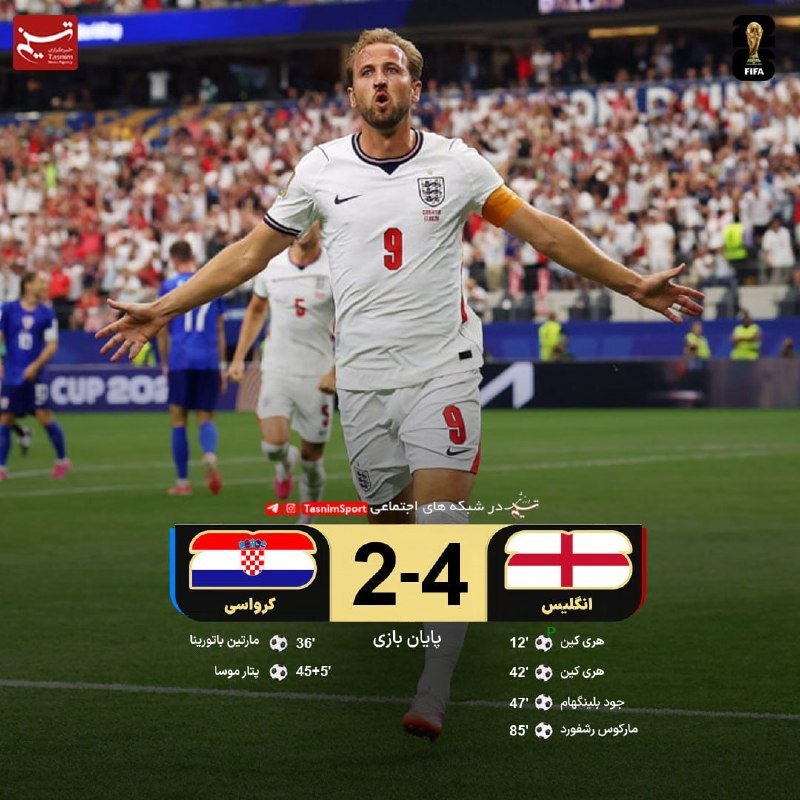
Lede. A 1-1 draw between Saudi Arabia and Uruguay on 15 June 2026 was sealed in the 42nd minute by Abdullah Al-Amri and surrendered in the dying moments to a Uruguayan equaliser. By 00:06 UTC on 16 June, Iranian state-aligned outlet Fars had framed the late concession as Saudi Arabia "losing the win in the last minutes." By 00:16 UTC, the Islamic Republic's Mehr News Agency had reframed the entire match as proof of a broader continental pattern: "the good trend of the Asians," it wrote, while "Uruguay's attempts were closed." At 00:24 UTC, The Spectator Index posted the scoreline as a single declarative tweet. The same fixture, three readings, three political temperaments. The football had stopped; the verdict had not.
Nut graf. For ninety minutes in a group-stage match somewhere on the 2026 calendar, two squads performed. In the hours that followed, three wire services performed something else: a soft-power audit, an Asian-solidarity narrative, and a Western wire-style scoreboard. The result is the small, telling artefact the rest of this analysis proceeds from — namely, that the global commentary machine now reads a 1-1 draw in three incompatible grammars, and that the friction between those grammars is itself the story.
The pitch, in chronological order
Al-Amri's 42nd-minute opener, circulated by Fars in real time, gave Saudi Arabia a lead it would hold for most of the second half. The Fars bulletin described the strike as the moment the door shut on Uruguay — a deliberate use of closed-door imagery, with the national team cast as the side doing the closing. Mehr News, writing roughly seventy minutes after Fars, adopted a continental register: the result "maintained the good trend of the Asians," a phrase that recasts a single friendly-style result as a regional data point. Both Iranian outlets are state-aligned, and both are reading the match through a long-running narrative in which Asian representation on the global sporting stage is itself a form of political redress. That is a recognisable Global-South framing and it is doing genuine work in their copy, not ornamental work.
The Spectator Index, by contrast, posted the 1-1 as a flat factual line. No colour, no continent, no trend. In the Western aggregator register, a draw is a draw. The split between the two registers is what makes the result a usable diagnostic: a single scoreline, three valid descriptive languages, and the choice of which language to use is now a political act rather than a stylistic preference.
Why the Iranian frame is doing real work
There is a temptation, from a Western wire desk, to dismiss the Mehr News phrasing as boilerplate pan-Asian boosterism. That would be a mistake. The "Asians" in question — Saudi Arabia, Japan, South Korea, the Gulf states, Iran itself, and a thickening layer of South-East Asian qualifiers — have spent the last decade building football infrastructure at industrial-policy scale: state academies, foreign coaching pipelines, federation budgets detached from short-cycle tournament logic. The framing in the Iranian coverage is that the trend line is real and is being validated pitch by pitch. The late Uruguayan equaliser complicates the trend without breaking it; Fars's "lost the win" framing acknowledges the slip while preserving the trend claim.
The non-trivial reading is that the Iranian outlets are not the only ones engaged in this work. Saudi Arabia's own state media, Chinese state outlets covering Asian football, and Gulf-aligned English-language coverage have all converged on a similar vocabulary over the last four years: continental competence, scheduling legitimacy, federation-grade professionalism. The Mehr News line is one node in a network, not a curiosity.
The Western aggregator problem
The Spectator Index's 1-1 tweet, stripped of framing, is the kind of post that performs neutrality while doing considerable work. It treats the match as a closed sporting fact and therefore implicitly declines to engage with what the same scoreline is doing in the Asian-solidarity register. The effect, accumulated across dozens of similar posts in a single tournament window, is to render the non-Western framing invisible by never contesting it — only by refusing to translate it. A reader who sees only the aggregator feed will conclude the match was a routine draw. A reader who sees only the Iranian feed will conclude the match confirmed a civilisational trend. Both are reading the same scoreline.
This publication's view is that the aggregator register is not the neutral default it presents as. It is one grammar among several, and a parochial one — produced in a media ecosystem that still treats global football primarily through European-club optics and treats international fixtures as a less interesting side product. The Mehr News framing is at least self-conscious about its own grammar; the aggregator framing is not.
Stakes, and what remains uncertain
The stakes are not that any one match is misread. They are that the global information environment is now organised around competing translation regimes for the same events, and that the regimes rarely acknowledge each other. Saudi Arabia's draw will be replayed, summarised, and forgotten in different ways in different time zones, and no single account will dominate. The question worth holding open is whether this is a transitional feature — the friction of a more plural media environment — or a structural one, in which no shared descriptive vocabulary for global events is rebuilt and each audience ends up reading a different tournament.
The sources do not specify venue, attendance, or the identity of the Uruguayan goalscorer, and this analysis does not speculate on those points. What the sources do specify, repeatedly and across editorial lines, is that a 1-1 draw is being narrated as three different stories by three different newsrooms. The honest reading is that the football result is the least interesting thing about the past twenty-four hours of coverage of it.
— Monexus will continue to follow the tournament's group-stage fixtures and the divergent framing they generate across regional wire services.
Wire provenance
This editorial synthesis draws on the following public wire/social posts:
- https://t.me/osintlive
- https://t.me/mehrnews
- https://t.me/farsna
- https://t.me/farsna