Scheffler, McIlroy and the field chasing a U.S. Open at one of the game's sternest tests
The 2026 U.S. Open returns to a brutal layout, with Scottie Scheffler chasing a career grand slam and Rory McIlroy opening at 12:52 BST in pursuit of a second title.
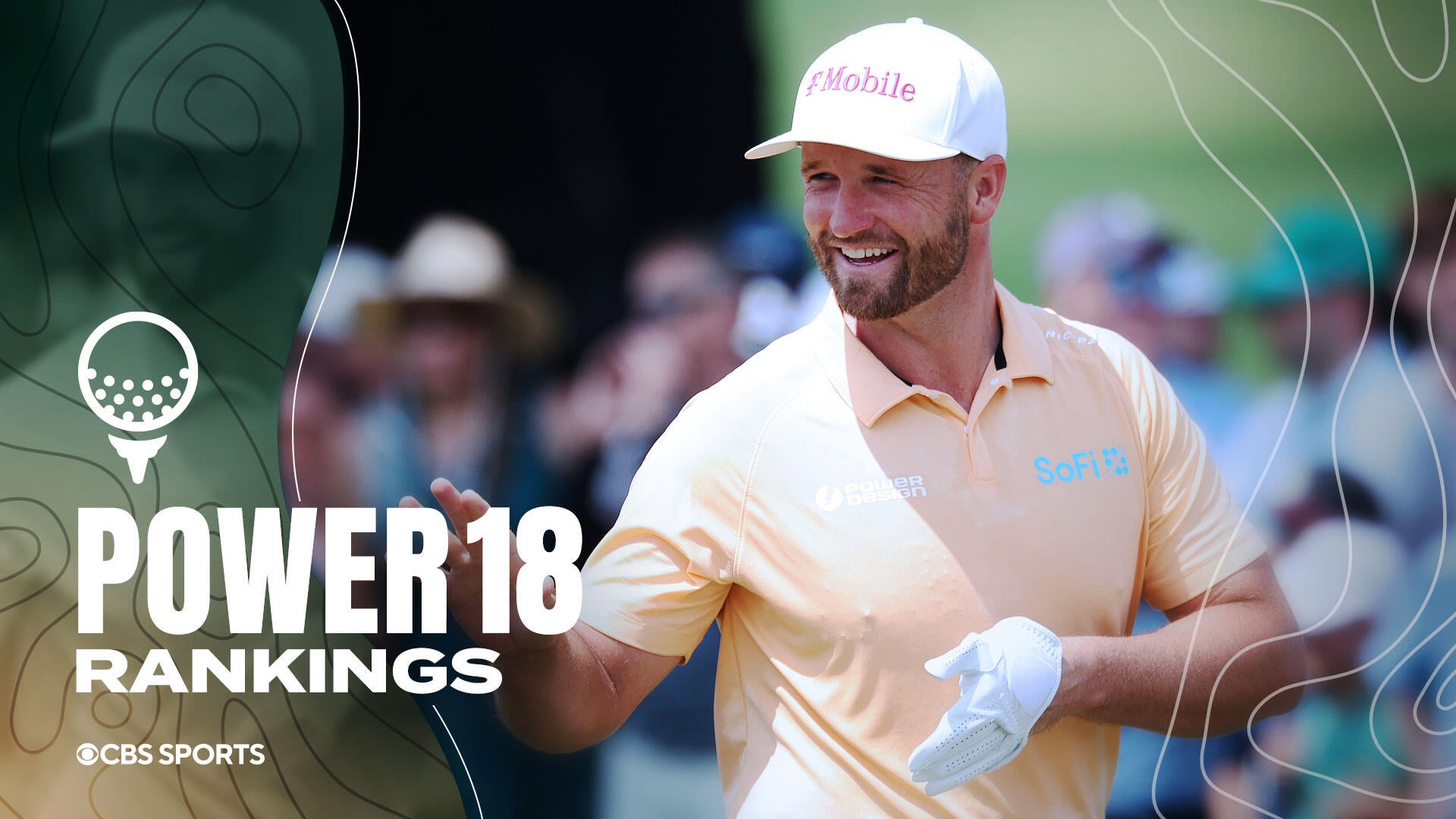
The 2026 U.S. Open tees off on 18 June with one of the championship's most demanding setups in recent memory, and the two players doing the heaviest lifting in the pre-tournament narrative could hardly be further apart in career arc. Scottie Scheffler, the world number one, arrives chasing the career grand slam. Rory McIlroy, a six-time major champion, will be in the early wave on Thursday, beginning his round at 12:52 BST in his bid for a second U.S. Open title. The field is full; the stakes, for both, are immovable.
A major championship this stacked is rarely about a single story. It is a referendum on form, on a golf course that punishes patience, and on the particular pressure that accumulates around a leaderboard when history is the only currency that buys a champion's legacy. The 2026 U.S. Open is no exception.
A course designed to interrogate
The U.S. Open does not pretend to be fair. The championship's identity is built on conditions that compress the field and reward the player whose misses are smallest, not the one whose birdies are loudest. According to CBS Sports' pre-tournament coverage on 15 June 2026, this year's edition returns to one of the championship's "toughest tests," with rough and green complexes calibrated to test both patience and shot-making. Scheffler's career trajectory — built on a ball-striking base that has rarely been matched in the modern era — fits that environment as cleanly as anyone's. McIlroy's does too, when the Northern Irishman is on his game.
The setup matters because the U.S. Open's scoring distribution has drifted toward the birdie-friendly end of the spectrum in recent runnings. When the USGA tightens the ropes, as it has signalled for this week, the result is a leaderboard that often stays bunched through Saturday afternoon and explodes on Sunday morning. That dynamic reshuffles the pre-tournament odds in ways the betting markets have only partially priced in.
Scheffler, the career grand slam and the weight of precedent
A career grand slam — winning all four modern majors at least once — has now been completed by five men. The list is short for a reason: each leg requires sustained excellence across surfaces, continents and four very different golf courses. Scheffler's path to this point has been distinctive. His major wins have come by grinding out pars as often as by making birdies, and his short-game craft has improved each season. The CBS preview framed his bid explicitly as a chase for the career slam, with "plenty on the line for the massive field" trying to deny him.
The counter-narrative is simple. The modern game is deep, and there is no longer a single dominant figure in the way Tiger Woods was dominant in his prime. The field that chases Scheffler includes major champions, Olympic gold medallists and a generation of twenty-something players whose driving distance has reshaped how an aggressive golf course can be played. If the U.S. Open setup this week permits length off the tee to be neutralised — a stated USGA design philosophy in recent runnings — the field tightens. If it does not, the advantage tilts back toward the longest and straightest, a category Scheffler already leads.
McIlroy, redemption, and the second-title problem
McIlroy's first U.S. Open title came in 2011, when he was 22 and playing the most fluent golf of his career. The fifteen years since have included four more majors, a period of reinvention, and a well-documented run of close calls in the championships he has already won once. The BBC Sport note published on 16 June 2026 at 14:40 UTC confirmed that the Northern Irishman will begin his first round at 12:52 BST on Thursday, placed in the early wave alongside the rest of the marquee group. The framing in that report — "his latest quest to win a second U.S. Open title" — captures the structural tension around his week. McIlroy does not need this title to validate his career. He needs it because the gap between six majors and seven has begun to feel, externally, like the difference between remembered greatness and settled greatness.
The reasonable counter is that McIlroy's game is not currently at its 2014-15 peak. His driving accuracy has fluctuated season-to-season, and his approach play has occasionally been exposed on the penal U.S. Open setups that have defined the championship's modern era. A course that does not reward the bomb-and-gouge style of the longest hitters would, on paper, flatter him. The question — and this is the part the pre-tournament coverage cannot resolve — is whether the USGA's setup this week tilts that way or away from it.
What the field actually looks like
The pre-tournament field is not a two-man story, however much the leaderboard on Sunday will try to make it one. The U.S. Open's qualifying structure produces a draw that includes established major champions, PGA Tour and DP World Tour regulars who have earned their way in through the regular season, and a small but consequential group of amateurs and club professionals who cleared the local and sectional stages. According to the CBS preview on 15 June 2026, the field is "massive" — a useful reminder that the U.S. Open's identity is partly the size of its draw and the depth of its weekend.
What the public reporting does not yet specify, with the round-one tee times only confirmed in detail on Monday, is the precise composition of the marquee groups. The BBC report identifies McIlroy's start time; the wider groupings will emerge from the USGA's official pairings release. That detail is not yet on the record, and Monexus does not speculate on what has not been published.
The structural read
The deeper pattern worth naming is structural. The men's major calendar has, over the last five seasons, become a two-leader economy: Scheffler, and a chasing pack whose composition shifts by week. That concentration at the top has not yet produced a career grand slam, because the chase pack has consistently converted on the Sundays that matter. Whether 2026 is the year the chase catches Scheffler, or the year Scheffler pulls clear, will be decided by a course that the USGA has built precisely to prevent anyone from running away with it.
The stakes, in plain terms, are about history. A Scheffler win makes him the sixth man to complete the career grand slam, and at an age that resets the timeline for what comes next. A McIlroy win gives him a second U.S. Open, fifteen years after his first, and pushes him further into the small group of players who have won two of each modern major. Any other winner produces a first-time major champion in an era that has, so far, resisted producing very many of them. Each outcome reshapes the ledger the next generation reads from.
How Monexus framed this vs the wire: the wire coverage has centred the Scheffler career-slam storyline and the McIlroy redemption storyline as parallel narratives. Monexus treats them as one story — the same championship, the same course, the same question: who is best at the hardest test in golf this week.