Sorsby ends the eligibility fight Texas Tech should never have started
Texas Tech quarterback Brendan Sorsby will declare for the NFL supplemental draft, ending a months-long eligibility dispute that had entangled the NCAA, the Big 12 and the university over admitted sports betting.
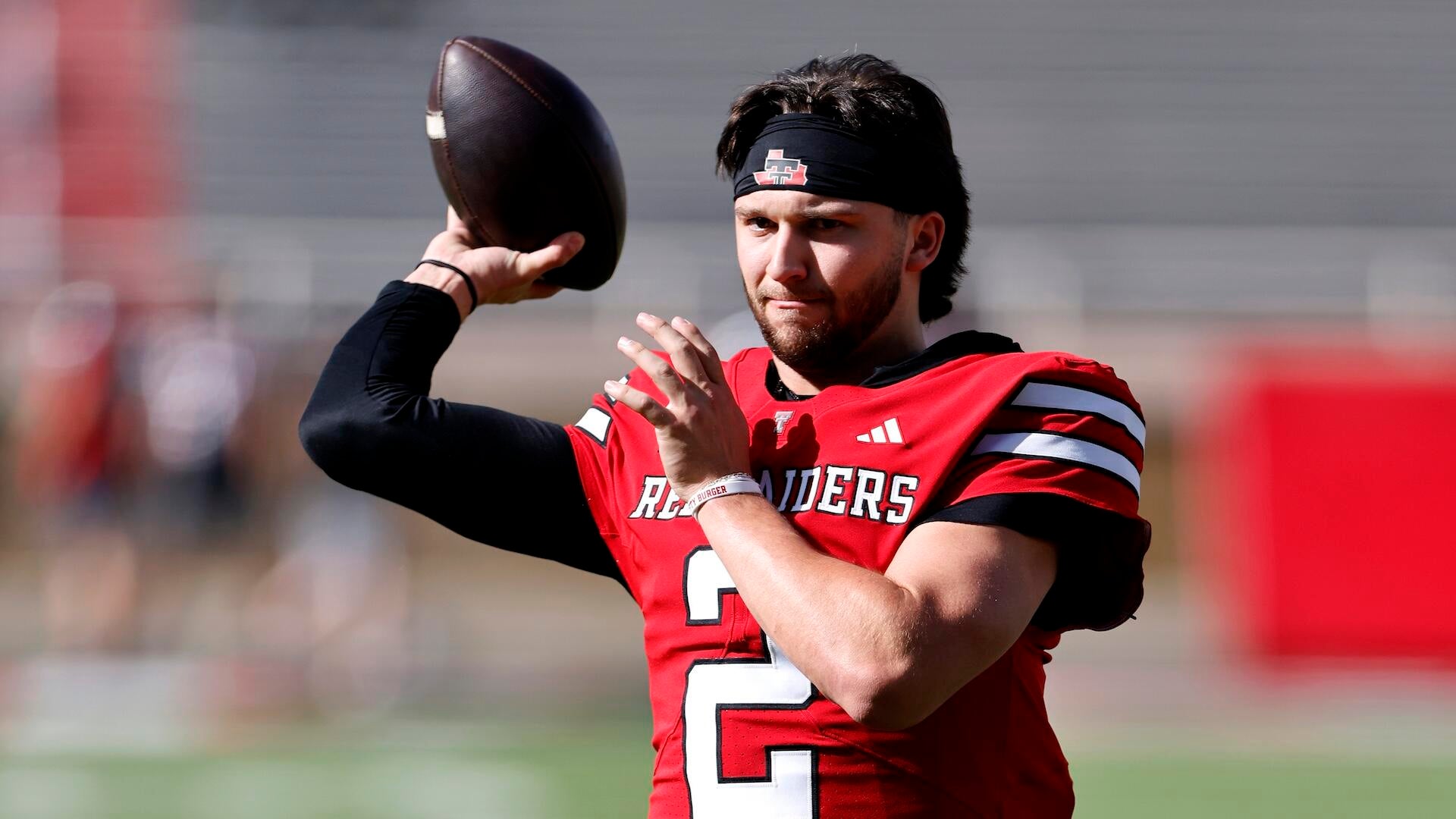
Texas Tech quarterback Brendan Sorsby will enter the NFL supplemental draft, according to multiple reports on 2026-06-16, walking away from a college career and an eligibility fight that had pulled the NCAA, the Big 12 Conference and the university into open court. The decision, first reported by ESPN's Pete Thamel, lands a little more than a week after the NCAA publicly asked an appeals court to overturn a lower-court order that had let Sorsby suit up for the Red Raiders while litigation over his playing status continued.
Sorsby's exit is the cleanest possible resolution to a mess the sport had no interest in litigating through a 2026 season. It spares the Big 12 and the NCAA a courtroom test of how gambling-related discipline interacts with an athlete's ability to play, and it spares Texas Tech a season of weekly story cycles. The price is paid entirely by the player.
How the case got here
The dispute began with a straightforward admission: Sorsby acknowledged wagering on Texas Tech, including on his own team, an act the NCAA treats as a Tier I or Tier II integrity violation depending on the bet's scope. The organisation moved toward a multi-year ineligibility penalty, and the Big 12 separately signalled it would not certify the quarterback for conference play, according to reporting on 2026-06-16. Texas Tech and Sorsby's representatives pushed back, and a state court granted a temporary injunction that let Sorsby return to the field pending the broader legal fight.
The NCAA then escalated, asking the appellate court on 2026-06-15 to rule on the matter before the season starts. That posture, accelerated appeals against a sitting injunction, made it clear the association intended to use the case as a precedent rather than a one-off.
Why the supplemental route is the off-ramp
The supplemental draft exists for precisely this kind of situation: an NFL-bound player whose college eligibility has closed on a timeline that does not line up with the league's regular April cycle. Sorsby, by entering that pool, transfers the entire eligibility question out of the NCAA's enforcement lane and into the NFL's transactional one. A team that selects him absorbs whatever is left of his college suspension under league rules; the college process simply ends.
For Texas Tech, the move is a quiet win. The programme has been operating under a cloud of headlines about a star quarterback who admitted to betting on his own team, a fact that no marketing department can recycle. A clean room, in this context, looks like a roster that does not include Brendan Sorsby.
For the NCAA, the case becomes a smaller, quieter precedent. Whatever the appellate court would have said about the injunction, about a state court ordering a private athletics association to clear a player, about the line between conference certification and national eligibility — none of that gets tested now. The NCAA's lawyers can tell the membership that the integrity rule was not watered down by an outside court; the rule simply ran out the clock on the only player who was going to invoke it.
For the Big 12, which had publicly contested Sorsby's availability, the same off-ramp applies. The conference's certification process is rarely a litigated subject; a case that ended in a courtroom loss would have invited future challenges. A case that ends with the player gone is the conference's preferred outcome even if it cannot say so out loud.
The argument the sport still has to have
None of this should be read as the gambling policy being settled. Sorsby's situation, a high-profile quarterback admitting to wagering on games involving his own team, is the kind of case that was always going to end one of two ways: with a multi-year ban and a precedent, or with the player leaving college. The system has now produced the second outcome. The first one remains on the docket for whoever comes next.
The structural question is whether a Tier I or Tier II betting penalty is genuinely enforceable when a player has a credible legal claim and a programme willing to back it. A Texas court granted an injunction. The NCAA treated that as an overreach. The disagreement was substantive and would have produced, eventually, a written ruling that other players, agents and universities could cite. That ruling will not be written. The next player to test the rule will therefore be testing a rule whose last real challenger never finished the fight.
The money angle is the part of this story that the wires have not fully priced. Sports betting integration with college athletics has accelerated across the legalised states. Cases in which athletes cross the integrity line, intentionally or otherwise, are no longer hypothetical. The NCAA's enforcement division, the conferences' certification processes and the players' legal counsel are now operating in a space where an injunction is a realistic tool. The Sorsby file gave the system a chance to draw a hard line. It chose, instead, to let the line stay in pencil.
What remains contested
Several facts in the underlying record have not been independently confirmed in the public sources reviewed for this piece. The exact contents of the injunction, the specific tier the NCAA assigned to the violation, and the precise scope of bets Sorsby acknowledged are not in the available reporting. The decision to enter the supplemental draft itself is reported as Sorsby's choice; whether any NFL club has expressed a public interest is not in the source material, and any speculation there is omitted on purpose.
It is also worth noting that supplemental draft outcomes are not guaranteed selections. Players who enter the pool are eligible to be picked in a single supplemental round, with compensation scaled to a prescribed formula. The mechanics of that market, where a team trades into a pick, where bonus values are capped, and how a player with off-field questions is graded by scouts, are the next chapter of this story rather than the last.
For now, the file closes in a way each of the institutions can defend. Texas Tech keeps its programme, the Big 12 keeps its certification authority un-litigated, and the NCAA keeps its rule unenforced against the one player who had the means and the lawyer to challenge it. The cost, as it usually is in these cases, is paid by the athlete at the bottom of the chain.
This publication reviewed the available wire reporting on 2026-06-15 and 2026-06-16 and found consistent accounts of the supplemental draft decision and the NCAA's appellate posture; the underlying court filings and the contents of the injunction are not included in the reviewed material and have not been relied on here.