Tehran's reading of the Islamabad memorandum: what the Iranian side is actually claiming
A member of Iran's negotiating-team media committee has spent 16 June 2026 laying out, clause by clause, what Tehran says it agreed to in Islamabad — and what it insists it did not.
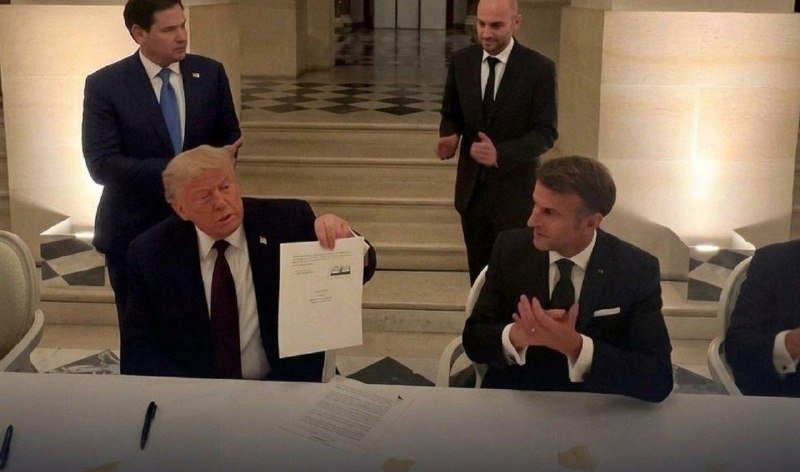
On 16 June 2026, between 15:21 and 15:58 UTC, Iranian state outlet Tasnim News published a sequence of video clips from an extended sit-down with Saeed Ajarlou, identified by the channel as a member of the media committee attached to Iran's negotiations with the United States. Taken together, the clips amount to the most granular public, Iranian-side reading yet of the so-called Islamabad memorandum — clause by clause, caveat by caveat — and they are worth taking seriously as a primary source on what Tehran believes it has signed.
The picture that emerges is not the one Western briefings have tended to sketch. Tehran is publicly treating the text as a step-by-step, reciprocal arrangement, contingent on prior American performance, with the Strait of Hormuz retained under Iranian management and the IAEA held at arm's length. The framing is adversarial, conditional, and unromantic — closer to a lawyer's reading than a statesman's.
Clause 1: ceasefire language, not a war's end
Ajarlou opened the sequence at 15:21 UTC by walking through what Tasnim's producers called "the first clause" of the memorandum. The question Tehran is putting into the public record is narrow but consequential: does the text end the war, or does it establish a 60-day ceasefire? The Iranian-side read, as transmitted by Tasnim, is that the document is a temporary halt, not a settlement — and that the text does not by itself require Israel to withdraw from Lebanon. That distinction matters. A ceasefire is reversible on the calendar; a war's end is a political fact. Tehran is reserving the right to resume.
Clause 5: the Strait of Hormuz stays Iranian
The most economically loaded exchange came at 15:33 UTC, when Ajarlou turned to what Tasnim labelled "Clause 5." The Iranian-side claim is direct: Iran has not ceded the Strait of Hormuz in the memorandum. Arrangements for management and services in the strait, Ajarlou told Tasnim, remain in Iranian hands. The follow-up clip at 15:38 UTC elaborated on how those arrangements actually function — who provides security, who collects fees, who guarantees passage — without conceding any new external authority. For a waterway through which a significant share of seaborne crude transits, the clause is the difference between sovereignty on paper and sovereignty in practice. Tehran is publicly insisting on the latter.
Implementation: step-for-step, with an Iranian audit of US behaviour
At 15:42 UTC, Ajarlou laid out the implementation logic. Iranian and American actions under the memorandum will be sequenced. Each new Iranian step is conditional on a prior American step actually being delivered. If Washington fails to honour a commitment, Tehran reserves the right to halt. The mechanism is essentially contractual: a suspension-of-performance clause, enforced by Iranian discretion. It is the structural opposite of a single, irreversible concession.
At 15:54 UTC, the line hardened. Iran's negotiating team, Ajarlou said, will not serve as the spokesperson for American bad faith. The phrasing is telling: it concedes that the talks have produced communiqués that cast Iran in an unflattering light, and pre-emptively disowns the next one. The audience is domestic as much as diplomatic — a signal to Iranian constituencies that the team will not be used to launder a bad deal.
Inspections: the IAEA kept out of the next round
At 15:51 UTC, Ajarlou addressed the file that has historically tripped up every Iran deal since 2015: inspections. The Iranian-side position, as Tasnim reported it, is that Iran will not grant inspection access to its facilities to the International Atomic Energy Agency during the upcoming negotiations. That is a deliberately tight formulation. It does not say Iran is withdrawing from the IAEA, or that pre-existing access is being revoked; it says the next negotiating round will not be the venue in which inspectors are admitted to additional sites. The distinction will be lost on most Western readers, but Iranian legalists will read it as the difference between a tactical pause and a structural reversal.
Vance, the JCPOA, and the question of guarantees
The closing clips, at 15:57 and 15:58 UTC, returned to the question that hangs over every US-Iran arrangement: durability. Ajarlou told Tasnim that the signature of US Vice President JD Vance is not, in itself, a guarantee. "Our guarantee is our launchers," he said — a line that will land very differently in Washington than in Tehran, but is plainly intended to remind an Iranian audience that the only enforcement mechanism the Islamic Republic ultimately trusts is its own deterrent. Ajarlou added that Iran retains a "bad memory" of the JCPOA, the 2015 nuclear deal from which the United States withdrew in 2018 — a reference point that, for Tehran, defines the cost of taking American signatures at face value.
What to make of all this
The honest read is that Tehran is publishing a maximalist, defensive interpretation of a document whose text has not been released in full. That is itself a negotiating posture: every public claim about Clause 5 or the IAEA is a stake driven into the ground that will be expensive to uproot. The counter-position — that this is stage-managed boilerplate from a press committee with little operational weight — is plausible, but the consistency of the messaging across seven clips in under forty minutes suggests a coordinated line rather than a freelance briefing.
For Western readers, the practical upshot is simple. If the Iranian-side reading holds, the memorandum is a thin, conditional, reversible arrangement with the strategic files — Hormuz, inspections, enrichment-adjacent facilities — deliberately left for later rounds. If it does not hold, the same clips will be replayed in Tehran as evidence that Iran negotiated in bad faith. Either way, the burden of disambiguation now sits with the US side, and the next move is Washington's.
— Monexus framing note: this desk is publishing the Iranian-side read in full because the text of the memorandum itself has not been made public, and because most English-language coverage has so far relied on anonymous Western briefings. We have not been able to independently verify Clause 5 or the IAEA posture from primary documents; the seven Tasnim clips above are the public record on the Iranian side as of 15:58 UTC on 16 June 2026.
Wire provenance
This editorial synthesis draws on the following public wire/social posts:
- https://t.me/tasnimnews_en/1
- https://t.me/tasnimnews_en/2
- https://t.me/tasnimnews_en/3
- https://t.me/tasnimnews_en/4
- https://t.me/tasnimnews_en/5
- https://t.me/tasnimnews_en/6
- https://t.me/tasnimnews_en/7
- https://t.me/tasnimnews_en/8
Follow the event.
These dated source records provide context. They do not retrospectively verify this archive article.
Separate what the nuclear watchdog reported from what it could not determine after the June 2025 strikes.