Terrain, Trust, and the Limits of Eyewitness Video in the Drone Age
A single clip of a Ukrainian TV studio hit by drones has become a test case for whether audiences can still believe what they see — and what that means for wartime reporting.
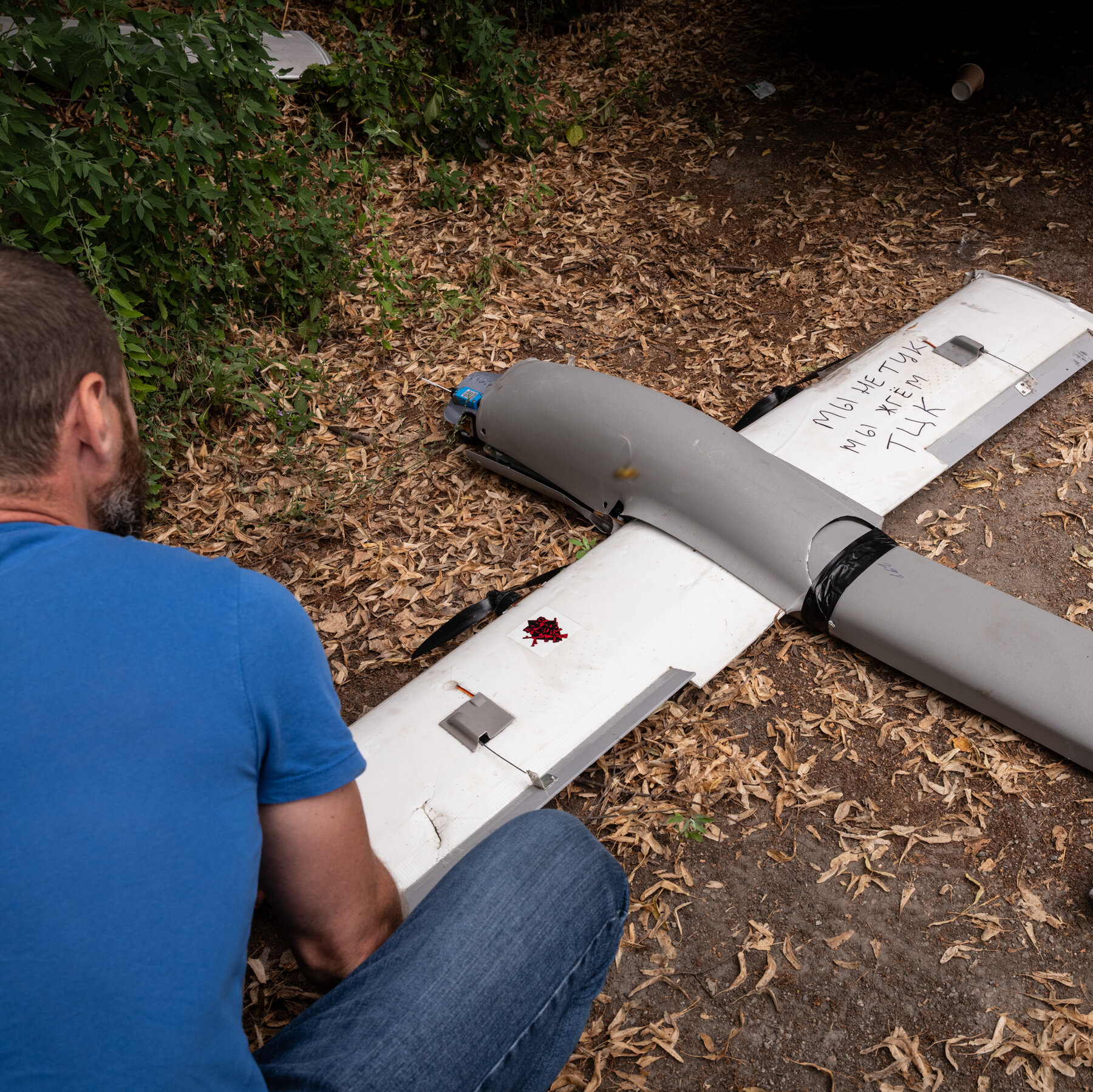
A short piece of video, circulated on Telegram channels in the early hours of 16 June 2026, has done something unusual: it has prompted an argument not about who struck whom, but about whether the picture itself is real. The clip purports to show the interior of a Ukrainian television studio damaged in a drone strike. The dominant share in the thread, posted at 07:46 UTC by the channel myLordBebo, makes a narrower claim — that the image cannot be AI-generated because the terrain visible through the studio's blown-out wall matches the surrounding landscape across the video's frames. The case is being made, in other words, with the tools of a discipline that didn't exist outside intelligence agencies a decade ago.
That an audience now has to be persuaded of something so basic — that a video is a video — tells you where wartime reporting has landed. The age of cheap, convincing synthetic media has collided with the world's most photographed conflict, and the burden of proof has shifted from the denier to the witness.
A studio, a strike, a forensic argument
The clip itself is brief: a TV set in disarray, cameras askew, a presenter taking cover, and beyond the studio's breached wall a stretch of Ukrainian terrain that the post says can be cross-referenced with surrounding frames. The author's argument is procedural rather than political. They note that no widely available generative-AI tool currently models continuous environmental geometry across multiple camera positions in a way that would let a forger fabricate a coherent landscape between interior and exterior shots. The proof of authenticity, in their telling, is the terrain match itself.
The claim is technical and the source is a single Telegram account. The argument is also characteristic of how open-source intelligence — OSINT — has come to function in the Russia–Ukraine war, where every photograph is now treated less as evidence and more as a hypothesis to be tested.
When the camera lies, or appears to
The broader context is a media environment saturated with synthetic imagery. Text-to-video systems have moved from research demos to consumer products in the space of a single news cycle, and Ukraine has been ground zero for the consequences. Russian-aligned channels have repeatedly circulated fabricated footage of staged Ukrainian setbacks, Ukrainian fabrications of Russian atrocities, and a long tail of clips whose provenance is impossible to resolve without specialist tooling. Each new piece of genuine footage now arrives under suspicion.
The result is a strange inversion. In older wars, governments worried about photographs that might damage them. In the present conflict, both sides — and the audience — worry about photographs that might be too good to be true. Scepticism has become a defensive reflex, which is healthier than credulity but produces its own distortions. Genuine atrocities are dismissed as deepfakes; mundane battlefield footage is treated as irrefutable truth. The epistemic floor is uneven.
What OSINT can and cannot do
The terrain-match argument is the kind of analysis that has become routine on a small set of specialised accounts: researchers geolocating missile strikes from chimney shadows, timestamping footage by sun angle, matching windows in before-and-after shots. The methodology is sound in principle — the earth doesn't move — but it carries a structural limitation worth naming. OSINT is overwhelmingly an English-language, Western-platformed, volunteer-led discipline. The researchers who do it are disproportionately drawn from NATO-allied countries, and the audiences who consume it are too. Russian and Chinese open-source work exists but is less visible, less networked, and more often dismissed at the door.
This matters because the discipline is increasingly functioning as a kind of unofficial court. When a Western-aligned researcher confirms a strike, the finding is treated as near-conclusive; when a researcher with the wrong flag flies the same approach, the same method, the finding is treated as suspect. The tools are neutral. The infrastructure around them is not.
What hangs on the picture
For Ukraine, the picture matters more than the meta-argument. The country is the invaded party, and a steady flow of authentic frontline footage has been one of the most effective tools in sustaining Western political support. If audiences come to doubt what they see, the cost is paid in Kyiv long before it is paid in the commentariat. The studios that get hit are also part of the country's information infrastructure: a damaged broadcaster is a damaged war effort, and the fact that strikes are reaching broadcast facilities is itself the story.
For the audience, the stake is older. A public that cannot believe its own eyes is a public that defers — to official spokespeople, to curated fact-checkers, to whichever authority claims the technical expertise to pronounce. That is not a healthy place to land. The myLordBebo argument, with all its limits, is the right instinct: hold the picture to the terrain, not to the caption. But it should be possible to do that work without depending on a handful of volunteer analysts whose methods most readers will never see.
What remains unresolved
The thread offers no second source. There is no wire confirmation of the strike, no Ukrainian official statement in the post, no timestamping of the footage by an independent researcher. The terrain argument is plausible but not verified beyond the single account that made it. The deeper question — whether audiences will, on net, become more or less informed as synthetic media improves — is also open. The history of propaganda suggests that a saturated environment produces scepticism in the literate and credulity everywhere else. That is not an outcome the OSINT community is well placed to fix on its own.
Desk note: Monexus is publishing this item with the source material we have, not the source material we wish we had. The picture, the terrain argument, and the wider problem of wartime image verification are reported from a single Telegram post; the structural frame is editorial. Readers looking for a second confirmation will not find one in our sources list — and that absence is, in this case, the story.
Wire provenance
This editorial synthesis draws on the following public wire/social posts:
- https://t.me/myLordBebo
Follow the event.
These dated source records provide context. They do not retrospectively verify this archive article.
A dated voting record is evidence of one decision. Use the original UN record before turning it into an alignment label.
Visual explainer · historical vote of 2022-03-02 →