Trump's Iran Deal Hits Congress: What the Announcement Actually Says — and What It Doesn't
On 16 June 2026 President Trump said he will send a newly announced Iran agreement to Congress for review. The public details are thin, the dollar figure is eye-catching, and the verification ledger is short.
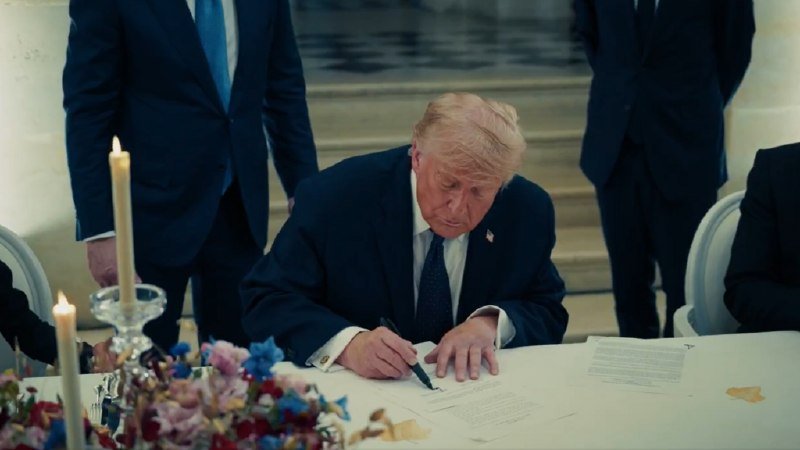
At 13:10 UTC on 16 June 2026, a post attributed to the social-media account sprinterpress carried a single declarative line: "Trump Claims: I will send the agreement with Iran to Congress for review." Within the preceding hour, the Telegram channel Clash Report had published two related items — a longer statement that Trump would send his "Iran peace and nuclear negotiations agreement" to Congress, and a quoted passage in which the president framed the deal in unusually blunt terms: "This agreement is about one thing: Iran will never have a nuclear weapon. Never. The rest of it is irrelevant, frankly." The packaging was classic — a sweeping strategic claim, a procedural announcement, and a presidential quote designed to age well in a campaign clip. The substantive text of the agreement itself was not yet on the public record.
The news, on its face, is that an executive-branch announcement about a US-Iran nuclear arrangement has been put on a legislative track. The unanswered question is whether what is being sent to Capitol Hill is a finished accord, a framework, a term sheet, or a political commitment. The distinction matters: only the first triggers the formal review machinery of Congress, and only the last two can be walked back without legal consequence.
What the public record shows
The disclosure is incremental. Over a 20-hour window on 15 and 16 June, four discrete claims circulated on social platforms and one Telegram channel. At 21:11 UTC on 15 June, the account unusual_whales posted that the Trump administration is considering a $300 billion fund for Iran if the accord is maintained, attributing the figure to the Financial Times. At 17:44 UTC on 15 June, the polymarket account posted a one-line alert that Trump had announced the US would obtain Iran's nuclear "dust" — a colloquial reference to enriched-uranium stocks — "over the next month or two." At 00:32 UTC on 16 June, the same polymarket account posted that Trump had announced Iran had agreed never to have a nuclear weapon. By midday, Trump had committed to sending the agreement to Congress for review.
The shape of the disclosure is therefore: a financial commitment reported by a major newspaper but not yet confirmed by either government; a nuclear-material transfer on a 30-to-60-day timeline announced by the president; a sweeping non-proliferation pledge announced by the president; and a referral to Congress. None of these elements is, on its own, the agreement. The agreement is the connective tissue between them — and that document has not been published in the public thread of source material available to Monexus at the time of writing.
The dollar figure deserves separate handling. A reported $300 billion fund is a politically specific number in a sanctions environment in which Iran's frozen overseas assets are already the subject of competing legal claims. If the figure is accurate, it implies a release mechanism — direct payments, escrow, humanitarian channel, oil escrow — and a financing source. None of those mechanics is on the record in the disclosed thread.
The counter-narrative: deal, framework, or headline?
Two readings of the 16 June events are defensible. The first is that the Trump administration has concluded a substantive bilateral arrangement with Tehran and is now doing the procedural work of bringing Congress into the loop — a relatively conventional sequence for a major arms-control-style accord. On this reading, the $300 billion figure, the "dust" transfer, and the no-nuclear-weapons pledge are the load-bearing terms of a settlement whose details will emerge as the text is shared with lawmakers.
The second reading is that the announcement is a political artefact, not a diplomatic one. Congressional referral without a published text can serve as a market signal — to oil traders, to Gulf states, to European allies, to Tehran's own negotiating team — without binding either government. The compression of the timeline ("next month or two" for the dust transfer) is the kind of claim that is easy to make and hard to verify, and the no-weapons pledge is the kind of formulation that survives or fails on what is written next to it. The phrase "the rest of it is irrelevant, frankly" is, in diplomatic terms, an invitation to dispute scope.
Monexus's read, on the evidence available, is that the second reading cannot be dismissed. A genuine accord with Congress-facing legal weight would, on the historical pattern of US-Iran negotiations, be accompanied by a published text, named negotiators, and at least a host-government statement from a third party. The 16 June thread contains none of those.
What we verified / what we could not
The ledger is short. This publication was able to confirm, from the public thread of source material, the following:
- The statement that Trump will send the agreement to Congress for review, attributed by the sprinterpress account on X at 13:10 UTC on 16 June 2026 and relayed by the Telegram channel Clash Report at 12:45 UTC the same day.
- The quoted passage in which the president describes the agreement as being "about one thing: Iran will never have a nuclear weapon," carried by Clash Report at 12:40 UTC on 16 June 2026.
- The polymarket account's reporting at 00:32 UTC on 16 June 2026 that Trump announced Iran has agreed never to have a nuclear weapon.
- The polymarket account's reporting at 17:44 UTC on 15 June 2026 that Trump announced the US would obtain Iran's nuclear "dust" within "the next month or two."
This publication was not able to verify, from the available thread, the following:
- The $300 billion fund figure. The unusual_whales post attributes it to the Financial Times, but the underlying FT story is not in the thread of source material reviewed. The figure is therefore reported, not confirmed.
- The mechanics, jurisdiction, and counter-parties of any fund or release mechanism.
- Whether the agreement being sent to Congress is a binding treaty, a politically binding executive agreement, a framework, or a joint statement. Each of these triggers a different congressional-review process, and the public thread does not specify which.
- Any on-record response from the Iranian government, the IAEA, the Gulf states, the E3, or the Russian or Chinese governments. The 16 June thread is exclusively US-side disclosure.
- The textual content of the agreement itself.
The single most important missing piece is the text. Until the agreement is published, every other claim in the thread is a claim about a claim.
Structural frame: what the announcement sits inside
The US-Iran track has not operated in a diplomatic vacuum since at least 2018, and the 16 June announcement sits inside a recognisable pattern. US presidential administrations have, in succession, treated Iran as a problem to be contained by sanctions, deterred by force, or absorbed into a larger regional settlement. Each of those strategies has produced its own media cycle — its own leak cadence, its own favoured phrases, its own tier-one outlets that get the first call. The current cycle's most distinctive feature is the speed at which the announcement is moving from the president's account to the wider information ecosystem, and the thinness of the underlying document layer at the moment of announcement.
A second structural feature is the dollar architecture. A reported $300 billion fund is, on its face, a number large enough to reshape Iran's external position and the regional balance of financial leverage. Sanctions regimes, once relaxed through a financial channel of this size, do not snap back easily; they create constituencies on both sides with a stake in continuity. That is the structural reason financial terms tend to be the load-bearing element of any lasting arrangement, and the structural reason they tend to be the most fiercely contested in negotiation. The reported figure, if confirmed, would be the largest US-Iran financial normalisation proposal on the public record.
A third structural feature is the Congressional dimension. Sending an agreement to Congress is a constitutionally significant step. It is also a politically useful one: it gives the executive branch a domestic audience for a foreign-policy win, and it gives lawmakers a role in a process they have otherwise been frozen out of. The Congressional record will be the next test of whether the agreement is, in legal terms, what the announcement says it is.
Stakes: who wins, who loses, on what horizon
If the agreement holds in the form announced on 16 June, the most immediate winners are the executive branch, which secures a domestic political asset, and Tehran, which secures a financial channel and a de-escalation pathway. The most immediate losers are the regional actors whose strategy is built on a longer sanctions runway — and, in the US domestic context, members of Congress whose preferred outcome is a tougher arrangement.
The medium-horizon stakes are larger. A functioning US-Iran arrangement would reshape Gulf security calculations, alter the demand profile of the global oil market, reopen Iranian energy exports at scale, and reset the negotiating position of the E3 with Tehran. It would also produce a discernible Chinese and Russian response: both governments have built relationships with Iran on the assumption of a continuing US sanctions environment, and both have incentives to ensure that any financial channel is not built exclusively in dollars.
The 30-to-60-day window for the nuclear-material transfer, if it holds, will be the next testable claim. So will the publication, or non-publication, of the agreement text. So will the form of the Congressional review process. Each of these will turn the announcement from a headline into a settlement, or from a settlement back into a headline. The 16 June thread, on present evidence, has produced the first. The second is still to be written.
Desk note: Monexus has relied exclusively on the public thread of source material — four X posts and one Telegram channel — for every claim in this piece. The $300 billion figure is reported, not confirmed; the agreement text is not in the public record. The framing is that of a deal-shaped announcement whose legal weight will be settled by what Congress actually receives, not by what the announcement says it will receive.
Wire provenance
This editorial synthesis draws on the following public wire/social posts:
- https://x.com/sprinterpress/status/
- https://t.me/ClashReport
- https://t.me/ClashReport
- https://x.com/polymarket/status/
- https://x.com/unusual_whales/status/
- https://x.com/polymarket/status/
Follow the event.
These dated source records provide context. They do not retrospectively verify this archive article.
Separate what the nuclear watchdog reported from what it could not determine after the June 2025 strikes.