Live Wire
15:59ZSCMPNEWSTrump’s woes at home, what China’s World Cup presence shows: 7 US-China relations readshttps://www.scmp.com/n…15:59ZFARSNEWSINThe Wall Street Journal's claim about Iran's oil exemption under the agreement The Wall Street Journal claims…15:59ZCLASHREPORFrance's domestic intelligence agency (DGSI) is dropping Palantir, with PM Sébastien Lecornu citing fears of…15:58ZSCMPNEWSBuilding renovation corruption complaints spike 1.5 times after Tai Po fire: ICAChttps://www.scmp.com/news/ho…15:58ZTASNIMNEWSIs the signature of "JD Vance" guaranteed?🔴 Is the Islamabad Memorandum defensible?📍 Challenging conversati…15:57ZPRESSTVPress TV pinned a photo15:57ZTASNIMNEWSVance's signature is not guaranteed; Our guarantee is our launchers📍 frank conversation with Saeed Ajarlou;…15:56ZRNINTELA Russian warship fired warning shots at a British yacht in the English Channel.🇬🇧🇫🇷🇷🇺⚡️- French and Br…
Markets
S&P 500753.26 0.21%Nasdaq26,546 0.52%Nasdaq 10030,188 1.17%Dow522.66 0.81%Nikkei94.44 0.40%China 5034.58 1.52%Europe90.36 0.55%DAX41.94 0.24%BTC$65,850 1.91%ETH$1,782 3.17%BNB$606.14 3.45%XRP$1.21 4.44%SOL$73.33 2.37%TRX$0.3171 0.61%HYPE$74.64 9.70%DOGE$0.0872 3.77%LEO$9.72 0.65%RAIN$0.0139 2.01%QQQ$735.07 1.20%VOO$692.54 0.19%VTI$371.87 0.18%IWM$293.66 0.33%ARKK$79.48 0.19%HYG$80.04 0.00%Gold$398.59 0.51%Silver$63.52 0.08%WTI Crude$113.8 6.11%Brent$43.38 5.80%Nat Gas$11.61 1.53%Copper$39.67 0.04%EUR/USD1.1594 0.00%GBP/USD1.3408 0.00%USD/JPY160.38 0.00%USD/CNY6.7564 0.00%
OPENNYSEcloses in 3h 57m
The Monexus
Vol. I · No. 167
Tuesday, 16 June 2026
Saturday Ed.
Updated 16:02 UTC
  • UTC16:02
  • EDT12:02
  • GMT17:02
  • CET18:02
  • JST01:02
  • HKT00:02
← The MonexusGeopolitics

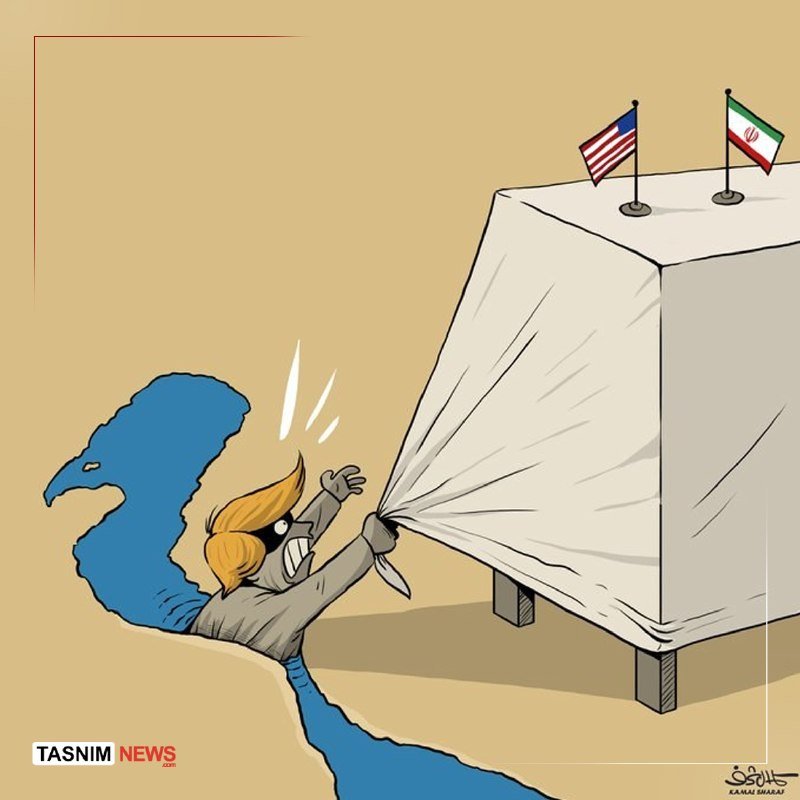
Trump–Iran deal lands in Évian: von der Leyen claims Strait reopening, oil slides, details still thin

At a G7 sideline in Évian, the European Commission president claimed Trump had secured a definitive end to Iran's nuclear programme. Oil prices fell on the news. Few other details had been confirmed by mid-afternoon UTC.

@presstv · Telegram

European Commission President Ursula von der Leyen said on 16 June 2026 that she had congratulated U.S. President Donald Trump on the agreement he reached with Iran, declaring that both sides believe the deal should mean a definitive end to Iran's nuclear programme, the reopening of the Strait of Hormuz, and a fall in oil prices. The remarks, delivered at a G7 sideline in Évian and carried by Telegram wire channels at 12:14 UTC, are the first on-the-record European confirmation of a diplomatic outcome that has been the subject of weeks of speculation in Washington, Tehran, and the Gulf.

What the European Commission is now publicly endorsing is, in effect, a package: a nuclear settlement, the lifting of a maritime choke-point that carries a fifth of global seaborne oil, and an energy-market reaction already visible in intraday trading. The political weight of that endorsement — coming from the executive of the European Union, the bloc that has spent the better part of two decades trying to keep the Iran file from collapsing — is significant. So is the fact that, more than six hours after the first wave of reporting, the textual agreement between Washington and Tehran has not been published.

What we know, by the wire

The most concrete public statement remains von der Leyen's. Per Telegram channels tracking the Évian sideline, she said she had congratulated Trump, that both leaders agreed the deal should mark a definitive end to Iran's nuclear programme, and that the Strait will reopen. She also said oil prices are falling — a market observation that matches the price action visible in European benchmarks by 12:00 UTC on 16 June. The format of the exchange, a brief on-the-record remark to press on the margins of a G7 working session, is the standard vehicle for European leaders to signal alignment with a U.S. diplomatic move without yet signing onto the substance.

In Washington, Senator Ted Cruz (R-TX) used the same news cycle to praise the Trump administration's earlier strikes on Iranian nuclear infrastructure as the most consequential presidential decision of the term, and to argue that the military action had produced the diplomatic result. The framing matters: it positions the deal as the product of coercion rather than negotiation, a reading that the Iranian side has historically rejected. The Telegram feed carrying Cruz's comments did not, as of 12:01 UTC, include a White House readout confirming the agreement's specific terms.

What we do not know

The agreement's text has not been published. The Iranian counterparties have not been named in the European readout. The verification regime — inspectors, enrichment caps, timelines — is not in the public record. Whether the deal is bilateral Washington–Tehran, or whether it routes through intermediaries (Oman, Qatar, Switzerland, the UN Security Council), is not stated in the materials available. The 2025 framework that was widely discussed in European chanceries in the spring is not cited. Iran's Supreme National Security Council, which is the constitutional signatory for any nuclear undertaking, has not been quoted in the thread materials available at publication time.

The Strait of Hormuz claim is particularly thin in sourcing. The narrow shipping lane between Iran and Oman has been the object of repeated seizure incidents and harassment by Iranian Revolutionary Guard Corps Navy fast boats since 2019, including the 2024 episode in which commercial vessels were boarded and a series of oil-tanker seizures. A statement that the Strait "will reopen" is therefore a forward-looking commitment, not a description of present fact. Maritime insurers and tanker operators typically price such commitments over days, not minutes, and the price move in crude is, at this stage, a reaction to the announcement of an announcement.

The structural frame

Two large patterns sit underneath this episode. The first is the return of explicit great-power coercion to the non-proliferation file. For most of the post-2015 era, the European preference was a technocratic, inspector-led, sanctions-adjacent model — JCPOA and its successors — in which the United States participated through deal-making and the Europeans through enforcement. The current sequence inverts that order: military action first, deal second, verification architecture to be specified. Cruz's framing is candid about that inversion. Whether the Iranian state accepts the inversion, or merely pauses to rebuild, is the open question that determines whether the package holds for a year or for a decade.

The second pattern is the energy-market reaction as a diplomatic instrument. A fall in oil prices is, in this configuration, a deliverable: it eases European inflation, lightens the fiscal burden of the G7's Ukraine-era spending plans, and reduces the political cost of the Iran posture in capitals where voters drive. That utility is precisely why Iran's leverage over the Strait has historically been a deterrent against the kind of military action that preceded this deal, and why Tehran will want, in any text that emerges, a credible mechanism — royalty, escrow, sanctions sequencing — that makes a renewed closure of the Strait a costly step for its own government, not a cheap one.

Counter-reads

The most plausible alternative reading is that the Évian moment is being staged for European consumption while the actual agreement is narrower than the political optics suggest. Von der Leyen's "definitive end to Iran's nuclear programme" is a goal, not a clause; the deal on the table may instead be a freeze-plus-monitoring arrangement, a cap on enrichment at a low percentage, or a sequential sanctions-relief schedule. None of those would, on their own, justify either the Cruz framing or the oil-price move, which is why markets may continue to discount the announcement as it sharpens into a document.

A second counter-read, more sympathetic to Tehran, is that the Iranian side has extracted a price — Strait reopening as a written deliverable, not a negotiating posture — that previous U.S. administrations refused to consider. In that reading, the deal is a narrowing, not a surrender, of the Iranian programme, and the Strait commitment is the principal concession in return. The thread materials available do not allow a judgment between the two reads; they do make clear that the European public framing, at 12:14 UTC, is closer to the first.

Stakes

If the deal holds in its announced shape, the immediate winners are European governments and G7 finance ministries — lower diesel and gasoline prices through the European summer, a tailwind for the ECB's inflation glide path, and a diplomatic win for a Trump administration that can carry a non-proliferation trophy into the autumn. The losers, in the short term, are Gulf shippers whose insurance premia had priced the closure risk, and Iranian hardliners who lose a deterrent instrument. The medium-term losers, if verification is weak, are non-proliferation regimes across the board, since the precedent set is that a determined military power can dictate terms to a threshold state. The medium-term winners, if the package is enforceable, are consumers and importers in Asia and Europe.

What remains genuinely uncertain, six hours into the news cycle, is whether the agreement that von der Leyen and Cruz are describing is the same agreement. The textual basis is the missing piece. Until it appears, the Strait claim is a promise, the nuclear claim is an aspiration, and the oil-price move is a vote of confidence in the political will of two governments whose domestic incentives to follow through are uneven.


How Monexus framed this: the wire is running von der Leyen's remarks as a confirmation and Cruz's as a victory lap. The structural read here treats the announcement as a political moment whose content is still missing — and flags the asymmetry between the European political uptake and the absence of a public text, an Iranian signatory, or a verification architecture.

Wire provenance

This editorial synthesis draws on the following public wire/social posts:

  • https://t.me/wfwitness
  • https://t.me/ClashReport
  • https://t.me/epochtimes
© 2026 Monexus Media · reported from the wire