Trump's Iran deal, and the Lindsey Graham problem
Trump told Israeli Channel 14 the US would defend Israel if it struck Iran independently. That same week, Washington signed a memorandum with Tehran that makes the comment look less like a commitment and more like a leash. Lindsey Graham's continued Abraham Accords maximalism is the tell that the ol
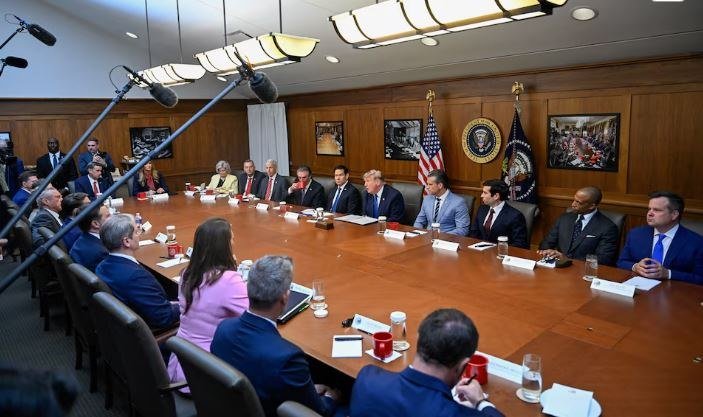
Donald Trump sat down with Israeli Channel 14 on 18 June and drew a red line that, on its face, makes no sense: if Israel strikes Iran independently, the United States will defend Israel. "Absolutely," he said, when asked the question directly. The headline, as circulated by Fars News and Clash Report, is a commitment to back any Israeli move against Tehran. Read in context, and against the memorandum of understanding signed the same week between Washington and the Islamic Republic, it is something else: a warning shot fired across the bow of the Israeli right.
The deal itself is fragile and incomplete. After more than two months of negotiations and roughly three months of open conflict, the US and Iran agreed to a ceasefire and signed an MoU rather than a binding treaty, leaving the central questions, particularly the terms of any nuclear dismantlement, unsettled, according to Middle East Eye's write-up of the agreement. The Supreme Leader's office confirmed that Mojtaba Khamenei personally authorised the signing, despite having "initially held a different position," a public airing of internal dissent that Iranian commentators treated as significant. Iran's government has already begun signalling how it intends to translate the deal into cash: a separate maritime-fee regime for the Strait of Hormuz, a chokepoint through which a meaningful share of global oil moves.
The political reaction in Washington has been just as jagged. JD Vance, dispatched to defend the agreement against Israeli critics, told a domestic audience that Trump is "your only ally left in the world," framing the billions in annual US defence aid to Israel as the price of admission to a conversation Israel cannot afford to walk away from. The New York Times, however, ran a piece on the same day noting that Vance's defence "rests on vague and misleading claims," particularly his assertion that Iran gained no new benefit from the lifting of oil sanctions, a position contradicted by the basic architecture of the deal. Late-night host Jimmy Kimmel catalogued the inverted scoreboard for his audience: an ayatollah killed, replaced by what Kimmel described as a "younger and even more radical ayatollah," with the war's outcome now being edited into Wikipedia's entry as an Iranian win by editors with no discernible partisan alignment.
Which brings the story to Lindsey Graham. The South Carolina senator, who has spent two decades positioning himself as the US Senate's most reliable advocate for maximalist pressure on Iran, has refused to accept the new reality. Per reporting surfaced by The Canary, Graham continued posting on X this week about "expanding the Abraham Accords," a framework whose principal premise was the isolation of Tehran, not its rehabilitation. The Abraham Accords were always a theory about regional architecture: peace between Israel and the Arab states could be consolidated only after the Iranian question was settled on hard-line terms. The Trump MoU inverts that sequence. It treats Tehran as a negotiating partner with a claim to revenue, sanctions relief, and a sovereign monopoly over the world's most strategically vital waterway. Graham's continued insistence on the old playbook reads less like strategy than like an inability to update priors.
But the structural problem is bigger than one senator. The US walked into this round under the assumption that a blockade and economic warfare campaign would force a capitulation; by the terms now being reported, Iran is "resuming oil sales" and "reaping strategic and financial gains." A retired intelligence commentator quoted via Osint Live put it bluntly: permitting Iran to resume oil sales is "far more consequential than a narrow" military or nuclear concession, the kind of outcome that resets the regional balance for a generation. The Vance line that the US retains "leverage to dictate the outcome of the next round" looks, on the public record, more like a negotiating posture than an empirical claim.
What to watch next is whether the Israeli political system absorbs the new geometry or tries to break it. With Israeli elections expected in the coming months and Netanyahu's coalition trailing in polls, per Middle East Eye's reading of the Israeli political weather, the temptation to act unilaterally, to test Trump's "absolutely" in real time, will be live. The next round of talks, the first Iranian oil cargoes bound for buyers previously cut off, and any movement in the Strait of Hormuz fee schedule will tell us whether the deal is a ceasefire that holds or merely a pause before a second, uglier war.
Follow the event.
These dated source records provide context. They do not retrospectively verify this archive article.
Separate what the nuclear watchdog reported from what it could not determine after the June 2025 strikes.