Trump's Iran deal doubles down on a transactional Middle East — and leaves the architecture underbuilt
A White House read-out framed a multi-stage deal as already done. The structural pieces underneath it are thinner than the rhetoric suggests.
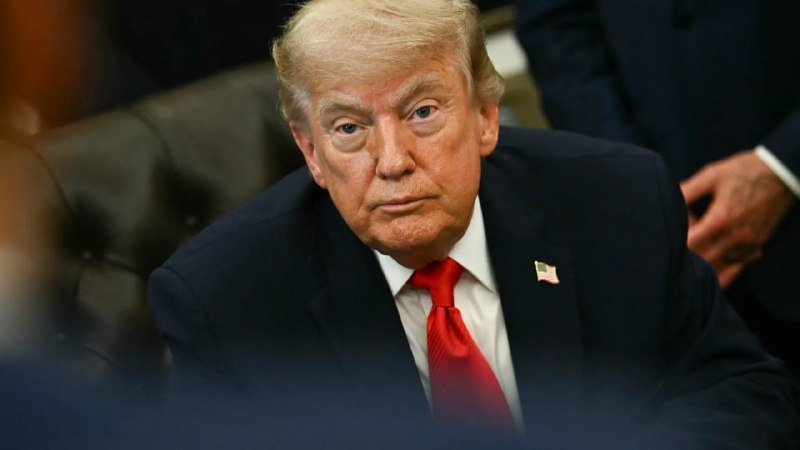
The choreography was deliberate. On 16 June 2026, in the Cabinet Room of the White House, US President Donald Trump sat across from Qatari Emir Sheikh Tamim bin Hamad Al Thani and told the press pool that the Iran file was effectively closed. "We have our deal done with Iran," Trump said, per the Open Source Intel wire capture of his remarks. "It should be successful. It goes to a second stage, which I think will be easier." He was flanked by a Gulf leader whose government, alongside Saudi Arabia and the UAE, has spent the better part of two years quietly shuttling between Washington and Tehran to make the optics of detente possible.
What is being sold as a finished diplomatic product is, on the evidence available, a frame around a process — and a process that the same speaker described, in the same remarks, as reversible. "We are not investing any money in Iran, by the way," Trump added, pushing back on a rumour from the prior day. "A rumor got out there yesterday. It was ridiculous. We have the right to go in someday and do if I want to do something." The right of return to military action, asserted on camera, is now part of the deal's pre-amble.
The thesis to test is straightforward. Either the United States has secured something durable on the nuclear file, on missile proliferation, and on regional de-escalation — in which case the transactional, leader-to-leader diplomacy on display is producing a real architecture. Or it has purchased a pause, dressed it in the language of a deal, and left the harder questions for the second stage that may or may not arrive.
What was actually said
Strip away the pageantry and the read-out contains four distinct claims. First, that an Iran agreement exists in completed form and now moves to a second, "easier" phase. Second, that US money is not being deployed inside the Iranian economy. Third, that regime change is not US policy — though Trump added the qualifier that "I guess you have regime change in Iran," suggesting the administration's analytical view is that the Islamic Republic is in slow internal motion regardless. Fourth, that the Lebanon war is "minor" and that the Iran deal can survive it.
None of those four claims, taken together, describes an architecture. A completed deal with a sequel ahead of it; a denial of investment that nonetheless reaffirms the option of force; a regime-change posture framed as observation rather than action; and a regional war described as incidental — these are the components of a transactional settlement, not a structural one.
The Qatari track and what it can carry
Qatar's role in this picture deserves more weight than the read-out grants it. The Emir's presence was framed by Trump in personal terms: "The Emir is a fantastic man, respected all over the world." That warm register is not incidental. Doha has served as the principal back-channel for Iran–US communications for the better part of a decade, and Al Udeid air base hosts the largest US forward operating footprint in the Gulf. The Emir's line to the press — that "there are going to be huge Iran opportunities," per the same wire capture — reads less as a forecast and more as an invitation to capital. The opportunity in question is the same one the Trump administration has been gesturing at for months: a post-sanctions Iranian market wired into Gulf finance, on terms that favour the intermediaries.
This is the part of the picture that the Western press has covered least carefully. A nuclear deal that opens a market is a different object from a nuclear deal that closes a weapons file. The two objectives can coincide, but the first is being negotiated by the same Gulf monarchies that have a financial stake in the result.
What the counter-narrative says
The Tehran-facing read is straightforward. Iranian state media has, across multiple statements since the framework was first hinted at in early 2025, framed any deal as evidence that resistance pays: sanctions came off only after Iran enriched, drones, and the regional axis held. From that vantage point, Trump's "right to go in someday" language is not a threat to be managed but a confirmation of the strategic logic that produced the original nuclear advance in the first place. A deal that leaves the option of force on the table, in this reading, is a deal that concedes the legitimacy of the threat and rewards the posture that made it credible.
The honest assessment is that both readings contain truth. The deal does leave the option of force on the table; that is the price of its domestic viability in Washington. The deal does, by the same token, concede the strategic logic of Iran's regional posture; that is the price of Tehran's signature. A settlement that satisfies neither constituency fully is, on the historical record, a settlement that survives only as long as the next crisis does not arrive.
The structural frame, in plain language
What is unfolding in the Gulf is the construction of a transactional regional order, in which personal relationships between leaders substitute for the kind of multilateral architecture the 2015 JCPOA represented. That earlier arrangement was flawed, slow, and unpopular on multiple sides — but it did have the virtue of putting the verification problem inside an institutional frame. The current arrangement has the virtue of speed and the disadvantage of fragility. The right of return to force, asserted publicly by the US president, is not a bug of this approach; it is the feature. Deterrence, in this model, runs through personal credibility rather than through treaty text.
The question that should be asked of any administration selling a deal on these terms is the boring one: what happens when the principals leave office, or when one of them decides the other has overreached. The answer, on the available evidence, is that the deal unravels. There is no architecture underneath the handshake.
Stakes and what to watch
If the second stage proceeds on the announced terms, the principal beneficiaries are the Gulf monarchies that have positioned themselves as indispensable intermediaries, and the Iranian merchant class that has been waiting for sanctions relief since 2018. The principal losers are the Iranian opposition factions that bet on the regime's economic isolation as a slow-motion pressure strategy, and the Israeli and American hawks who read the same isolation as the only non-military route to constraint. The Lebanese front, dismissed as a minor war, is in fact the most likely trigger of a second-stage collapse — a single serious escalation there would give any US president a domestic reason to walk the "right to go in" rhetoric back into action.
The two things the read-out does not specify — and that the public evidence does not yet allow anyone to specify — are the technical shape of the nuclear constraints in the second stage, and the legal mechanics of any sanctions relief. Until those are on paper, the deal is a frame around a process. That is not nothing. It is also not a building.
This publication treats the 16 June read-out as a transactional moment, not yet a structural settlement, and will widen its sourcing as the second-stage text, if it exists, becomes public.
Wire provenance
This editorial synthesis draws on the following public wire/social posts:
- https://t.me/s/osintlive
- https://t.me/s/osintlive
- https://t.me/s/osintlive
- https://t.me/s/osintlive
- https://t.me/s/osintlive
- https://t.me/s/ClashReport
Follow the event.
These dated source records provide context. They do not retrospectively verify this archive article.
Separate what the nuclear watchdog reported from what it could not determine after the June 2025 strikes.