Trump's Iran deal enters a second stage — and a $300 billion fund is suddenly on the table
On 16 June 2026 the US president described Iran's leadership as 'rational' and confirmed a second-stage accord is in motion, while a $300 billion investment fund waits in the wings if Tehran holds the line.
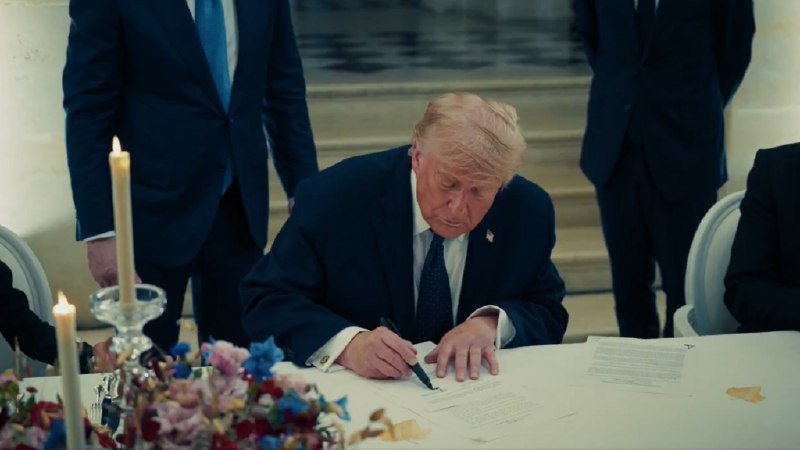
On the morning of 16 June 2026, in a sequence of remarks relayed by Telegram channels that track US foreign-policy statements in near real time, Donald Trump set out the architecture of an Iran deal he says is already done — and signalled that the harder part is only beginning. The US president told reporters that Iran now has "rational leadership," that the agreement "goes to a second stage, which I think will be easier," and that, in his formulation, an Iranian nuclear weapon would draw an American response: "In my deal, if Iran gets a nuclear weapon, they get blown up. In Obama's deal, they were allowed to have a nuclear weapon." The comments, timestamped between 09:43 and 10:16 UTC, sketch a posture that is at once transactional and absolute: a deal in motion, a red line stated bluntly, and an open question about what the next phase actually costs — financially, diplomatically, and strategically.
The second stage is where the money is. On 15 June 2026, the Financial Times reported, via X analyst Unusual Whales at 21:11 UTC, that the Trump administration is weighing a roughly $300 billion fund for Iran if the accord is maintained. The figure, if it survives contact with Congress and the Gulf monarchies, would represent one of the largest single inflows into the Iranian economy since the 2015 Joint Comprehensive Plan of Action, and a sharp departure from the maximum-pressure template Trump ran on in his first term. The same Telegram thread that carried the FT reference also records Trump pushing back on the rumours: "We are not investing any money in Iran, by the way. A rumor got out there yesterday. It was ridiculous. We have the right to go in someday and do if I want to do something or somebody wants to do something." Read together, the two messages form a recognisable negotiating grammar: deny the headline, preserve the option, keep the pressure on.
What the president actually said
Stripped of the Telegram relay, the on-record content is narrow but consequential. Trump confirmed the existence of a first-stage deal and described a second stage as imminent. He ruled out an American investment programme — a denial that landed within hours of the FT report surfacing, suggesting the White House wanted to dampen speculation rather than deny the underlying channel. He argued that the Iranian leadership has changed in character, a notable rhetorical shift from the 2018–2020 sanctions era, when the same administration framed the Islamic Republic in terms of irrationality and regime-collapse inevitability. And he drew a bright nuclear line: no weaponised programme under his deal, on pain of military action.
Two further statements add texture. On regime change — a topic that tends to surface in Washington debates about Iran the way weather does in small talk — Trump said, "I don't believe in regime change. I've watched regime changes for years, and they never work. It has to just happen," and added, "I never cared about regime change, but I guess you have regime change in Iran." The first sentence is a long-held realist position. The second is a hand-off to circumstances the White House can claim credit for without claiming responsibility. And in a comment that complicates the regional picture, Trump said of past Iranian behaviour, "Iran would even hit Türkiye once. I never understood it. Nobody is going to understand it. That's the problem. They are totally irrational people, and those people are now gone." The reference to Türkiye is unusual in this register — Ankara and Tehran are not usually framed as adversaries in Washington — and signals how broadly the administration is willing to recharacterise the Islamic Republic's past decision-making in order to underwrite the present deal.
The $300 billion question
The Financial Times's reported $300 billion figure is the single most consequential number in the package, and the one the White House is moving fastest to muddy. Even at the lower end of plausible disbursement schedules, a fund of that size would dwarf the frozen Iranian assets currently held in escrow in South Korea, Iraq, and Qatar, and would approach the scale of the post-sanctions reconstruction estimates floated around the JCPOA. It would also do something the JCPOA never quite managed: give Tehran a tangible economic reason to keep its side of a bargain that has, so far, been mostly defined by what Iran must stop doing.
That is the structural read. The 2015 deal was a denuclearisation instrument with an economic side-effect. The 2026 deal — to the extent that the second stage exists in any concrete form — looks like it is being designed in the opposite direction: an economic instrument with a denuclearisation conditionality. Whether that inversion survives the next round of Israeli, Saudi, and congressional scepticism is the open question. The Israeli security establishment, which is not party to this Telegram thread but is on permanent watch for any US-Iran accommodation, has historically read Iranian cash inflows as a strategic threat regardless of the nuclear file. A $300 billion fund, even one nominally ringfenced for civilian infrastructure, will be read in Tel Aviv and Riyadh as a balance-of-power event, not a financial one.
What we verified / what we could not
The verified column is short and solid. Trump did make a series of statements on 16 June 2026, between 09:43 and 10:16 UTC, as relayed by the Telegram channels Clash Report and DDGeopolitics. The quotes used in this article — including the "rational leadership" line, the "blown up" red line, the regime-change disclaimer, the Türkiye remark, the denial of US investment in Iran, and the confirmation of a second stage — are all drawn from those two channels. The Financial Times report on a $300 billion fund is sourced via Unusual Whales on X, timestamped 15 June 2026 at 21:11 UTC; the original FT article URL is not in the thread context and is not cited here.
What we could not verify from the available thread: the specific architecture of the second-stage deal, the legal vehicle for any $300 billion fund, the identities of the Iranian counterparts Trump is dealing with, the position of the Iranian foreign ministry, and the reaction of Gulf and Israeli governments. The Telegram material is also a relay of US-side statements, not a balanced diplomatic readout — Tehran's own framing of the deal, the second stage, and any investment mechanism is absent from the source set. This article therefore leans on the American statements as primary, treats the FT figure as reported-but-not-corroborated, and flags the Iranian counter-frame as a known gap rather than papering over it with inference.
Stakes
If the second stage is real, and if a fund on the order of $300 billion is the price of keeping it on the rails, the regional order shifts in three directions at once. Iran gains a sanctioned economic lifeline and a powerful argument that engagement works; the United States reasserts itself as the indispensable broker in a Middle East it had, under the previous maximum-pressure template, largely written off; and Iran's rivals — Israel, Saudi Arabia, and the UAE most visibly — are left to calculate how to live with an Iranian economy that is richer, a US security guarantee that is more conditional, and a nuclear file that is, by the administration's own account, still one detonation design away from a military response. The trajectory Trump described on 16 June is a high-wire crossing, not a settlement. The next few weeks will determine which side of the wire Iran, and the deal, end up on.
This publication framed Trump's 16 June comments as a negotiating posture rather than a finished doctrine, and held back from asserting the $300 billion figure as confirmed policy on the strength of a single relayed report. The Iranian counter-frame is a known gap in the source set; the desk will return to this story as more material surfaces on both sides.
Wire provenance
This editorial synthesis draws on the following public wire/social posts:
- https://t.me/DDGeopolitics/
- https://t.me/ClashReport/
- https://t.me/DDGeopolitics/
- https://t.me/ClashReport/
- https://t.me/ClashReport/
- https://t.me/ClashReport/
- https://t.me/ClashReport/
- https://t.me/ClashReport/
- https://x.com/unusual_whales/status/
Follow the event.
These dated source records provide context. They do not retrospectively verify this archive article.
Separate what the nuclear watchdog reported from what it could not determine after the June 2025 strikes.