Trump Floats Tighter Russia Sanctions as Oil Slump Hands Washington Leverage
The president told reporters he could soon reimpose or strengthen curbs on Russian crude, citing lower prices. Markets read it as both a market-moving statement and a bargaining posture ahead of any Ukraine settlement.
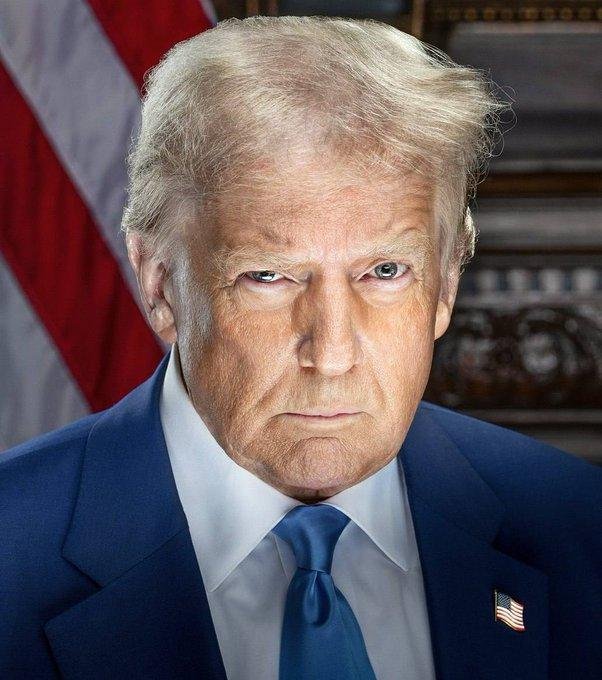
At 18:32 UTC on 15 June 2026, an account closely watched by traders posted a single sentence from the US president: that it is important stocks are rising. Within hours, the same administration had moved the conversation from equities to crude. By 12:42 UTC on 16 June, a Ukrainian operational channel was carrying the president's suggestion that he could soon strengthen sanctions against the Russian Federation, citing the drop in oil prices. A minute later, a separate counter-sanctions channel relayed the same remarks, framed as a possible reimposition of curbs on Russian oil.
The sequence matters. The White House used a soft tape in energy to raise the cost of doing business for Moscow without yet signing anything. That is the lever, and the timing is not incidental.
A sanctions threat tethered to the tape
The remarks, as carried by the channels, are deliberately under-specified. The president did not announce a new executive order, did not name a price cap, and did not name the legal mechanism — a Treasury sanctions package, a State Department designation, or a secondary-tariff regime similar to the ones used against buyers of Iranian and Venezuelan crude. The phrasing was conditional: he could soon strengthen sanctions, thanks to the drop in oil prices. The conditional tense is the news.
The mechanics are familiar. Sanctions bite harder when the targeted exporter cannot easily redirect volume at a discount. With benchmark crude trading lower, Russian Urals already prices at a structural discount to Brent; tightening sanctions now means tightening them on an industry that is already compressed on margins, and on shadow-fleet operators whose freight costs do not fall with the spot price. The administration's argument, implicit in the choice of words, is that the cost of compliance is lower for the rest of the world precisely because the cost of non-compliance is higher for Moscow.
There is a second, more market-sensitive reading. Oil futures respond to perceived supply risk faster than to actual supply changes. A headline of the form "may soon strengthen" is enough to bid up front-month contracts by a margin that has nothing to do with current fundamentals. That move itself becomes a reason not to escalate: the political benefit of the threat, both at home and against Moscow, is realised before any instrument is signed.
The equities context, and why the order matters
The earlier post — that it is important that stocks are rising — is not a throwaway line in a White House communications environment where the president routinely comments on tape. It sets the frame for the sanctions signal that followed. If equity strength is a stated political objective, then a tool that moves both oil and risk assets in a single announcement is a tool that does two jobs at once.
That does not mean the two messages are coordinated in the strict sense. It does mean they are coherent. A president signalling that he wants stocks higher, and then floating a sanctions move that — by raising the prospect of tighter enforcement on a major exporter — could compress supply just enough to lift crude, is reading from a single macro script. The market hears it as: pain in Moscow, limited downside at home.
The counter-read is straightforward and has to be on the page. The president has used similar language before. Theatrical sanctions threats have, on multiple occasions since 2022, been walked back within days when counterparties engaged, when prices moved the wrong way, or when allied capitals flagged the cost of enforcement. The phrase "could soon" is not a calendar.
A more crowded sanctions architecture
The conversation is also no longer bilateral. Whatever the US Treasury designs, it lands inside an architecture that already includes the G7 price cap, the EU's oil-import ban and services ban, and the UK's separate listings regime. Each of those instruments has a constituency: European refiners that have spent two years reconfiguring supply chains, G7 insurers that have to decide what counts as compliant shipping, and Asian buyers — primarily in India and China — that have absorbed discounted Russian barrels at scale.
A US move that tightens enforcement against shadow-fleet operators, or that sanctions additional downstream buyers, would be doing two things at once. It would raise the compliance premium for non-Russian buyers, making Russian crude less attractive even at a discount. And it would test how far the G7 architecture can be pushed without fragmenting. India has been the most visible flashpoint; the question of secondary tariffs on third-country buyers is no longer hypothetical.
For Moscow, the arithmetic is unkind in either direction. Tighter sanctions and lower prices mean less revenue per barrel on smaller volume. Looser sanctions and lower prices mean more revenue per barrel on the same or larger volume, but a smaller absolute receipt. The Kremlin's preference, on the evidence of its public statements, has consistently been the second option, which is why the diplomatic language out of Moscow in recent weeks has emphasised the need to restore Russian export access as a precondition for any settlement on Ukraine.
Stakes, and what the next ten days look like
If the administration follows through, the most direct beneficiaries are US shale producers and Gulf-state exporters, who gain pricing power without supplying additional volume. The most direct losers are the same downstream buyers — Indian refiners above all — that have built margin on discounted Russian crude. Ukraine, whose wartime fiscal arithmetic is sensitive to every dollar of Russian energy revenue, gains either way; tighter US enforcement means less money flowing into the Kremlin's war chest, with or without a formal instrument.
The next ten days are the window. The president has, by his own framing, tied the move to a price condition that is already met. If no new sanctions package is visible by early July, the threat reverts to a negotiating posture — useful, but no longer a market-mover. If a package does land, expect it to focus on the shadow fleet, on third-country facilitators, and on the financial plumbing that still touches Russian crude, rather than on a sweeping new embargo. The theatre is in the words; the substance, when it comes, will be in the annexes.
What remains genuinely uncertain is the reaction function. The sources cited above do not specify which mechanism the president has in mind, nor do they specify whether the move would be coordinated with the G7 price-cap partners, nor how India and China would be addressed. The conditional tense in the original remarks is doing a lot of work, and the market is right to price it as a probability rather than a fact.
Desk note: Monexus carried the remarks in the order they entered the wire — equities first, oil second — and treated the sanctions signal as conditional. Where the president's framing and the operational-channel framing differed on emphasis, the official remarks were given primacy.
Wire provenance
This editorial synthesis draws on the following public wire/social posts:
- https://x.com/unusual_whales/status/
- https://t.me/ClashReport/
- https://t.me/operativnoZSU/
Follow the event.
These dated source records provide context. They do not retrospectively verify this archive article.
A dated voting record is evidence of one decision. Use the original UN record before turning it into an alignment label.
Visual explainer · historical vote of 2022-03-02 →