Trump turns on Netanyahu at G7, calling Beirut strike 'vicious' and demanding restraint in Lebanon
At the G7 summit on 16 June 2026, US President Donald Trump publicly rebuked Benjamin Netanyahu over a Beirut strike and demanded that Israel treat Lebanon with respect, marking the sharpest rupture between the two leaders in months.
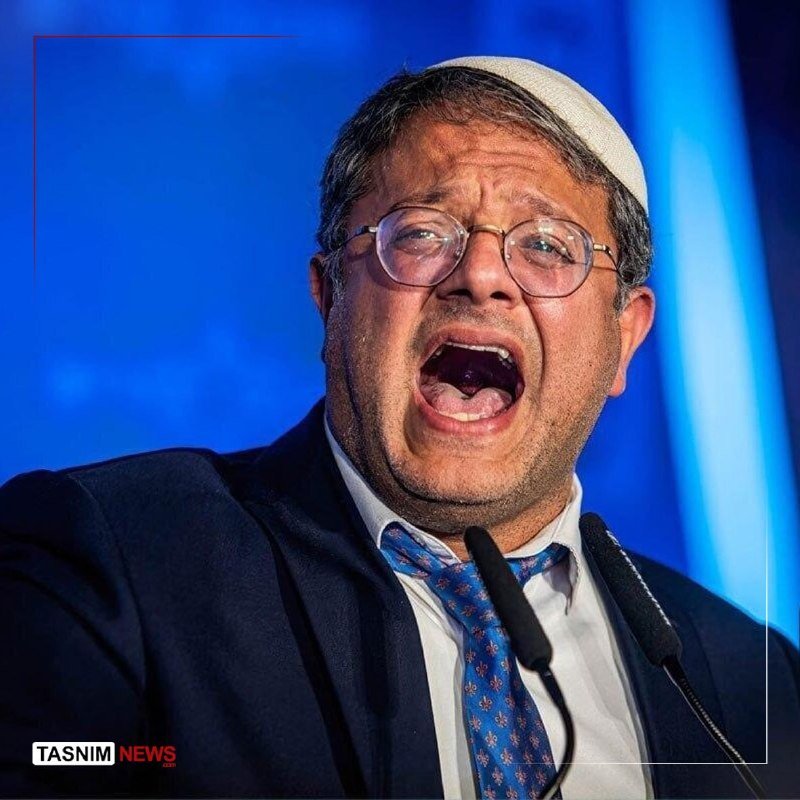
At the G7 summit on 16 June 2026, US President Donald Trump used a public stage to lash Israeli Prime Minister Benjamin Netanyahu over an Israeli strike on Beirut, calling the operation "vicious" and demanding that Israel show "respect" for Lebanon. The rebuke, delivered in front of fellow leaders and broadcast worldwide, is the sharpest public break between Washington and Jerusalem in the current Israeli campaign and the first time Trump has used such personal language about Netanyahu in this phase of the fighting.
The outburst carries weight because it lands while Israeli forces remain engaged in active operations against Hezbollah infrastructure inside Lebanon, and while the Trump administration is simultaneously brokering a wider regional arrangement that requires Israeli cooperation rather than Israeli defiance. The question now is whether the comments mark a genuine policy pivot by the White House toward restraining Netanyahu — or whether they are the kind of theatrical pressure Trump has historically deployed to bring a counterpart back into line before quietly conceding the underlying Israeli position.
The scene at the summit
Trump's remarks came during his scheduled press appearance at the G7 on 16 June 2026, according to Iranian state-aligned channel Press TV, which posted video of the exchange at 18:23 UTC. The president framed his comments as a broader frustration with the trajectory of Israel's military operations against Lebanon, telling reporters that the campaign had gone on "too long" and killed "too many people."
He then turned directly to Netanyahu. The Israeli prime minister must be "more responsible" with regard to Lebanon, Trump said, according to a post by the prediction-market account Polymarket at 17:44 UTC. Minutes later, at 15:57 UTC, the markets account @unusual_whales summarised the same remarks with a sharper formulation: Trump had said Netanyahu must now "treat Lebanon with respect."
The wording matters. "More responsible" and "respect" are diplomatic softeners — but the framing around them was not. Press TV's clip shows Trump deploying "vicious" to describe the Beirut operation, a term no sitting US president has used about an Israeli military action in recent memory. The contrast between the polite public language and the sharper descriptor is itself the story: it lets Trump signal personal displeasure without forcing a formal policy break.
Why now — the strategic backdrop
The Israeli campaign against Hezbollah in southern Lebanon and the southern suburbs of Beirut has been running in intensified form since late 2024, with periodic large-scale air operations against what Israel says are command nodes, weapons depots and rocket-launch infrastructure. Civilian casualty counts in Lebanon have mounted steadily through that period; the Beirut strike that triggered Trump's comments sits inside that pattern of escalation.
For the White House, the timing is awkward. The administration has been trying to lock in a wider regional architecture — normalisation-adjacent understandings with Arab partners, a de facto ceasefire track with Hezbollah intermediaries, and continued hostage diplomacy with Tehran's proxies. Each of those tracks is easier with a quiet Israeli front in Lebanon, and harder with images of Beirut building collapses dominating the G7 news cycle. A US president publicly scolding an Israeli prime minister at a summit of major Western economies is the kind of moment that reassures Arab and European partners that Washington is still capable of saying "no" to Jerusalem — and that unsettles Israeli confidence in American reliability in equal measure.
The counter-read: pressure tactic, not policy
There is a competing reading, and it should be set out plainly. Trump has a long track record of public criticism followed by private accommodation. The 2024 episode in which he publicly demanded that Israel wrap up operations, only to let the campaign continue on essentially the same trajectory, is the obvious precedent. So is the pattern of escalating presidential rhetoric that resolves into a quiet Washington-brokered arrangement that largely preserves Israeli operational latitude.
On this reading, the G7 comments are leverage, not a red line. The point is to make Netanyahu feel the cost of defiance in a setting where other leaders are watching, then return to the underlying bargain: Israeli operations continue, but with adjustments calibrated to American domestic and diplomatic needs rather than to anything resembling an allied strategy of restraint. The strongest version of this argument notes that the Trump administration has not, as of the times reported above, paused arms deliveries, conditioned aid or announced any concrete consequence for the Beirut operation. Words, on this telling, are doing the work that policy is not.
What makes the current moment feel different is the venue. A G7 press appearance is not a Truth Social post. It is a piece of multilateral diplomacy performed in front of the leaders whose cooperation Trump will need on Iran, Ukraine and trade in the months ahead. European governments have grown increasingly vocal about Lebanese civilian casualties; Gulf partners have been pressing for a Lebanese ceasefire as a precondition for further regional deals. Trump's language on 16 June is, at minimum, a signal to those partners that the US president hears them — and a signal to Netanyahu that the cost of being seen as the obstacle is now being raised in public.
What we verified / what we could not
What the public record on 16 June 2026 supports:
- Trump publicly criticised Netanyahu over the Beirut strike at the G7 summit on 16 June 2026, using the word "vicious" to describe the operation and saying it had gone on "too long" and killed "too many people" (Press TV video post, 18:23 UTC).
- Trump said Netanyahu must be "more responsible" with regard to Lebanon (Polymarket post on X, 17:44 UTC).
- Trump said Netanyahu must now treat Lebanon with respect (@unusual_whales post on X, 15:57 UTC).
What the record does not, on the basis of these items, support:
- The exact date, location and casualty count of the specific Beirut strike that prompted the rebuke. The Press TV item references "the strike" without supplying a building address or toll. Monexus cannot, from the available sources, confirm a specific incident file.
- The full transcript of Trump's remarks. The clips summarised above were captured from the press appearance, but a complete White House transcript was not in the inputs.
- Any Israeli official response. As of the timestamps above, no Netanyahu office statement or IDF press release reacting to the G7 comments is in the source set.
- Any concrete US policy action — sanctions, aid conditioning, demarche — flowing from the remarks. The available sources record rhetoric, not measures.
This ledger matters because the temptation, on a story this loud, is to fill the silence with plausible-sounding specifics. Monexus declines to do so. The verifiable record is two adjectives, two demands ("more responsible," "respect"), a venue and a date. That is enough to anchor the story; the rest is interpretation, labelled as such.
Structural frame — what larger pattern this sits inside
Public US-Israel friction is not new; what is unusual is the venue and the personal temperature. The deeper pattern is the gap between an Israeli operational tempo calibrated to the destruction of Hezbollah's residual rocket and command capability in Lebanon, and an American regional strategy that needs Lebanon quiet so that other files — Iran, the Gulf, hostage architecture — can move. When those two agendas align, friction stays behind closed doors. When they diverge, it surfaces, and the surface chosen tends to be whatever multilateral forum the US president is currently standing in.
That dynamic is not about personalities, even though the personalities are loud. It is about the structural mismatch between an Israeli military campaign designed to finish a decades-long fight against a specific armed opponent, and a US-led regional order that has to balance Jerusalem, Beirut, Tehran, Riyadh and Cairo simultaneously. Trump is the loudest messenger of that mismatch in American politics; he is not its author.
Stakes — who wins and who loses
If Trump's comments harden into a policy that constrains Israeli operations — through conditioning, demarches or quiet ceasefire brokering — the winners are Lebanon's civilian population, European and Gulf partners pressing for de-escalation, and the parts of the US administration that want a quieter regional landscape to negotiate over. The losers are Netanyahu's political position at home, where any visible American pressure feeds the coalition argument that Israel is being restrained by a partner, and the Israeli general staff, which loses some of the operational latitude it currently enjoys.
If the comments dissolve into rhetoric, as the skeptical reading expects, the winners are the Israeli operational planners and the political network around Netanyahu that has bet on a continuation of permissive American support. The losers are Lebanese civilians, who absorb the continued campaign, and the credibility of US diplomacy in Arab capitals, where leaders will note carefully whether the G7 moment produced action or only air.
Nuance — what remains uncertain
Three things remain genuinely unsettled. First, whether the Trump administration's follow-up moves will be substantive or theatrical; that will be visible within days, not weeks. Second, whether the Israeli political system absorbs this as a one-off outburst or as a signal that the strategic ceiling on operations against Lebanon is being lowered. Third, whether the wider regional track — Iran talks, Gulf normalisation-adjacent understandings, hostage diplomacy — is far enough advanced that Netanyahu can afford to ignore the pressure, or whether he needs American goodwill badly enough to make concessions in private that the public comments demand.
What the available sources cannot answer, and what Monexus therefore does not assert, is which of those three paths the next 72 hours will close off. The record on 16 June 2026 is unambiguous about the language. It is silent about what comes next.
This piece follows Monexus's standing convention on Israel–Palestine and wider Middle East coverage: Israeli security concerns and Lebanese civilian harm are both treated as first-order facts, Israeli and Western-wire sources are foregrounded, and Iranian state media is cited with explicit framing rather than as a stand-alone basis.
Wire provenance
This editorial synthesis draws on the following public wire/social posts:
- https://t.me/presstv/