Trump floats Syria as Hezbollah enforcer as US-Iran deal carves out a Lebanon clause
President Trump says Israel could let Syria's transitional government take on Hezbollah, while a reported US-Iran understanding permits Israeli operations inside Lebanon without breaking the deal.
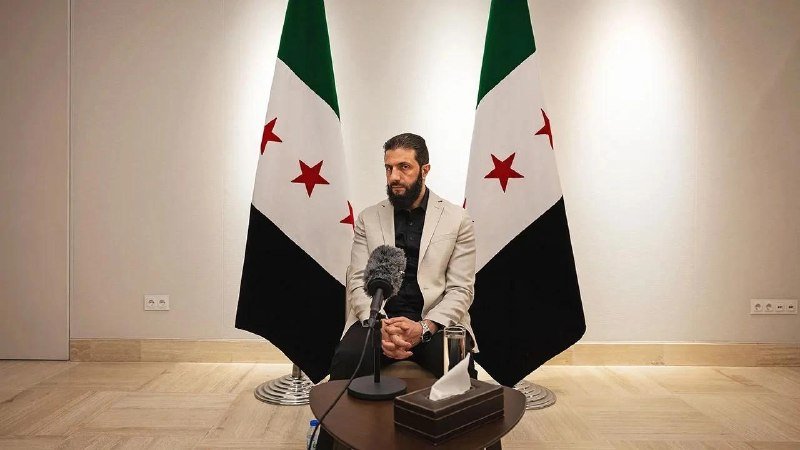
President Donald Trump told reporters on 16 June 2026 that he had suggested to Israel that it let Syria's transitional government under Ahmad al-Jolani handle Hezbollah, and that, in his words, he believed the Syrians "would do a better job." The remarks, circulated by Telegram channels Clash Report, Abu Ali Express and DDGeopolitics, were made the same morning Trump described Iran's leadership as "rational" — a phrase that signals the diplomatic terrain around a US-Iran understanding has shifted in ways that are now rippling across the Levant.
The pattern forming around Beirut is unusual by the standards of recent Middle East diplomacy. A reported clause in a US-Iran arrangement would, according to Haaretz citing a Pakistani source, allow Israel to continue military operations in Lebanese territory without breaking the wider deal. Trump has separately said that an Israeli move against Lebanon would not, on its own, void the US-Iran understanding. Two regional readouts — one Israeli, one Gulf-adjacent — point in the same direction: the Lebanon front is being carved out of the diplomatic envelope, not folded into it.
The Lebanon carve-out
The most concrete claim in circulation comes from a Haaretz report that the US-Iran deal contains a Lebanon clause permitting Israel to operate "with freedom" inside Lebanese territory and to continue military operations there. The Haaretz sourcing is indirect — the paper cites a Pakistani interlocutor — and the underlying text of any such clause has not been published. That caveat matters. Israeli press has previously carried single-source accounts of understandings with Tehran that did not survive contact with the actual negotiating record. Treat the existence of a written clause as reported, not confirmed.
What can be confirmed from the public record is the direction of the President's own statements. On 16 June 2026, Trump was recorded saying that an Israeli strike on Lebanon would not break the US-Iran deal. He also said he had suggested to Israel that Syria's authorities take responsibility for Hezbollah. Both remarks were carried by Telegram-based Middle East desks, including DDGeopolitics and Abu Ali Express, with the Syria line in particular amplified by Clash Report. The cluster of channels carries a single underlying audio-visual source — a Trump press availability — and the quoted language is consistent across them.
The Syria hand
The proposal to outsource the Hezbollah problem to Damascus is the more provocative of the two remarks. Ahmad al-Jolani's government in Syria has spent the past several months consolidating control over a fragmented post-Assad landscape and has had intermittent friction with Hezbollah's remaining networks along the former Syrian-Lebanese border corridor. The implicit logic of Trump's suggestion is that a hostile-to-Hezbollah actor with reach on that border could do work that Israeli airpower alone has not finished — and that the US would prefer that work be done by a third party rather than by an expanding Israeli ground presence.
There is, however, a second read of the same sentence. Al-Akhbar, the Beirut-based newspaper aligned with the Lebanese resistance axis, reported on 16 June 2026 that the al-Jolani government is "looking for arson against Hezbollah" — language the paper uses to describe a Syrian leadership allegedly seeking to manufacture a new conflict rather than contain an old one. The framing is hostile, and Al-Akhbar is an interested outlet, but the underlying observation is structurally compatible with the Trump suggestion: Damascus may be willing to escalate against Hezbollah because Damascus wants something from Washington, and escalation is the coin.
What is actually new
Two things are genuinely new in the 16 June cluster, and they are easy to conflate. The first is the explicit US presidential tolerance of continued Israeli operations inside Lebanon as a sub-component of a larger Iran file. That is a posture, not a treaty, but posture is what recent Middle East deals have actually consisted of. The second is the suggestion that a third government — Syria's — be deputised as the on-the-ground counter to Hezbollah, with US blessing. Both moves presuppose an Iran file sufficiently advanced to absorb them. Trump's "rational leadership" remark about Tehran is the predicate. Without a functioning US-Iran channel, neither Lebanon carve-out nor Syria hand-off is operable; the channel is what makes the trade thinkable.
What remains genuinely uncertain is whether Tehran has accepted the Lebanon terms at all. The reporting on the deal's contents is Israeli-press and Gulf-adjacent-press, with Haaretz on the most specific claim citing a third-country diplomat. Iranian state-aligned coverage of the same 24 hours has framed Syria's posture toward Hezbollah as provocative rather than opportunistic, and has not corroborated a Lebanon clause. The most that can be said with the present sourcing is that the United States is signalling — to Israel, to Syria, to its own domestic audience — that it intends to manage, rather than restrain, the next phase of the Hezbollah file.
Stakes
The near-term stakes are operational. If the Syria hand-off is real, Israeli air operations over Lebanon continue while the political cost of those operations is partly transferred to a third government. The Lebanese state, which has been unable since 2024 to assert a monopoly on arms inside its own territory, becomes the venue for someone else's campaign. For Syrian authorities, accepting the role buys leverage in Washington at the cost of a confrontation with a battle-hardened non-state army on its western border. For Tehran, the calculation is whether tolerating an Israeli operations tempo inside Lebanon, in exchange for preservation of the wider US-Iran arrangement, is a price worth paying. The reported clause is the price's name.
The longer-term stakes are about the architecture of any future settlement. A Lebanon front conducted as a side-letter of an Iran file, with enforcement partially outsourced to Damascus, locks in the proposition that Lebanese sovereignty is a residual category — to be managed when convenient, and set aside when not. That proposition is older than this administration, but the public blessing of it by a US president, and the willingness to attach it to a flagship diplomatic vehicle, sharpens it. The next round of reporting should focus on whether any of the three principal governments involved — in Washington, Jerusalem, and Tehran — confirms the Lebanon clause on the record. Until one does, the framing is ahead of the facts.
Monexus framed the 16 June remarks as a dual track — a Lebanon carve-out and a Syria hand-off — and treated the Haaretz single-source claim with the appropriate caveat, rather than running the headline as confirmed. Telegram channels were used as distribution evidence for Trump's verbatim quotes, not as authoritative interpreters.
Wire provenance
This editorial synthesis draws on the following public wire/social posts:
- https://t.me/clashreport
- https://t.me/abualiexpress
- https://t.me/DDGeopolitics
- https://t.me/rnintel
- https://t.me/farsna
Follow the event.
These dated source records provide context. They do not retrospectively verify this archive article.
Separate what the nuclear watchdog reported from what it could not determine after the June 2025 strikes.