Britain's £210m uranium deal hands Ukraine a two-year bridge over its energy cliff
On the margins of the G7 summit, Keir Starmer committed £210 million to keep Ukraine's reactors fuelled through 2028. The deal is small in money and large in signal.
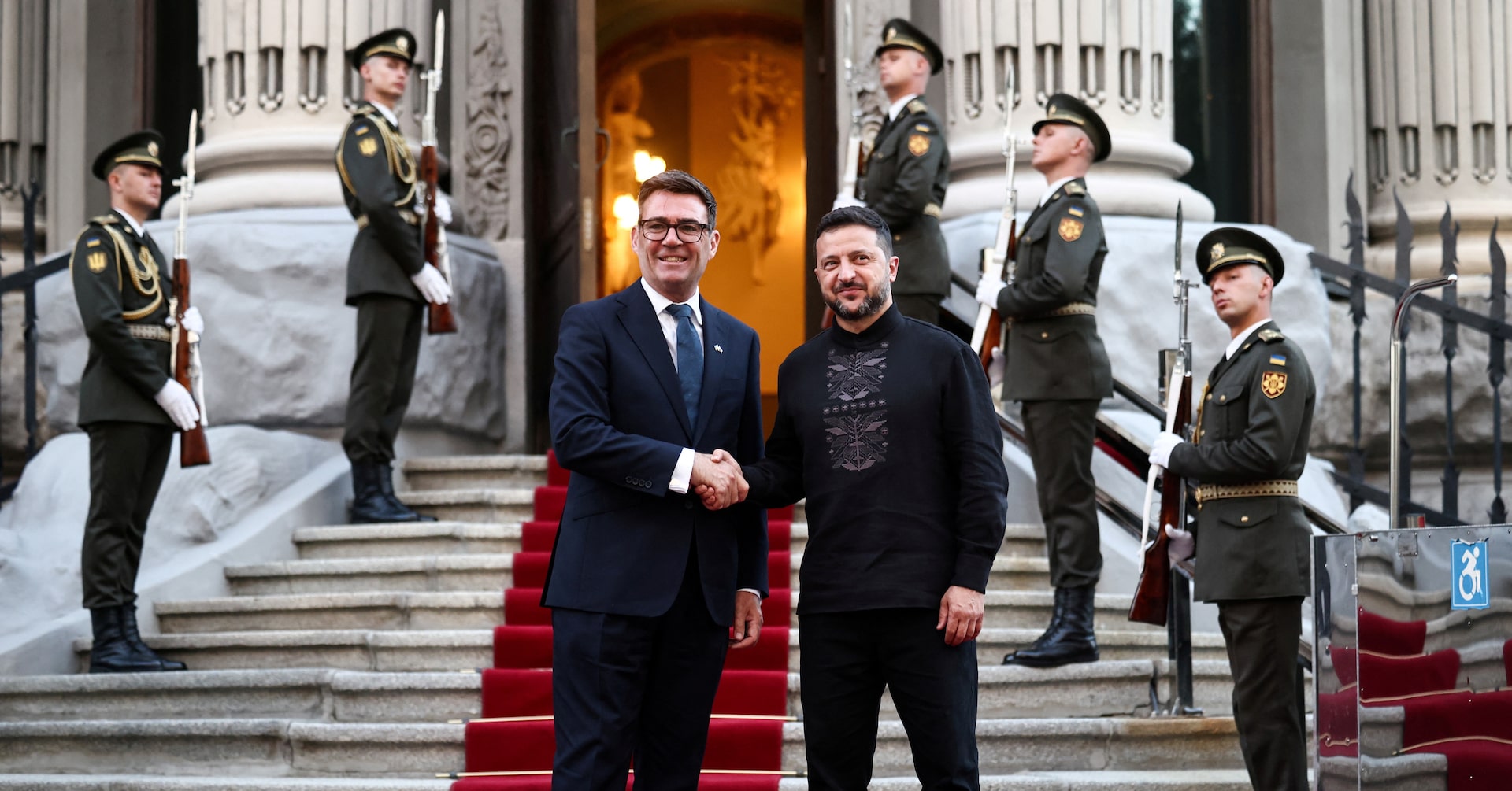
At the G7 summit on 16 June 2026, British Prime Minister Keir Starmer announced a deal to supply Ukraine with enriched uranium for its nuclear power plants through 2028, backed by £210 million in UK export and development financing. The figure and the timeframe are small. The signal is not. Britain has, in effect, underwritten two years of fuel flows for reactors that generate a large share of Ukraine's electricity, on a calendar that runs past the next British general election and well into the next phase of the war.
The announcement was carried in near-identical terms by two Iranian state-linked wires — Tasnim and Tasnim Plus — and the Farsi-language Jahan Tasnim service, which framed the deal as Britain stepping into a fuel-supply role formerly held by Moscow. The triangulation matters less for the framing than for the underlying fact: the United Kingdom is now the named Western guarantor of nuclear fuel for a country whose reactors were, until 2022, almost entirely dependent on Russian fabrication and enrichment capacity.
What the deal actually does
The £210 million is structured as British government financing, not a commercial purchase, and runs alongside the supply of enriched uranium itself. The fuel is destined for Ukraine's VVER fleet — Soviet-designed pressurised-water reactors that need a precise isotopic and geometric specification. Only a handful of Western suppliers can produce compatible assemblies at scale. Britain, through its civil nuclear industry and downstream partnerships, is positioning itself as one of them. By locking in deliveries through 2028, London is giving Ukrainian grid operator Energoatom a planning horizon long enough to schedule refuelling outages around war risk rather than around supplier uncertainty.
That is the operational point. The political point is older: every cubic metre of enriched uranium that does not come from Russia is a cubic metre of Russian state revenue, Russian diplomatic leverage, and Russian technical presence inside Ukrainian critical infrastructure that does not exist. The Kremlin spent two decades making itself the default vendor for post-Soviet nuclear plants. The war made that default unviable. Western governments are now, slowly and expensively, replacing it.
The G7 context — and what the communiqué did not say
The Starmer announcement landed on the margins of a G7 summit whose centre of gravity, on the public record, sat elsewhere. The uranium line was not the lead item out of any Western wire that picked up the summit; it was the lead item in the Iranian wires, which treated it as a story about Western escalation. That asymmetry is itself a useful indicator of which audiences the deal is calibrated for. The G7 host, summit communiqué language, and the photo-opportunity were about broader coordination. The fuel contract is a quiet, technical, two-year instrument that will only matter if the lights stay on in Khmelnytskyi, Rivne, and South Ukraine.
It is worth naming what is missing. The sources do not specify which British entity administers the financing, which enrichment or fabrication partner is contracted, whether the uranium is of Western European or transatlantic origin, or how the price compares with the Russian benchmark Ukraine was paying before 2022. The £210 million is the only number on the record, and it should be read as a ceiling, a down payment, or a working total — the announcement does not say which.
The structural frame — fuel as a fourth front
The war in Ukraine has been reported, sensibly, through four lenses: military, humanitarian, financial, and diplomatic. There is a fifth that gets less column-inches: critical infrastructure and supply chains. Energy sits at the centre of it. Russian strikes on the grid through 2024 and 2025 made that obvious. What is less obvious is the upstream side — the long-lead industrial inputs that make electricity possible in the first place. Nuclear fuel is the cleanest case. A fresh fuel load has to be ordered years in advance, fabricated to a reactor-specific design, and shipped under physical-security conditions that a country at war cannot fully guarantee. A fuel-supply interruption is not a price shock; it is a slow throttle on the grid, felt in rolling blackouts and industrial curtailment months after the contract gap opens.
London is therefore buying Ukraine optionality. Two years of guaranteed fuel is two years during which the wartime energy narrative does not have to include a "what happens when the rods run out" chapter. That chapter is now postponed until at least 2029 — a horizon long enough to be useful, and short enough to keep the question alive in Western planning.
What Russia loses — and what Russia may yet keep
The Russian counter-read, present in the framing of the Iranian state-linked wires, is that British money is being used to extend a war the West will not admit it is financing. There is a more granular Russian counter-read worth taking seriously: the deal does not, on the available evidence, unwind Russia's role in the broader VVER ecosystem. Other post-Soviet operators — Armenia, in particular, and several Finnish-built units in the region — remain on Russian fuel contracts. Ukraine's decoupling is a leading indicator, not a general rule. The Kremlin's leverage over the global post-Soviet nuclear fleet is dented, not dismantled.
There is also a Ukrainian counter-read. Kyiv's strategic posture, articulated across four years of war, has been to make the country physically ungovernable by Russia even under a hypothetical settlement. Fuel security is part of that posture, but so is grid decentralisation, transmission hardening, and the slow build-out of distributed generation. The British deal helps, but it does not substitute for those. A two-year bridge is a bridge; it is not a road.
Stakes — and what remains uncertain
If the deal holds, Ukraine enters 2028 with its nuclear fleet still operating at or near pre-war output, Britain has a defensible post-Brexit civil-nuclear export story, and the West has a documented case of a Russian supply dependency being successfully unwound. If the deal slips — if financing is delayed, if fabrication is held up, if a single shipment is interdicted — the consequences show up in the grid first and the headlines second.
What remains genuinely uncertain is the price. The sources do not disclose the per-kilogram cost of the enriched uranium relative to the Russian benchmark, the share of the £210 million that is grant versus loan versus guarantee, or the contractual penalty regime if deliveries are disrupted. A reader who wants to know whether Britain is paying a wartime premium, a peacetime rate, or something in between cannot answer that question from the public record as it stands on 16 June 2026. The number that is on the record — £210 million for two years of supply — is the number that will travel. The number that will matter is the one nobody has published yet.
Desk note: The wire coverage of this announcement was unusually thin and unusually asymmetric — the lead items came from Iranian state-linked outlets, with the British government framed as a single named source. Monexus treated the £210 million figure and the 2028 horizon as the load-bearing facts, and treated the geopolitical framing as commentary rather than data.
Wire provenance
This editorial synthesis draws on the following public wire/social posts:
- https://t.me/ClashReport
- https://t.me/tasnimnews_en
- https://t.me/tasnimplus
- https://t.me/JahanTasnim
Follow the event.
These dated source records provide context. They do not retrospectively verify this archive article.
A dated voting record is evidence of one decision. Use the original UN record before turning it into an alignment label.
Visual explainer · historical vote of 2022-03-02 →