The $300 billion question: who actually owns the US-Iran deal
A reported $300 billion investment fund tied to a US-Iran ceasefire is being negotiated in private, leaving both Iran's exiled opposition and Tel Aviv visibly out of the room. The deal's structure reveals more about Washington than it does about Tehran.
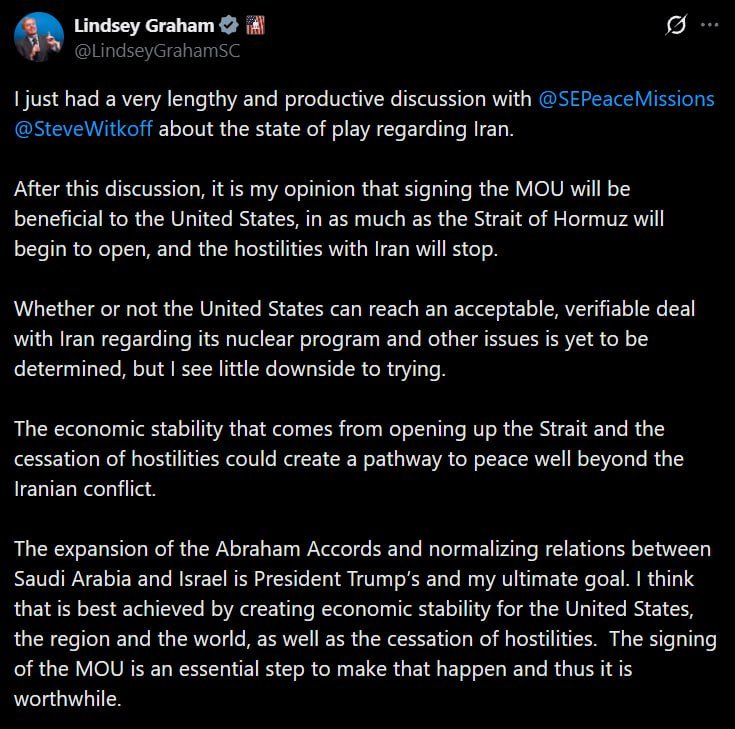
The numbers, as reported on 16 June 2026, are large enough to make any careful observer stop scrolling. Washington is weighing a $300 billion investment fund for Iran, contingent on Tehran holding a ceasefire and signing a nuclear deal. The proposal has not been published. The text has not been shared with Israel, the closest security partner of the United States in the region. Iranian opposition groups inside and outside Iran say they feel betrayed by a president whose military actions in the region they once counted as a tailwind, and they have named European leaders, by their own count, as indifferent. The shape of the arrangement — money for compliance, opacity for allies, exhaustion for the opposition — tells a more honest story than the press releases on either side.
This publication reads the reported framework as the operating doctrine of a foreign-policy style that has become harder to mistake for improvisation. Treat the adversary as a counterparty, reward the deal on signature, defer the verification architecture to a later press cycle, and treat allied governments and exile movements as audiences to be managed rather than partners to be consulted. The Iranian opposition, which spent years building a case that Tehran's behaviour was incompatible with the international financial system, is now being asked to watch that system write a cheque. Israel's intelligence and diplomatic establishment, which has spent two decades arguing that the verification tail on any Iran deal is more important than the deal itself, is being asked to take the same posture on faith.
What the proposed fund actually does
The $300 billion figure is best understood not as a single transfer but as a conditional envelope, structured around two triggers: a sustained ceasefire and a nuclear arrangement. The opacity of the triggers is the point. By tying access to capital to behaviour rather than to a published, enforceable technical protocol, the deal hands the United States a continuous lever over Iran's economy even after any signature ceremony is over. Iranian state-aligned outlets have already begun to test that leverage by floating parallel demands; Western outlets, including reporting aggregated by OSINTdefender, have framed the fund as the centre of gravity of the entire negotiation. Both framings are too tidy. The honest read is that the fund is a tool of permanent conditionality, and that is precisely why it is being negotiated away from the cameras.
Why the opposition reads this as betrayal
Iranian opposition movements did not become politically consequential by accident. They made themselves useful to Western policymakers by amplifying a specific argument: that the Iranian state's regional behaviour and nuclear posture were inseparable from its domestic repression, and that any accommodation with Tehran that did not address both would eventually be reversed. The reported fund collapses that argument. It is, in effect, a price tag on accepting the regime as a going concern. The opposition's complaint, that European leaders are indifferent to this trade, lands because the European Union's institutional machinery for Iran policy is built around the Joint Comprehensive Plan of Action template — preserve the deal, route money through formal channels, hope for incremental moderation. That template is now being asked to absorb a $300 billion conditional envelope on American terms, and European capitals have not visibly objected to being briefed rather than consulted.
Why Israel is not in the room
The Israeli objection, as filtered through OSINTdefender's compilation of 16 June reporting, is procedural on its face — Washington has not shared the text of the agreement — and substantive underneath. Israeli security doctrine treats the verification architecture of any Iran arrangement as the actual arrangement; the political signature is the least important part. A fund that scales with Iranian compliance, in this reading, is a fund that can be throttled by either side at any moment, and the lever runs through Washington, not Jerusalem. The Israeli concern is not that the deal is too generous to Iran in the abstract. It is that the United States has reserved for itself the ability to define what compliance means, and has declined to share that definition. That is a sovereignty question dressed up as a transparency question.
The structural frame, in plain language
What the reporting describes is a recurring pattern in the international economic order: large conditional commitments negotiated bilaterally between a hegemon and a sanctioned state, with allied governments and opposition movements positioned as stakeholders rather than parties. The fund, if it moves forward, will route capital through a small number of intermediaries, on terms that are not public, and against benchmarks that the United States alone will certify. That is not in itself a critique of diplomacy. It is a description of how the dollar-clearing system and the sanctions architecture together give Washington a permanent seat at the table of any transaction that touches the Iranian economy. The leverage is real. The question is what it is being used for, and on whose behalf.
The stakes, named plainly
If the deal closes on the reported terms, the Iranian state acquires a financial floor without conceding the regional posture that the opposition and Israel both regard as the underlying problem. Iranian exiled movements lose the principal claim that distinguished them in Western policymaking circles, which is that engagement with Tehran without preconditions rewards repression. Israel loses its customary veto over the architecture of any Iran arrangement, and inherits a verification regime it did not negotiate. Europe is left in its preferred position, which is to be a host for the deal's banking plumbing without responsibility for its political content. The United States keeps the lever. That is a coherent distribution of outcomes. It is not, however, the distribution that the people most affected by the deal were told to expect.
The reports circulating on 16 June do not yet describe a signed arrangement. They describe a framework, a price, and a set of omissions. The omissions are doing the work. Until the text exists in a form that Israeli officials, Iranian opposition leaders, and European counterparts can read and contest on the merits, the $300 billion number is best treated as a posture statement: a signal that the United States intends to remain the indispensable broker in the Middle East by being the indispensable paymaster, and that it intends to do so in private. The rest of the players in the region will then have to decide, as they have before, whether to fight the deal, fold into it, or build around it. The history of the last two decades suggests they will, in that order, do all three.
Desk note: this publication led with the conditional structure of the fund and with the absence of Israeli and opposition signatories, rather than with the dollar figure alone — the wire cycle has tended to treat the $300 billion as the headline, when the verifiable substance is the conditionality and the missing text.
Wire provenance
This editorial synthesis draws on the following public wire/social posts:
- https://t.me/s/osintdefender
- https://t.me/s/osintdefender
- https://t.me/s/osintdefender
Follow the event.
These dated source records provide context. They do not retrospectively verify this archive article.
Separate what the nuclear watchdog reported from what it could not determine after the June 2025 strikes.