Tehran's $300bn Bet: Inside the US-Iran Memorandum That Could Quiet the Lebanon Front
A draft memorandum circulating on 16 June 2026 ties a $300bn private investment fund to a 60-day cross-front ceasefire — and the fine print is where the deal will live or die.
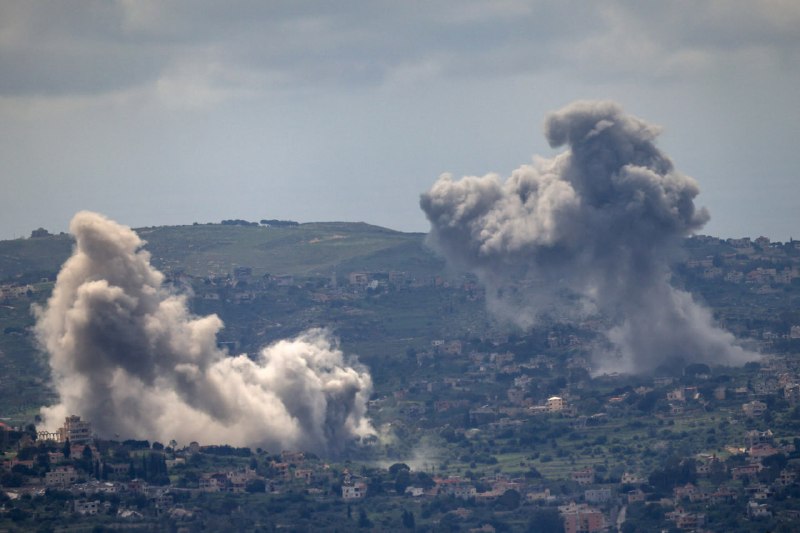
On the afternoon of 16 June 2026, two threads of disclosure converged inside a single diplomatic document. Reuters reported that a memorandum of understanding between the United States and Iran includes the creation of a $300bn private investment fund, designed to attract capital into the Islamic Republic. Within hours, Israeli Channel 12's diplomatic correspondent Barak Ravid told his audience that he had obtained the key points of the same document: a 60-day ceasefire framework that extends beyond Iran's borders to cover Lebanon, and a sweeping undertaking by Iran, the United States and their respective allies to cease hostilities along multiple fronts. The two reads — financial and military — describe the same package. Whether they can be sold to the constituencies on both sides of the deal is now the only question that matters.
The draft, as described by Ravid and as paraphrased by Iranian outlets including Tasnim, is built on three pillars that have to move together. First, a halt to hostilities — direct and through proxies — between Iran, the US and their respective partners, with Lebanon explicitly inside the frame. Second, the financial architecture: a private investment fund of roughly $300bn, more than half of which, according to the Reuters summary carried by Tasnim, would be reserved for attracting fresh capital into Iran. Third, the implementation timeline: a 60-day window for the ceasefire to take hold and for the fund's governance to be designed.
What is actually in the ceasefire language
The most consequential line in the draft is the one that names Lebanon. A US-Iran understanding that buys quiet only on Iran's own perimeter would be vulnerable to the next flare-up in Beirut or the Bekaa; a framework that drags Lebanon into the same 60-day clock commits all parties — Iran, Hezbollah, the United States, and by extension Israel — to a synchronised cooling period. Israeli reporting through Channel 12, as relayed via Telegram channels including GeoPolitical Watch and the Washington Free Beacon-adjacent World Freedom Witness feed on 16 June, treats the Lebanon language as the load-bearing element.
That is also where the package is most fragile. Iran's regional posture has been built on the assumption that its allies can act with deniable autonomy; Israel's doctrine, since October 2023, has been that any arrangement which leaves a Hezbollah kinetic capability intact is not an arrangement at all. A 60-day clock that the Lebanese theatre has to respect within the same window is a compact whose terms of compliance are still being argued about in capitals that have not been named in the document.
The $300bn fund, read carefully
The investment fund is the political sweetener and the strategic prize at the same time. Reuters' framing — a private vehicle, not a state-to-state aid package — is significant. Private capital is harder for US sanctions enforcement to unwind without a positive act of Congress or a Treasury licence regime; it is also harder for Iran to redirect without an audit trail that Gulf and Asian institutional investors will demand.
The structural question is governance. Who sits on the fund's board, who decides deployment, and under whose sanctions regime each tranche moves are the questions that will determine whether $300bn is a real number or a marketing figure. Iranian state-linked coverage, including the Tasnim and Tasnim Plus feeds on 16 June, has tended to emphasise the headline size of the fund and the share earmarked for fresh capital inflows into Iran. Western and Israeli coverage has tended to emphasise the conditionality. Both are describing the same document from opposite ends of the leverage it creates.
The structural frame: deals that bundle money and guns
There is a familiar template at work. Multilateral understandings that pair an economic architecture with a security commitment have, for three decades, been the diplomatic instrument of choice when neither side is willing to sign a treaty and neither side can afford a war. The economic track gives the harderliners on each side something to defend to their base; the security track gives the moderating factions on each side something to deliver. The 60-day window is the tell: short enough to be revocable, long enough to test whether the money and the quiet can co-exist for one news cycle.
The asymmetry this time is that the economic track points primarily inward — at Iran's domestic investment climate — while the security track points primarily outward, at the regional perimeter. That is a feature, not a bug, for Tehran's negotiating position: it can argue internally that the fund is for Iranian reconstruction and development, while externally delivering a ceasefire commitment whose price has been pre-paid by the same document. Whether the Iranian system has the absorptive capacity to deploy $300bn in private capital without tripping secondary sanctions on Russian, Chinese or UAE intermediaries is the live technical question that the document does not yet answer.
Stakes and the next 60 days
For Washington, the deal's political value is that it pulls the Lebanon front off the front pages during a US electoral cycle and demonstrates that the administration's regional portfolio can be negotiated, not merely managed. For Tehran, the value is access to dollar-denominated capital pools that have been closed since 2018, plus the legitimising effect of any sanctions relief that has to accompany the fund's operation. For Israel, the calculus is narrower: a 60-day clock that includes Lebanon is acceptable only if the verification regime is bilateral and verifiable, and only if the next round of hostilities triggers automatic snap-back.
The most likely failure mode is not the headline terms but the sequencing. A fund that cannot move money because the underlying sanctions architecture is unchanged is a fund that does not exist. A ceasefire whose violation triggers no automatic consequence is a pause, not a settlement. The 60-day window is therefore also a deadline by which both sides have to convert a memorandum into instruments — Treasury licences, UN Security Council language, escrow arrangements, third-country depositary banks — or the document becomes a piece of paper that each side cites when it is convenient.
What remains unresolved
Three pieces of the puzzle are not yet visible in the reporting on 16 June. First, the verification architecture for the Lebanon ceasefire — who monitors, who reports violations, what the escalation ladder looks like. Second, the legal vehicle for the fund — whether it is a Delaware LLC, a Luxembourg SICAV, an Emirati special-purpose vehicle, or a hybrid that no sanctions counsel has yet blessed. Third, the role of third-party guarantors. A deal this size and this exposed, between two governments whose domestic politics can overrule any executive signature, normally travels with at least one external underwriter — a Gulf state, a European treasury, a Chinese policy bank. None of those names appear in the disclosed points so far.
The reporting on 16 June is enough to know that the document exists and that the Israeli, American and Iranian sides are now briefing their respective publics in incompatible but compatible ways. It is not yet enough to know whether the $300bn and the 60 days will arrive in the same envelope.
This publication's framing note: wire coverage on 16 June split cleanly between the financial substance of the memorandum (Reuters, Tasnim) and the security substance (Channel 12 via Ravid). Monexus treats the two as a single instrument, on the reading that an investment fund this large does not exist outside a security envelope and a ceasefire this broad does not survive without an economic one.
Wire provenance
This editorial synthesis draws on the following public wire/social posts:
- https://t.me/tasnimnews_en
- https://t.me/wfwitness
- https://t.me/GeoPWatch
- https://t.me/tasnimplus
- https://t.me/tasnimnews_en/
- https://t.me/wfwitness/
- https://t.me/GeoPWatch/
- https://t.me/tasnimplus/
Follow the event.
These dated source records provide context. They do not retrospectively verify this archive article.
Separate what the nuclear watchdog reported from what it could not determine after the June 2025 strikes.