Beirut Tilts East: Aoun's Iran Remarks Test Lebanon's Diplomatic Balancing Act
Lebanon's President Joseph Aoun told state-aligned outlets on 17 June 2026 that Beirut stands with Iran and any state that 'helps us,' a phrasing that puts fresh strain on Lebanon's western and Gulf alliances.
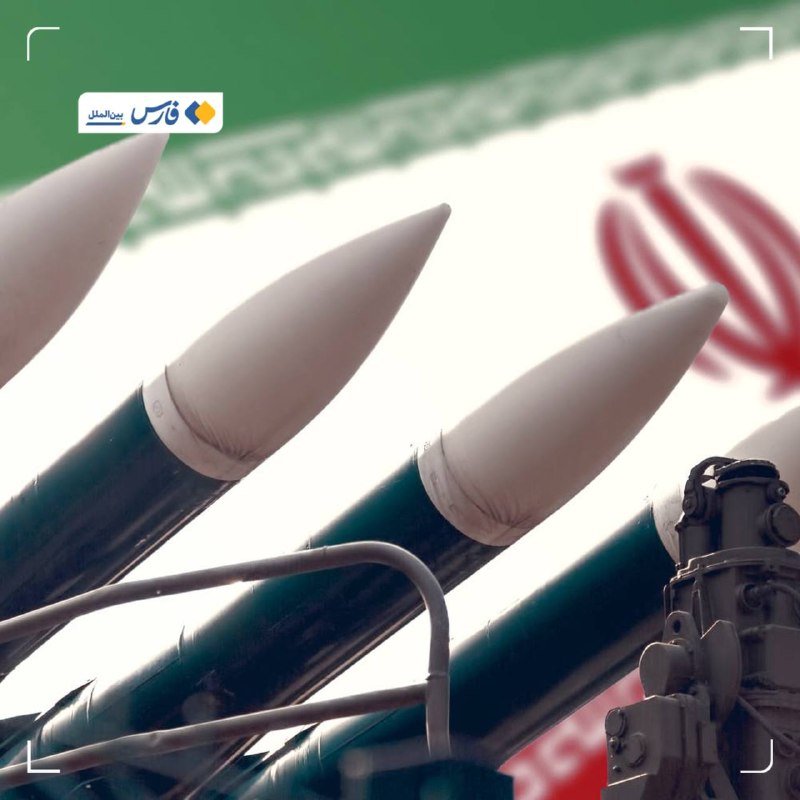
Lebanon's President Joseph Aoun told Iranian state-aligned outlets on 17 June 2026 that Beirut 'stands with Iran and any country that helps us,' language that risks redrawing a delicate diplomatic balance only months after the new head of state took office. The remarks, carried by Fars News, Mehr News and Tasnim within the same midday window, go further than the usual Lebanese formulation of 'friendship with all' and arrive at a moment when Beirut is trying to thread a needle between Tehran, Riyadh and Washington on a portfolio of files from border demarcation to ceasefire diplomacy.
What Aoun actually said, stripped of the translation churn that often muddies Iranian-wire coverage, is narrower than the headlines imply — and broader than Beirut's Western partners will be comfortable with. The President framed Lebanese foreign policy as an 'independent path' and insisted that 'no party can link Lebanon's negotiations to its own agenda.' Read against Tehran's domestic audience, that is a validation message. Read against Washington and Riyadh, it is a sovereignty declaration that cuts both ways.
The President's words, and where they were published
Three Iranian state-aligned wires carried the comments within roughly thirty minutes on 17 June 2026: Fars News at 13:20 UTC, Mehr News at 12:58 UTC, and Tasnim at 12:51 UTC. All three translated the same core formulation — that Lebanon is 'in favour of a ceasefire with any country that helps us, including Iran.' Fars added the explicit 'we stand with Iran' framing; Mehr and Tasnim led with the ceasefire line. None of the wires published an accompanying text from the Lebanese presidency at the time of writing, and the Iranian accounts differ on whether Aoun was responding to a question or delivering prepared remarks.
The choice of platform matters. Fars, Mehr and Tasnim are not Lebanese outlets, and they are not the wires a Western diplomatic readout would default to. By speaking through them — or by allowing his comments to be packaged through them — the Lebanese presidency is signalling which audience it wants to reach first. That is itself a piece of foreign policy.
Why this is harder than it looks
Lebanon's postwar diplomatic grammar has rested on a careful paradox: formal friendship with the Arab League and the West, parallel and sometimes deeper entanglement with Iran and Syria. For decades that line was held by Hezbollah's strategic posture, by Saudi financial gravity, and by French-brokered political engineering. The 2024–25 war reshuffled the deck. Hezbollah's military infrastructure was degraded, its patron took direct hits from Israel and the United States, and a new Lebanese government under Aoun — a former army commander widely seen as acceptable to both Riyadh and Washington — took office promising state monopoly on the gun and a credible negotiating posture.
Aoun's comments land inside that context. By naming Iran as a country that 'helps us,' the President is publicly tying the legitimacy of the new dispensation to a relationship Beirut's Gulf and Western partners would prefer to see quiet. By framing the position as 'independent' and 'not linkable,' he is simultaneously telling Tehran that Beirut will not be drawn into an Iranian negotiating track against its will. Both halves of the message are true. Neither half is reassuring on its own.
The counter-narrative, and why it does not fully hold
The cynical read — and it is the one Western embassies will reach for first — is that Aoun is reciting a script written in Tehran, that the 'independence' language is cover for alignment, and that the ceasefire line is designed to lock in Iranian acceptance of any future arrangement with Israel. There is something to that. Iran's regional strategy has long rewarded governments that treat Tehran as a peer patron rather than a back-channel patron, and the President's willingness to be quoted in Fars, Mehr and Tasnim on the same day is unusually direct.
But the counterpoint deserves equal airtime. Lebanon's 2026 negotiating posture genuinely is constrained by the need to keep multiple rooms open. A government that publicly broke with Iran would gain nothing with Washington — the US does not require a Lebanese rupture with Tehran to keep its own leverage — and would lose the residual Hezbollah-Iran channel that may yet be useful if a wider ceasefire arrangement comes into view. The 'any country that helps us' phrasing is also deliberately generic; it can be read in Tehran as alignment, in Riyadh as a reminder that Lebanon wants Gulf reconstruction support too, and in Washington as a sovereignty claim that pushes back against great-power packaging.
Structural frame: small states, big patrons, narrower rooms
What we are watching is the narrowing of the diplomatic room small Levantine states once had. For two decades, Lebanon could sit in a Saudi-funded reconstruction conference on Monday, host an Iranian cultural delegation on Tuesday, and receive a French-brokered political mission on Wednesday — each relationship informally compartmentalised, each patron willing to tolerate the others' footprint because the alternative was worse. That compact has frayed. Iran is now publicly staking claim to a Lebanese seat at regional negotiating tables. Saudi Arabia is conditioning engagement on reforms it wants to see internalised. The US wants Lebanon inside a post-war security architecture that implicitly requires disarming non-state actors. Beirut is being asked to pick a primary patron at exactly the moment it can least afford to.
Aoun's language reflects that compression. By foregrounding 'independence' while naming Iran explicitly, the President is trying to perform an alignment without performing a rupture — to keep the door open in every direction while signalling, especially to a domestic audience, that the new Lebanese state will not be spoken for. It is a sophisticated line to walk. It is also a line that will be tested the first time Lebanon is asked to take a side on something concrete.
What remains uncertain, and what to watch next
Three things are not yet visible. First, the official Lebanese text. The Iranian wires do not always carry full quotations or context, and the Beirut press office has not, at the time of writing, published a matching release. The phrasing will read differently in the original Arabic. Second, the reaction from Riyadh and Washington. Saudi engagement with Lebanon has been conditional on visible state control over non-state actors; Iranian-aligned rhetoric inside the presidency will be read against that yardstick. Third, the Hezbollah response. The party has historically preferred a Lebanese state that does not speak its name; a presidency that names Iran directly changes the optics of who is leading whom.
The stakes are concrete. Lebanon's reconstruction financing remains contingent on Gulf and Western willingness to underwrite a state they trust to negotiate honestly. Iran's interest in a friendly Lebanon is partly ideological, partly logistical, partly about preserving a Mediterranean foothold under sanctions pressure. A presidency that can hold both relationships without collapsing either is doing something genuinely difficult. A presidency that is read, fairly or not, as having chosen one over the others is doing something much harder, and much more consequential.
Monexus treated the three Iranian state-aligned wires as primary sources with explicit framing caveats, rather than as neutral reportage, while paraphrasing the shared core formulation rather than quoting a single translated phrase as definitive.
Wire provenance
This editorial synthesis draws on the following public wire/social posts:
- https://t.me/FarsNewsInt
- https://t.me/mehrnews
- https://t.me/JahanTasnim