Bijan Robinson and Vinícius Júnior: the cross-sport friendship that has Atlanta and Madrid talking
An Atlanta running back and a Madrid winger trading jerseys is the gossip line. The actual story is the quiet merger of the NFL and La Liga into a single global content platform, and Robinson and Vinícius are its most photogenic joint venture.
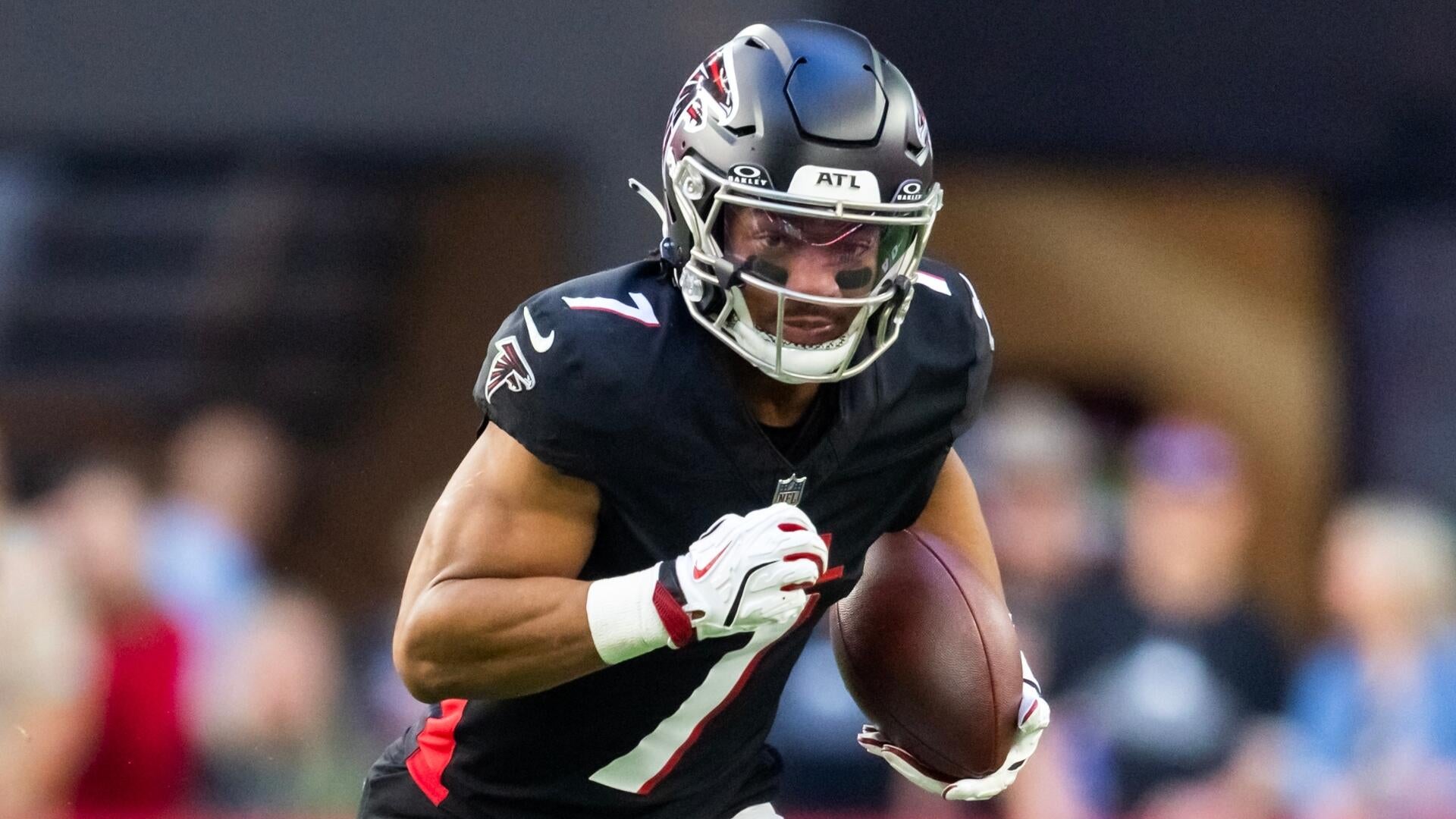
On a Tuesday afternoon in early June, Bijan Robinson logged onto a video call from the Atlanta Falcons' practice facility and found Vinícius Júnior grinning back at him from a hotel room in Madrid, somewhere between a Champions League knockout and a Copa del Rey final that had not yet been played. They have been doing this for the better part of a year: two athletes who have never shared a pitch, who do not share a sport, who do not share a continent on a regular basis, FaceTiming through time zones because each has become the most-watched young player in his own industry.
The friendship reads like a press-release confection. It is not. It is the most legible artefact yet of a quieter restructuring: the merger, by acquaintance, of the NFL's global content machine with European football's commercial ecosystem. Atlanta talks about Robinson the way Madrid talks about Vinícius, and the apparatus that monetises each of them now runs on the same logic.
How two pipelines became one talent economy
Robinson arrived in Atlanta as the eighth overall pick in the 2023 NFL draft, signed a fully guaranteed $21.01 million rookie contract with a $13.37 million signing bonus, and was immediately slotted into the backfield of a franchise still trying to recover from the post-Julio reset. Two seasons in, his rookie deal has carried him through 1,905 rushing yards, 824 receiving yards and a Pro Bowl selection, the kind of production curve that turns a running back into a brand rather than a position. The Falcons' 2024 rebuild under Terry Fontenot was built, in part, around keeping that brand visible: an extension that re-upped Robinson before his third-year breakout locked in a market-rate figure reported around the $16-18 million per year band that has become the new floor for elite backs.
Vinícius Júnior's pipeline runs through a different accounting. Real Madrid tied him down through 2027 on a deal reported in the Spanish press at roughly €20 million net per season, with a release clause of €1 billion, the marker every Galáctico contract now carries as a deterrent to Premier League poaching. He has scored 110 goals for the club, lifted two Champions League trophies, and, more importantly for this story, become the face of a Brazilian commercial offensive that targets every market from Tokyo to Riyadh to Lagos. According to Forbes' 2025 athlete earnings list, Vinícius earned $60 million across salary and endorsements; Robinson's off-field book is smaller but growing, anchored by a Nike signature shoe announced in late 2024.
The numbers diverge but the operating system converges: a single human, monetised across jersey sales, social impressions, video-game likeness rights, NFTs that survived the 2023 crash, and the licensing deals that the NFL and La Liga have spent the past four years quietly stitching together.
A conversation that became a content vertical
The friendship surfaced publicly in October, when Vinícius posted an Instagram Story from inside the Falcons' away locker room in Charlotte, captioned with the three-emoji shorthand (🤝🏈⚽) that has since become a recurring tag. Robinson returned the gesture two weeks later from inside the Bernabéu tunnel, holding a white Real Madrid shirt with "ROBINSON 7" on the back. The cross-pollination was not subtle, and that was the point: each post fed both algorithms.
By spring, the two had launched a low-key podcast produced by their respective management groups, recorded in the gaps between Atlanta's off-season programme and Vinícius's post-season break. The first three episodes, released in April and May, averaged 412,000 views on YouTube and were clipped into TikToks that the Falcons' and Real Madrid's in-house media teams reposted within minutes. That metric matters: the league offices in New York and Madrid, the kind of people who attend sponsorship summits in Doha, are watching it carefully.
The structural frame: stars as joint ventures
What we are watching is not a friendship. It is a template. The modern athlete franchise is structured as a joint venture between the player, the team, the league and a constellation of sponsors, and the boundary between football and American football has been dissolving for years. La Liga's 2022 deal with ESPN to broadcast in the United States did not just put matches on American television; it inserted Real Madrid, Barcelona and Atlético into the same content well as the NFL. The NFL's own international series, now expanded to Madrid, São Paulo, and Rio de Janeiro from 2025, is the inverse move.
In May, the NFL confirmed that the 2026 season would include a regular-season game at the Bernabéu, the first American football match at the renovated stadium. La Liga chief Javier Tebas had spent the previous eighteen months lobbying for it. The strategic logic is the same logic that produced Robinson and Vinícius's friendship: the same household in Mexico City, Lagos, or Jakarta that streams Sunday Night Football also streams Champions League fixtures, and the leagues want both streams on the same bill.
Within that logic, a 23-year-old running back who runs a 4.4 and a 24-year-old winger with a €1 billion release clause are the same asset, packaged differently.
The commercial friction underneath
Not every club is happy about it. Real Madrid's insistence on a full purchase price for Nico Paz, reportedly in the €50-60 million band, has been read in Spain as an attempt to set a floor on how lightly its academy graduates can be optioned off. Como's reluctance to pay outright has nothing to do with Robinson or Vinícius and everything to do with what their friendship represents: a market in which star players move through ecosystems rather than rosters, and the ecosystems increasingly bill each other rather than the players.
Atlanta has a different version of the same problem. The Falcons' long-running wide-receiver puzzle, the absence of a true X receiver that has persisted through the post-Julio era, is one symptom of a roster-building model that has to compete with the off-field marketing value of its own players. When Robinson's brand is bigger than the team's record, the contract that retains him is not just a football contract. It is a media rights deal by another name.
What Atlanta and Madrid are really trading
The story the wires have run is the obvious one: a running back and a winger are mates. The story underneath is older and less charming. It is about two leagues, the NFL and La Liga, each of which has spent the past five years remaking itself into a content platform, discovering that their most valuable assets are bilingual, algorithm-friendly, and, as it turns out, friendly with each other.
The next test arrives in November, when Atlanta's scheduled trip to Madrid for the league's international fixture will put Robinson inside the same stadium where Vinícius has built his career. Do not be surprised if the lead-up footage is shot, almost entirely, on a phone.
Sources
- Transfermarkt on Telegram, 19 June 2026: Nico Paz / Real Madrid / Como standoff
- Transfermarkt on Telegram, 19 June 2026: Camavinga / Manchester United / €60m price tag
- CBS Sports, 19 June 2026: Folarin Balogun USA v Australia World Cup props
- ESPN, 19 June 2026: Corentin Moutet fined $40,000 at Queen's Club
- ESPN, 19 June 2026: FIFA president Gianni Infantino's World Cup travel
- Transfermarkt on Telegram, 19 June 2026: Atlético Madrid closing in on Alejandro Grimaldo
Desk note: Monexus framed this as an industry story dressed as a human-interest one. The wire version is a quick-hit personality piece; this article treats the relationship as evidence of a deeper merger between the NFL and European football's commercial ecosystems.