An attack that wasn't: what the FBI's White House UFC plot tells us about the new threat imagination
The FBI says it foiled a plot to attack a UFC event on the White House lawn with explosive-laden drones. The story is thin — but it lands inside a political moment that has been waiting for exactly this kind of headline.
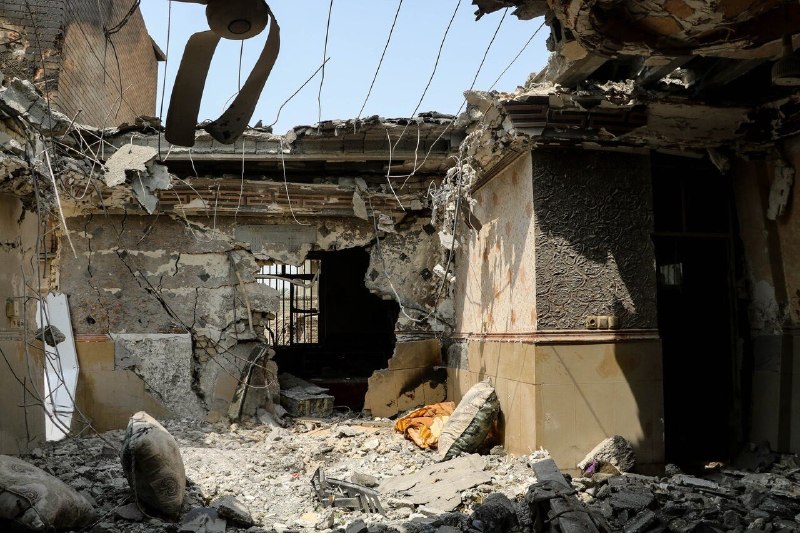
On 17 June 2026, the Federal Bureau of Investigation disclosed that it had disrupted a planned attack on a UFC mixed-martial-arts event scheduled for the White House lawn that weekend. According to the FBI, the group intended to use explosive-laden drones against the venue, with snipers positioned as a second-strike capability. The bureau's account, carried by France 24 and other wires, is the only public version of events in circulation; no footage, no charging documents, and no named defendants have been published at the time of writing.
The story matters less for what it confirms than for what it permits. A drone plot against a presidential sporting spectacle fuses two of the most politically productive anxieties in American public life: the fear of lone-wolf or small-cell domestic extremism, and the rising salience of low-cost aerial weapons. The result is a single narrative object that intelligence committees, sports leagues, and drone-regulation advocates can all point to as proof that their pre-existing concern was correct.
What the bureau said — and what it didn't
The FBI's statement, as reported by France 24, is spare. It describes a group, a target (the UFC event on the White House lawn), and a method (explosive drones, supplemented by snipers). It does not name the alleged plotters, identify their affiliation, specify how the bureau learned of the plot, or indicate whether arrests have been made. France 24's framing — "foiled" — implies the operation was pre-empted before any device was fielded, which is consistent with the FBI's preferred template for disruption cases but also the template most easily dramatised after the fact.
That template has a history. From the 2010 Times Square car-bomb case to a string of post-2020 domestic-extremism indictments, the FBI's preferred public posture on disrupted plots emphasises the capability the bureau says it intercepted, not the credibility of the plot itself. Independent reviewers — most prominently the University of Maryland's START program — have repeatedly noted that "foiled plot" counts are a poor measure of either terrorist capability or counter-terror effectiveness, because the underlying cases are filtered through informant networks and undercover operations in which the bureau itself plays an outsize role in moving the plot from ideation to action.
None of that is an accusation in this case. It is the frame in which any responsible reader should evaluate the announcement. A claim of disruption is not a claim of evidence, and the public's ability to assess the claim depends almost entirely on what the Justice Department chooses to release.
The drone angle
The more durable signal sits in the weapon. Consumer and prosumer drones have moved, over the last five years, from nuisance to instrument. Their combat debut on a global stage came in the Nagorno-Karabakh war of 2020 and matured through the Ukraine conflict, where both sides have fielded first-person-view quadcopters as a primary strike platform. Domestically, U.S. regulators have played catch-up: the Federal Aviation Administration's Part 108 rules on beyond-visual-line-of-sight operations only began taking effect in late 2025, and counter-UAS authority remains split across the Department of Homeland Security, the Department of Defense, and the Department of Justice in a way that academics and inspectors general have described as fragmented.
A plot attributed to a non-state group using "explosive-laden drones" against a populated venue — even a controlled one — therefore lands inside an active bureaucratic argument. Every agency with a counter-UAS portfolio now has a marquee case to point to when it asks for money, authority, or expanded rules of engagement. Whether or not this particular plot was ever operationally viable, its existence in the public record will be cited.
Why a UFC event, why on the White House lawn
The choice of target is its own story. The UFC has spent the last decade normalising its presence in venues of state — presidential inaugurations, embassy galas, military-base cards — as part of a deliberate brand strategy aimed at patriotic-coded American audiences. A White House lawn event, reportedly scheduled for the weekend of 17 June 2026, would have been the most legible expression of that strategy yet.
For plotters, real or alleged, the target offers a high-density political return. A successful attack on a flagship patriotic spectacle would generate coverage disproportionate to the operational sophistication required. For the FBI, the same target offers a high-density political return in the other direction: a disrupted plot against a high-visibility cultural event demonstrates vigilance and re-anchors public attention to physical-security threats at a moment when immigration, protest, and online-radicalisation stories have dominated the news cycle.
The UFC has not, in the materials available at the time of writing, issued a public statement on the FBI disclosure. The bureau's preferred communication channel in cases like this is often a closed-door briefing to congressional intelligence committees followed by a tightly framed press release — a sequence that privileges official spokespeople as the dominant source voice.
What the sources don't tell us
What remains genuinely uncertain is the operational substance of the plot. France 24's reporting does not specify whether any weapons had been acquired, whether any money had changed hands, whether the alleged plotters had conducted reconnaissance, or what stage of planning the bureau intercepted. The "snipers and drones" formulation reads as composite — a single statement that names two distinct capabilities, neither of which has been independently corroborated in the materials reviewed here.
A second uncertainty is jurisdictional. Domestic drone attacks against a federal venue would implicate a thicket of statutes — federal murder of officials, use of a weapon of mass destruction, aircraft sabotage — but would also require prosecutors to show that the plotters moved beyond talk. Past FBI disruption cases have ended in plea deals rather than trial verdicts, in part because the entrapment-adjacent facts become harder to defend in open court than in a press release.
Finally, the political timing is worth naming without overstating it. Announcements of this kind land harder in periods when the public is already receptive to the underlying threat. The drone threat is real and growing; the political appetite for visible counter-drone action is also real and growing. Whether the bureau's timing was influenced by either, or by neither, is not something the public record can answer.
The stakes
If the bureau's account holds up, the operational lesson is straightforward: low-cost aerial weapons have arrived in the domestic-threat picture, and security planners around the world will draw the same conclusion the Ukraine war has already taught them — that the cheapest node in the kill chain is now the most strategically decisive. Counter-drone authority, already fragmented across federal agencies, will come under renewed pressure to consolidate.
If the account does not hold up — if the plot proves thinner than the press release suggests — the institutional cost is borne by the bureau itself and by the credibility of future disruption announcements. That cost is harder to measure in the moment but no less real. Public trust in the FBI's domestic-extremism work has been contested since the 6 January 2021 investigations, and each subsequent case is read against that baseline.
Either way, the announcement will travel. It will be cited in congressional hearings on counter-UAS authority, in regulatory proceedings on commercial-drone rules, and in the next round of appropriations for federal security agencies. The White House lawn card will go on — under tighter perimeter, or under the same one — and the UFC will continue its long, deliberate integration into the visual grammar of American state ceremony. The plotters, named or not, real or alleged, will become a case study in someone's syllabus.
The Monexus desk framed this story around the gap between the FBI's announcement and the corroborating evidence available to the public, rather than around the bureau's own preferred framing of disruption. Wire reporting at the time of writing offered the FBI statement and very little else.
Wire provenance
This editorial synthesis draws on the following public wire/social posts:
- https://www.fbi.gov/news
- https://en.wikipedia.org/wiki/Counter-unmanned_aircraft_system
- https://en.wikipedia.org/wiki/Federal_Bureau_of_Investigation