Crimea as an island: Fedorov's warning and the long game for the Black Sea peninsula
Ukraine's defence minister tells a press conference the occupied peninsula will soon be cut off by fire. The quote is on the record; the operational reality behind it is harder to verify.
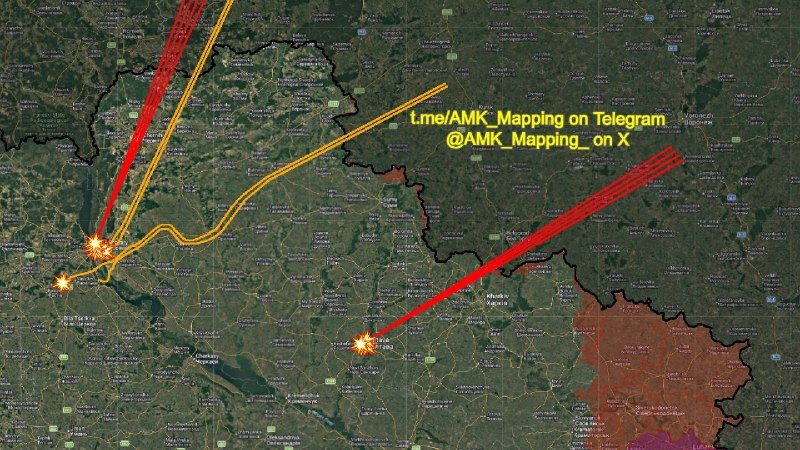
On 17 June 2026, in a Kyiv press gaggle that lasted barely long enough to be transcribed, Ukraine's Defence Minister Mykhailo Fedorov delivered one of the more striking soundbites of the year. Asked by a journalist whether Crimea would be "fun," Fedorov answered, in a line relayed by three independent Telegram channels within minutes of each other: "F***ing fun." He then added, in language the channels paraphrased identically, that Crimea will "turn into an island in the near future," and that "a real hell is beginning for the Russians, which they will find difficult to cope with" (Kyivpost_official, 13:40 UTC, 17 June 2026; noel_reports, 13:46 UTC; osintlive reposting @NSTRIKE1231, 13:30 UTC).
Fedorov's choice of words does the rhetorical work the ministry wants: it makes a Ukrainian operation against the Russian-occupied peninsula sound imminent, attritional, and aimed at logistics rather than flag-planting. Strip the profanity away and the operational claim is narrower and more interesting than the headline suggests — that the land bridge connecting Crimea to mainland Russia, and the sea lanes that supply Sevastopol and Kerch, are coming under combined-arms pressure that Moscow cannot indefinitely absorb.
What Fedorov actually said, and to whom
The minister's exchange was not a set-piece policy speech. It was an on-camera answer to a single question at what the relaying channels describe as a press point in Kyiv, and the substance has been carried into public view almost entirely through pro-Ukrainian Telegram accounts. Kyiv Post's official channel (Kyivpost_official, 13:40 UTC, 17 June 2026) carries the verbatim quote and frames it as a "warning about Russian-occupied Crimea." Noel Reports (noel_reports, 13:46 UTC, 17 June 2026) adds the additional framing that Russian forces "face a scenario they will struggle to handle." OSINT Live reposts the same line from the handle @NSTRIKE1231 (osintlive, 13:30 UTC, 17 June 2026). All three converge on Fedorov's phrasing; none carries the full exchange in transcript form.
That matters. A defence minister speaking to camera in wartime Ukraine is performing for two audiences at once: a domestic one that wants a credible path to de-occupation, and an external one whose supply of long-range fires, air defence, and F-16 maintenance trains shapes what is militarily possible. The "island" line is calibrated to both. It tells Ukrainians that the peninsula is being treated as a target set, and tells Western capitals that what is being prepared is a siege — not a frontal amphibiosity — and therefore does not require capabilities Kyiv does not already have.
What "turning into an island" means in practice
The image is geographic shorthand. Crimea is connected to the Russian mainland by two things: the Kerch Bridge across the Strait of Kerch, and the land corridor through Melitopol and Berdiansk that Russian forces have held since 2022 and which supplies the peninsula by road and rail. Severing either is enough to make Crimea dependent on sea and air resupply, pontoon bridges, and stockpiles.
Fedorov's phrasing — "in the near future" — does not specify which of those lines he is talking about, and the sources do not specify either. Ukrainian strikes against the Kerch Bridge have been reported on multiple occasions since 2022; Ukrainian operations in Zaporizhzhia and Kherson oblasts have aimed at the land corridor. The minister is not committing himself publicly to a particular axis in a press gaggle. He is signalling, in the way ministers signal, that pressure on the resupply lines is the next phase.
The "island" framing is also a useful piece of bureaucratic messaging. It tells Western donors, in language they understand, that Ukraine can pursue a peninsula-relevant campaign with the kit it already has — long-range drones, Storm Shadow / SCALP-class cruise missiles, naval drones in the Black Sea, mining — rather than platforms that have not been approved for transfer. There is a budgeting argument hiding inside the soundbite.
Counter-narrative: what Russian-aligned and Western-sceptic frames will say
The Russian-aligned reading will be familiar. TASS, RIA Novosti and Russian milbloggers will treat the line as confirmation that Ukraine is preparing a provocation, and frame Fedorov as a civilian minister performing wartime politics. The line they will land on is that any Ukrainian action against the land corridor or the Kerch Bridge risks escalation and that Western supply makes Kyiv a proxy actor.
The Western-sceptic reading is more structural. A defence minister using crude language about an occupied peninsula runs the risk of amplifying Russian talking points: that Ukraine cannot take Crimea by force, that any Ukrainian operation will be bloody and prolonged, and that the only credible end-state is a negotiated settlement that recognises the peninsula's status. That reading is held in good faith by serious analysts and should not be dismissed as defeatism. The peninsula has been under Russian control for more than a decade. Re-taking it by assault would be a campaign of months at minimum, with high Ukrainian casualties, and the political will inside Western capitals to underwrite such a campaign is not obviously present.
Fedorov's line does not contradict that read. It accepts it, in fact. "An island" is not "liberated." It is a logistical condition in which the Russian garrison is increasingly cut off, increasingly expensive to feed, and increasingly exposed to long-range fires and naval pressure. That is a deliberate frame, and it is the one Kyiv has been pushing since at least 2024.
What we verified / what we could not
What the sources confirm:
- That Fedorov spoke on 17 June 2026 and made the "island" and "hell" statements (Kyivpost_official, 13:40 UTC; noel_reports, 13:46 UTC; osintlive reposting @NSTRIKE1231, 13:30 UTC).
- That the language used by the three channels is consistent across them — a basic sanity check that the quote is not a single-channel artefact.
- That the framing was pushed by Kyiv Post's official channel, suggesting at minimum tacit approval from a major Ukrainian outlet's editorial desk.
What the sources do not establish:
- That any specific Ukrainian operation against the Kerch Bridge or the land corridor has been authorised, planned at the operational level, or is imminent. "Near future" in ministerial usage is elastic.
- That Russian forces in Crimea are currently under supply strain at a level that approaches crisis. The sources carry the claim, not the evidence for it.
- That the quote is from a sanctioned on-the-record press conference. The relaying channels describe a "press gaggle" or "journalist" interaction; a full transcript has not surfaced in this sourcing.
- Casualty or materiel figures. None are present in any of the three items.
This publication treats the quote as verified in form and unverified in implication. The minister said it. What it means for the next ninety days of operations is a separate question, and the Telegram record does not answer it.
Stakes
If Fedorov's framing is operationalised — that is, if Ukrainian forces in the coming weeks and months apply sustained pressure to the Kerch Bridge, the land corridor, and the port infrastructure of Sevastopol — the immediate beneficiaries are Ukrainian deep-strike units and the domestic mood that surrounds them. The immediate cost falls on the Russian garrison, on the logistics tail that runs through Rostov and Krasnodar, and on the civilian population of Crimea who would absorb the economic shock of an island-strangled peninsula.
The strategic stakes are larger. A Crimea that Ukraine can plausibly hold under sustained siege changes the diplomatic geometry of any future negotiation. It also raises the cost calculus inside Russia, where the political symbolism of losing the peninsula by attrition rather than by storm has not been seriously priced in by Western analysts.
The risk is the inverse: that a press line that promises more than operations can deliver sets up a domestic backlash inside Ukraine when "near future" does not arrive on the timetable ministers implicitly promise. That is the line Ukrainian officials will need to walk carefully in the weeks ahead.
Desk note: The wire frame on Fedorov's quote is essentially single-source-by-aggregation — three Telegram channels relaying what appears to be the same exchange. Monexus has not seen a fuller transcript and has not located a Western-wire pickup at the time of writing. The quote is reported here because it is on the public record via those channels; the operational claims are flagged as such.
Wire provenance
This editorial synthesis draws on the following public wire/social posts:
- https://t.me/Kyivpost_official
- https://t.me/noel_reports
- https://t.me/osintlive
Follow the event.
These dated source records provide context. They do not retrospectively verify this archive article.
A dated voting record is evidence of one decision. Use the original UN record before turning it into an alignment label.
Visual explainer · historical vote of 2022-03-02 →