Haaland's World Cup debut sends a statement about football's new centre of gravity
Erling Haaland's two-goal debut and Norway's 4-1 win over Iraq in the tournament opener signals how a 48-team World Cup reshapes who gets to play on football's biggest stage.
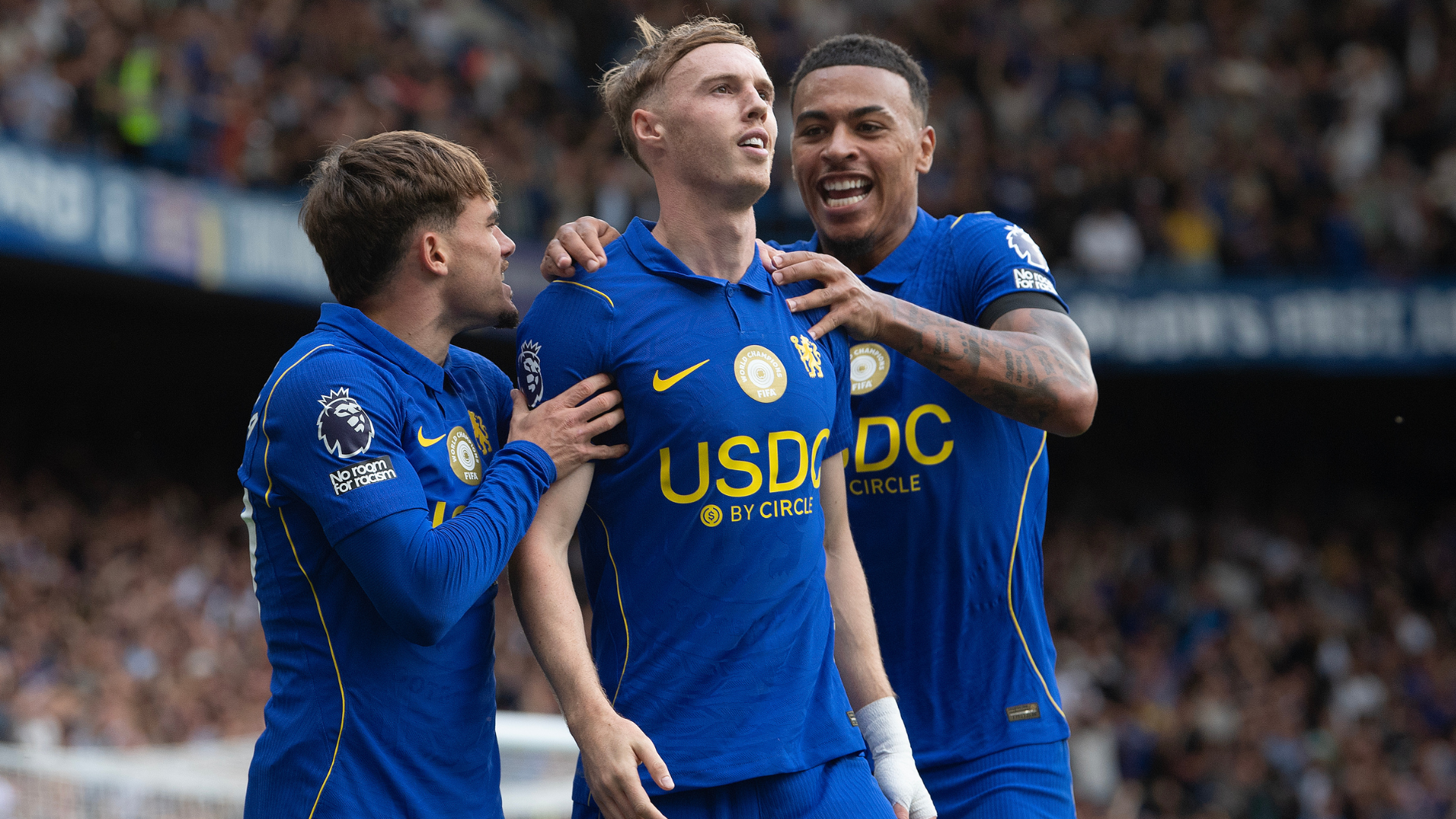
Erling Haaland arrived at his first World Cup on 17 June 2026 the way he arrives at most tournaments: as the player opposition managers would most like to avoid. By the time the final whistle sounded at the Group I opener against Iraq, the Norway striker had scored twice, set the tempo for a 4-1 victory, and given an early answer to the question FIFA's expanded 48-team format had quietly been asking — namely, whether the world's marquee tournament can still produce the kind of statement performance that used to define a World Cup week one.
France 24's match report, timestamped at 00:06 UTC on 17 June 2026, recorded a "flying start" for Norway against an Iraqi side playing on football's biggest stage for the first time in half a century. Al Alam Arabic's breaking-wire message at 00:28 UTC confirmed the 4-1 scoreline from the Iraqi vantage point. Telesur English's running coverage at 22:54 UTC on 16 June had Iraq still within a goal at halftime, 2-1, before Haaland's second — flagged by Telesur at 22:44 UTC — re-established the margin. The result, in other words, was closer than the final score suggests, and the closer scoreline matters for understanding what the rest of this group stage will look like.
A debut two years in the making
Haaland's path to this tournament has been one of the more unusual in modern Scandinavian football. He was born in Leeds during his father Alf-Inge's Premier League spell, came through Bryne and Molde in Norway, moved on to RB Salzburg and Borussia Dortmund, and joined Manchester City in 2022. Norway, for all his goals at club level, had not qualified for a senior men's World Cup since 1998 — a 28-year absence that ended when Ståle Solbakken's side topped their qualifying group.
The debut mattered beyond the personal. Norway went into this match as the highest-ranked team in Group I on the FIFA men's ranking, and they played like it for spells. France 24's report characterised Iraq as "valiant" — the same word Al Alam's Arabic wire implied in reverse, describing a national team that lost but did not collapse. There is a temptation in any opening match to read too much into the scoreline. Here, the scoreline flatters Norway slightly, and the first-half numbers from Telesur confirm as much: Iraq equalised, then Haaland replied almost immediately, then Norway pulled away after the break.
Iraq's half-century wait
The other story in this fixture is Iraq's. The Iraqi national team had not appeared at a men's World Cup since Mexico 1986 — a 40-year gap that this tournament finally closed. For a country whose football infrastructure has been rebuilt, repeatedly, since the 1990s and 2000s, the qualification alone carried weight. That Iraq conceded four and scored one is the kind of opening-night result that gets filed and forgotten; the appearance itself does not.
Iraq's football history is one of the more politically entangled in the region. The 2007 Asian Cup was won in front of a home crowd in Jakarta. The Olympic side reached the semi-finals at the 2004 Athens Games, a high point for a generation of Iraqi players who grew up under sanctions. Since then, the senior team has cycled through coaches and competitive windows. The fact that a 4-1 defeat in the opener dominated Al Alam Arabic's wire within minutes of full time — and was framed as a loss rather than a humiliation — is itself a small marker of how Iraqi sports media treats the team: as a national project that is allowed to lose, as long as it shows up.
The 48-team World Cup, plainly
FIFA's expansion to 48 teams from 32 was sold as a development story and contested as a competitive one. The development case is that more countries get to play in the tournament proper. The competitive case is that the gap between a seeded favourite and a first-time qualifier is now papered over with a group stage that runs longer and produces more matches.
What Norway-Iraq shows in microcosm is the limit of that critique. Haaland's second goal, scored within minutes of Iraq's equaliser according to Telesur's running clock, is exactly the kind of moment that decides group-stage matches at this scale: a single piece of individual quality, against a side that had worked hard to get back into the game, turning the result inside two or three minutes. The 48-team format does not produce more of those moments. It produces fewer elite-versus-elite matches in the group phase, and more matches like this one — a clear favourite against a side whose appearance is the story.
The structural frame here is straightforward. FIFA's commercial logic depends on selling the World Cup to broadcasters in as many markets as possible. Norway against Iraq, played in front of a globally distributed audience, ticks a market-development box that Brazil against Germany in the group stage does not. The competitive tension — and it is real — is whether the early rounds will produce enough storylines that travel beyond the host broadcast markets. Haaland's debut travels.
What the scoreline does not tell you
The scoreboard says Norway 4, Iraq 1. The running coverage tells a different first half. Telesur's halftime update put Iraq within a goal of an equalising second, with Haaland's brace already on the board and the match still open. France 24's report frames the Iraqi performance as "valiant"; Al Alam's Arabic wire frames it as a loss the team can build on. Both are defensible readings.
What the sources do not give us is a clean set of underlying performance numbers. We do not have expected-goals figures, shot counts, or possession splits in the thread context. We do not have the identity of Iraq's goalscorer, the minute-by-minute sequence beyond what Telesur captured at half and full time, or the attendance. For a match of this scale, that is a thinner reporting base than a beat reporter on site would produce; it is the wire layer, not the analysis layer.
What can be said with confidence: Haaland scored twice on his World Cup debut. Norway won their opening fixture. Iraq, on their first World Cup appearance since 1986, lost but did not disappear. The format did what FIFA's expansion architects said it would do — put a country that had waited four decades on the same pitch as a striker who had waited twenty-eight years for his tournament debut — and the rest of the group stage will be judged on whether matches like this one produce enough drama to justify the calendar.
Stakes going into the rest of Group I
Norway's likely progression is the easy line to write. The harder one is what happens to the other two slots. A 48-team World Cup sends more teams through to the knockout rounds; the precise format places the top two from each group, plus eight of the third-placed teams, into the round of 32. Norway, on this evidence, are clear favourites to top the section. Iraq's path to the knockouts runs through the kind of result that, on the night, was visible for a half-hour before Haaland's second goal.
The wider stakes sit at a different altitude. World Cup debuts matter for the tournament's commercial geography because they justify FIFA's claim to be running a global event rather than a Euro-American showcase with guests. They matter for the players involved because the career ledger of a single goal in this competition is different from a single goal in qualifying. And they matter for the federations involved because qualification cycles are long, and a four-decade absence is a generation of fans who never saw the senior team on this stage.
Haaland will score again in this tournament if Norway go deep. Iraq will play at least two more matches. The shape of Group I, after one fixture, is what it always was in the expansion era: a clear top, a contested middle, and a long way for everyone else to climb.
This article uses the wire layer only — France 24's match report, Al Alam Arabic's breaking update, and Telesur English's running coverage. The fuller picture, including performance metrics and managerial reaction, will follow as post-match coverage lands.
Wire provenance
This editorial synthesis draws on the following public wire/social posts:
- https://t.me/france24_en
- https://t.me/alalamarabic