A 60-day Strait of Hormuz deal and the architecture of managed tension
Tehran signals a memorandum of understanding is signed; an Axios-sourced draft points to a 60-day toll-free reopening brokered via Muscat. The shape of the deal says more than the deal itself.
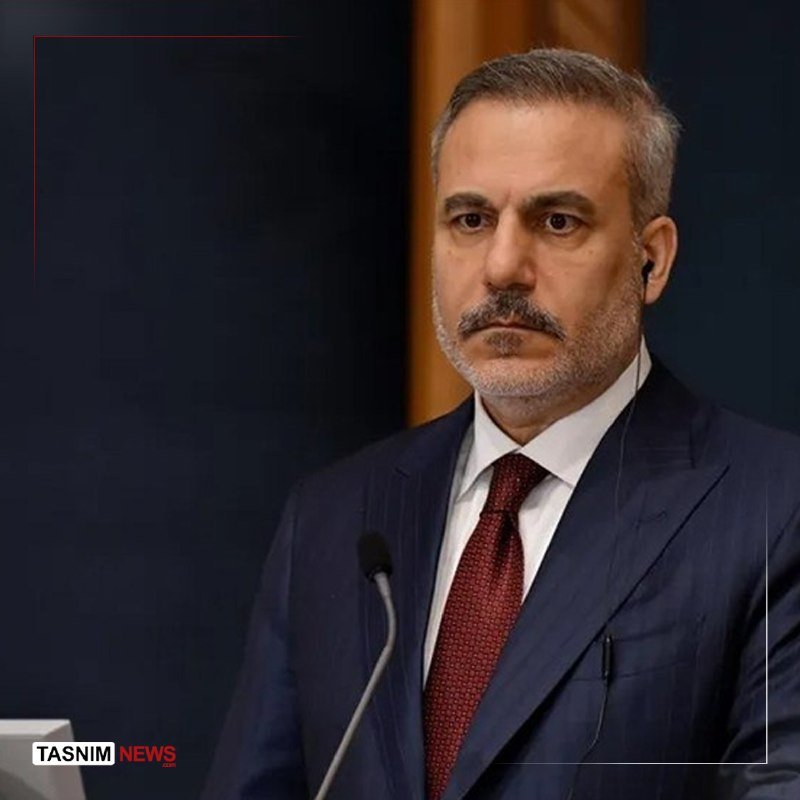
At 22:41 UTC on 17 June 2026, an Iranian statement circulated on the BRICS News channel declaring that "our commitments regarding Strait of Hormuz have begun because the memorandum of understanding has been signed." Within the preceding six hours, Iranian foreign-ministry spokesperson Esmail Baghaei told reporters, via Sprinter Press, that Tehran and Muscat had "largely reached a specific mechanism" for the waterway that "preserves Iran's sovereignty." Earlier the same day, prediction-market traders were repricing the headline: a U.S.–Iran draft deal, the Polymarket wire noted at 20:03 UTC, would reopen the Strait toll-free for just 60 days. A Cointelegraph flash at 15:51 UTC added that the two governments were "considering signing their agreement today," citing Axios. The throughline is not the signing. It is the duration.
What is actually on the table
The reporting points to a narrowly time-boxed arrangement rather than a settlement of the underlying dispute. A 60-day, toll-free window is, in commercial terms, a forbearance — a pause on coercion, not a resolution of grievances. Iranian state messaging frames the deal as Muscat-brokered, sovereignty-preserving, and MoU-based rather than treaty-based. The Axios-sourced characterisation, in turn, frames it as a temporary reopening that puts a clock on both sides: a deadline after which the chokepoint reverts to its contested status unless a deeper arrangement is reached.
The asymmetry is structural. Iran controls the geography; the United States and its Gulf partners control the insurance, the refining, and the alternative-route logistics. A short, renewable window hands the maritime-insurance market and the freight-rate curve back to volatility the moment it lapses. It also hands Tehran the option of re-imposing pressure on day 61, having demonstrated that it can be turned off — a far more valuable bargaining chip than a threat that has never been exercised.
The Omani channel as architecture, not as mediator
Baghaei's emphasis on the mechanism reached with Oman, rather than with Washington directly, is the part of the story the Western wires are under-reading. Muscat has spent the last decade positioning itself as the Gulf's back-channel capital: technically neutral, ideologically quiet, and procedurally patient. By routing the agreement through an Omani instrument, both sides acquire a face-saving geometry. Iran can describe the arrangement as regional, not capitulatory. The United States can describe it as a managed de-escalation, not a concession. The 60-day window is the price of that geometry — short enough that no one's domestic audience has to treat it as a strategic defeat.
The risk is that managed de-escalation is not the same thing as stability. A renewable forbearance is, by construction, an instrument whose value rises as the renewal date approaches. Each tick of the clock is, in effect, an option expiring — and option-expiry dynamics in commodity markets are observable in real time. Tehran's calculus will be to extract concessions on the sanctions architecture before the window closes; Washington's will be to extract behavioural commitments on shipping, proxy activity, and nuclear-file verification. The two lists are not the same length.
The counter-narrative Western desks are missing
The standard framing — that Iran is the actor imposing costs, and that a U.S.-engineered reopening restores normality — flatters the incumbent arrangement more than the evidence supports. The chokepoint's value as a deterrent depends on the credibility of its re-closure. A deal in which Tehran is paid, formally or implicitly, not to disrupt shipping is, in Iranian strategic vocabulary, a recognition that disruption has a price. The 60-day structure effectively creates a spot market for Hormuz risk.
There is also a quieter read: that the United States, heading into a domestic political cycle in which energy prices and great-power posture are both electorally salient, prefers a 60-day de-escalation to a 60-day confrontation. A short window defers the harder question — what a stable, multi-year Hormuz regime would actually look like — to a successor administration. In that reading, the MoU is less a peace than a punt.
Stakes and what to watch
If the deal holds, the immediate beneficiaries are the shippers, refiners, and tanker insurers who have spent the preceding weeks pricing the premium for an open-ended closure. Asian importers — China, India, Japan, South Korea — are the structural winners of any arrangement that keeps the lane open on commercial terms. The structural losers are the speculative long positions built on the assumption that the chokepoint's risk premium is permanent.
If the deal does not hold, or lapses at day 61 without renewal, the freight market will reprice inside a trading session and the diplomatic blame game will begin inside a news cycle. The honest summary is that the sources available as of 17 June 2026 do not yet specify the verification regime attached to the MoU, the precise toll arrangements during the 60-day window, or the contingency for a non-renewal scenario. What they do specify is the shape of the bargain: short, Oman-routed, and conditional. That shape is itself the story.
This publication treats the Iranian foreign-ministry line and the Axios-sourced U.S. characterisation as competing primary framings, not as one of them being the official truth and the other the spin. The 60-day clock is the unit of analysis.
Wire provenance
This editorial synthesis draws on the following public wire/social posts:
- https://t.me/bricsnews
- https://t.me/cointelegraph