Hormuz and the price of 'common sense': parsing Trump's Iran deal
A US-Iran understanding is due to be signed on 19 June 2026. The shipping lane at the centre of it carries a fifth of global oil — and the details are still being argued out loud.
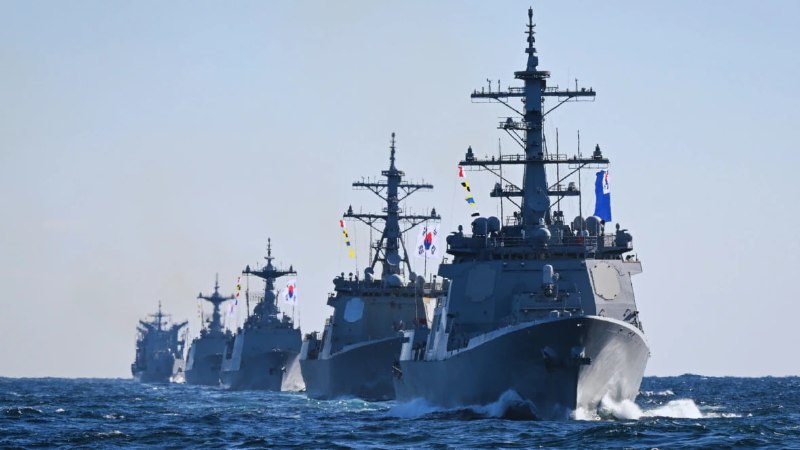
An agreement between the United States and Iran is scheduled to be signed on Friday 19 June 2026, with the stated objective of ending hostilities between the two countries and reopening the Strait of Hormuz to commercial traffic. Al Jazeera's breaking news desk reported the timing on 17 June, citing an understanding centred on restoring freedom of navigation in the narrow waterway that separates the Persian Gulf from the Gulf of Oman. No text of the agreement had been published as of 18:53 UTC on 17 June, and the public architecture of the deal — who signs for Iran, what mechanism enforces compliance, and what happens after the first sixty days — was being thrashed out in front of reporters rather than negotiated behind closed doors.
What is on the table is, on its face, a US-Iran arrangement that exchanges a halt to the most acute phase of military pressure on Tehran for an Iranian commitment to let oil tankers pass unmolested through Hormuz. The shipping lane carries close to a fifth of global seaborne oil. The terms, the credibility of those terms, and the question of who enforces them are now the story.
The scene at the podium
The most concrete exchange of the day came at 18:53 UTC, when a reporter asked Donald Trump, speaking at the White House, what mechanism would stop Iran from collecting transit tolls on Hormuz traffic after an initial sixty-day period. Trump's answer, captured by the Telegram channel DDGeopolitics and circulated on X by @sprinterpress, was that "common sense" would prevent Tehran from reimposing charges once the agreement took effect. The remark is the closest thing to a published enforcement provision the deal has produced. It is also the weakest possible anchor for an arrangement of this scale.
Earlier in the day, Trump used an Oval Office exchange to sketch the strategic rationale. The United States, he said, "could have bombed Iran for another 2 weeks or 2 years, but then the Hormuz Strait would not be open" — a statement posted at 18:50 UTC and amplified through Telegram monitoring feeds. The framing presents a US choice between maximalist military pressure and a negotiated reopening of the waterway, with the implicit claim that the deal represents the latter option taken.
At 11:37 UTC, Trump added that ships were "starting to go out" and that the strait would be "completely open" by Friday. The claim, carried by @unusual_whales, sits awkwardly beside the absence of any published plan for how that outcome is to be guaranteed. A separate post at 03:58 UTC noted the gap explicitly: Trump said the strait would be "completely open" by Friday, "though official details of the plan to reopen the strait have not been released."
The counter-narrative from Tehran and the Gulf
The Iranian side has not, in the materials available to this publication, published a parallel text. Iranian state-aligned outlets have in past negotiating cycles pushed back on the framing that the strait is a US-patrolled waterway, and Iranian officials have historically described the toll question as a sovereign matter for the Islamic Republic, not a concession to be negotiated away in a bilateral understanding with Washington. The lack of an Iranian counter-briefing in the public record on 17 June is itself a fact: it is consistent with a leadership that prefers to let Iranian gains materialise as fait accompli rather than be locked into commitments it cannot easily reverse.
The Gulf monarchies — Saudi Arabia, the United Arab Emirates, Qatar, Oman, Kuwait, Bahrain — have a direct, immediate interest in Hormuz remaining open. Their export infrastructure is built around the assumption that the strait functions as a reliable transit corridor. A deal that delivers an open waterway without a credible enforcement backstop is, for them, a worse outcome than a deal that delivers a closed one with a known duration: at least the latter can be priced.
The non-aligned maritime powers — China, India, Japan, South Korea — are the largest single bloc of Hormuz users. None of them have been visible at the negotiating table in the materials available on 17 June. Their interests are silent in the public record and central to the practical question of whether any arrangement holds. Tehran's longstanding position that Hormuz tolls are a question for littoral states and their customers, not for the United States alone, has a structural echo in Beijing's preference for multipolar management of the chokepoints on which its energy supply depends.
A structural reading — power at the bottleneck
Strip the exchange of its theatrical surface and the underlying geometry is familiar. The United States is the security guarantor of last resort for the existing transit order. Iran is the littoral state with the physical capacity to disrupt it. A deal between them is, structurally, an arrangement to share the rents of a public good — the right of passage — between the incumbent hegemon and the regional power most able to deny that right. The historic pattern in such arrangements is that the denial capacity is monetised (through tolls, through discounted oil, through political alignment) until the balance of military power shifts enough to reset the price.
Trump's invocation of "common sense" as the enforcement mechanism fits that pattern in a particular way. It is an admission that there is no third-party arbiter, no automatic sanctions snapback, no multinational naval task force with a published rules of engagement. The deal's compliance mechanism is, in effect, the credibility of the US threat to resume bombing if Iran re-imposes tolls after day sixty. The credibility of that threat is, in turn, a function of (a) US domestic appetite for another escalation cycle, (b) Iranian capacity to absorb that escalation, and (c) the willingness of third-party oil customers to keep buying Iranian crude if the strait is again contested. None of those three variables are public on 17 June.
This is where the reporting is thinner than the headlines. The "common sense" line is, on a generous reading, shorthand for the credible threat of resumed strikes. On an ungenerous reading, it is the language used when there is no enforcement provision to point to. The line between those two readings is, for now, the line between a deal that holds and a deal that doesn't.
What the deal is and is not
The materials available on 17 June support a narrow reading. What is on the table is a public commitment by the US president that the strait will be "completely open" by Friday 19 June, paired with an Iranian commitment — communicated through the same podium, not through a published text — not to disrupt transit. The deal is not a treaty. It is not a UN Security Council resolution. It is not a multilateral framework with China, India, Japan or the EU at the table. It is an executive-level understanding whose enforcement rests on the credibility of the US threat to resume military action and on Iran's calculation of the cost of reimposing tolls on day sixty-one.
The oil market has read the news with the same caution. Benchmarks are not on this publication's source list for 17 June, and the materials cited here do not contain specific price moves tied to the announcement. What the materials do contain is the repeated, explicit gap between Trump's stated outcome ("completely open by Friday") and the absence of any published mechanism to deliver it.
The most useful parallel is not the JCPOA — a multilateral nuclear arrangement with European and Russian co-signatories, an IAEA inspection regime, and a UN Security Council endorsement. It is closer to the informal understandings that have, periodically, paused US-Iran escalation in 2019, 2020 and 2023. Those pauses held for weeks or months, not years, and they held because the cost of breaking them was, in the moment, higher than the cost of observing them. The 19 June arrangement appears to be the same instrument, scaled to a larger economic claim.
Stakes and the road from Friday
If the deal holds past day sixty, the practical consequence is that roughly a fifth of global seaborne oil resumes transit at a predictable price, that Gulf state revenues stabilise, and that the US presidential claim of having secured a Hormuz reopening becomes a defensible domestic political asset. If the deal breaks at the sixty-day toll question — the exact question the White House was asked on 17 June — the consequence is not just a return to disrupted transit. It is a market that has priced in stability and must reprice risk, and an Iranian leadership that will have tested the credibility of the US threat and learned something from the answer.
The variable that will determine which path the arrangement follows is the one Trump named on the podium: whether "common sense," read as a willingness to absorb the cost of resumed US strikes, prevails in Tehran on day sixty-one. That is a question about Iranian domestic politics, about the price of oil on that date, and about the diplomatic weather between Washington and Beijing. None of those are visible in the public record on 17 June 2026.
What is visible is that an agreement of considerable economic and strategic weight is being sold on the strength of a single line at a podium, that the line itself is an admission of the absence of an enforcement architecture, and that the most consequential questions about the deal are being put to the US president by reporters in real time. That is not a settlement. It is the opening bid of a settlement. The hard part — the part that determines whether the waterway is "completely open" in August, September and October — has not yet been written.
— Monexus Staff Writer, 17 June 2026.
Desk note: the wire services have carried the signing date and Trump's "completely open" claim; this publication has centred the enforcement gap — the sixty-day toll question and the absence of a published mechanism — that the wires have reported but not led with.
Wire provenance
This editorial synthesis draws on the following public wire/social posts:
- https://t.me/DDGeopolitics
- https://x.com/sprinterpress/status/2067318885376737280
- https://x.com/unusual_whales/status/2067033303576879104
- https://t.me/DDGeopolitics/
- https://en.wikipedia.org/wiki/Strait_of_Hormuz
- https://en.wikipedia.org/wiki/Iran%E2%80%93United_States_relations