Strait of Hormuz, NATO pledges, and the price of a Ukrainian summer: how Trump's G7 gambit redraws the burden
A US president floats reopening the Strait of Hormuz in exchange for European help; the NATO chief walks the allies toward a bigger crisis-force pledge. The arithmetic of the transatlantic compact is being rewritten in plain sight.
On 17 June 2026, a single news cycle produced two statements that, taken together, sketch a renegotiation of the transatlantic compact — and, almost incidentally, a price tag for the next phase of the war in Ukraine. In The Hague, NATO secretary-general Mark Rutte told reporters that European allies had "increased pledges" for the alliance's crisis-response forces, a quiet diplomatic verb that papers over a year of difficult national-budget conversations. Within hours, Donald Trump told reporters at the G7 that he was prepared to "boost support for Ukraine and increase pressure on Russia" — provided the Europeans help secure the Strait of Hormuz. The Strait, he added in a separate remark, would be "toll free" when it reopens permanently. The transactional structure of the offer is the news.
What is being proposed, in plain terms, is a swap: a renewed US commitment to arm and underwrite Ukraine in exchange for a European naval and security lead in a critical Middle Eastern waterway. Each side of the equation is its own story. The Hormuz request pulls Europe — historically a maritime consumer, not a Middle Eastern security guarantor — into a maritime mission that sits outside the alliance's founding remit. The Ukraine side asks whether the Europeans have the industrial base, the ammunition stocks, and the political will to be the structural majority of Kyiv's backers while Washington rebalances. Read together, the two statements describe a NATO that is no longer an automatic article-5 fire brigade, but a marketplace of discrete security tasks priced in political capital.
The Hague arithmetic: what Rutte actually said
Rutte's press appearance, in the run-up to the alliance's summer ministerial calendar, was pitched as a routine update on readiness. The line that drew the headlines was his claim that European allies had, over recent weeks, "increased pledges" to NATO's crisis-response forces — the high-readiness units the alliance is meant to be able to deploy inside and outside its territory in a crisis. The verb matters. NATO communiqués have spent a decade talking about the 2%, 2.5% and now 3% defence-spending benchmarks; pledges to force-generation are a more granular, more uncomfortable metric. They translate money into trained, equipped, deployable bodies.
Rutte did not disclose numbers. Nor did he name the countries whose pledges had moved. The transparency gap is itself significant. Force pledges are the part of NATO burden-sharing that governments prefer to keep opaque, because a public pledge is a public contract: a shortfall becomes a political liability, not a budget footnote. What is known, from alliance public documents over the past eighteen months, is that the European contribution to high-readiness forces had been the slowest-growing line of allied capability. Germany's special forces, the UK Rangers, the French units aligned with the Very High Readiness Joint Task Force: all have been smaller than their stated ceilings, and all have been quietly expanded since the Ukraine war entered its fourth year. The direction of travel is consistent with Rutte's claim. The pace, by every external estimate available, is still well short of the alliance's published force goals.
Beijing in the room: the China variable Rutte would not name
At the same press appearance, asked about reports that China was helping Russia militarily in Ukraine, Rutte was characteristically tight-lipped. "We are not naive; we follow everything exactly. I cannot tell you more at this moment, or at least in this open press conference," he said, per the Telegram channel Clash Report's transcript of the briefing. The phrasing is a NATO staple — the alliance routinely tells the public less than it briefs its members — but the political subtext is new. Two years ago, the China–Russia axis was a Pacific and Indo-Pacific question. Today, it is a European theatre question, and is being acknowledged as such by name inside NATO councils.
The structural point is that Rutte cannot, in open session, confirm what officials in several allied capitals have been saying privately: that dual-use components, optical equipment, machine tools, and propulsion inputs reaching Russian defence factories are coming via Chinese intermediaries or Chinese-based supply chains. Some of this has been documented in sanctions evasion files published by the EU and the UK; some of it has been reported by outlet-after-outlet in Washington and London. The NATO position remains that it "follows everything" without publicly attributing. That posture has costs: it gives Beijing a continuing diplomatic shield (denial, in the same breath, of the part it plays) and it asks the European public to underwrite an industrial sanctions regime whose enforcement record is patchy. The honest reading is that the alliance is, slowly, treating China as a defence-industrial supplier to the war — and is not yet ready to say so on the record.
The Hormuz offer: tolls, traffic, and the politics of a sea lane
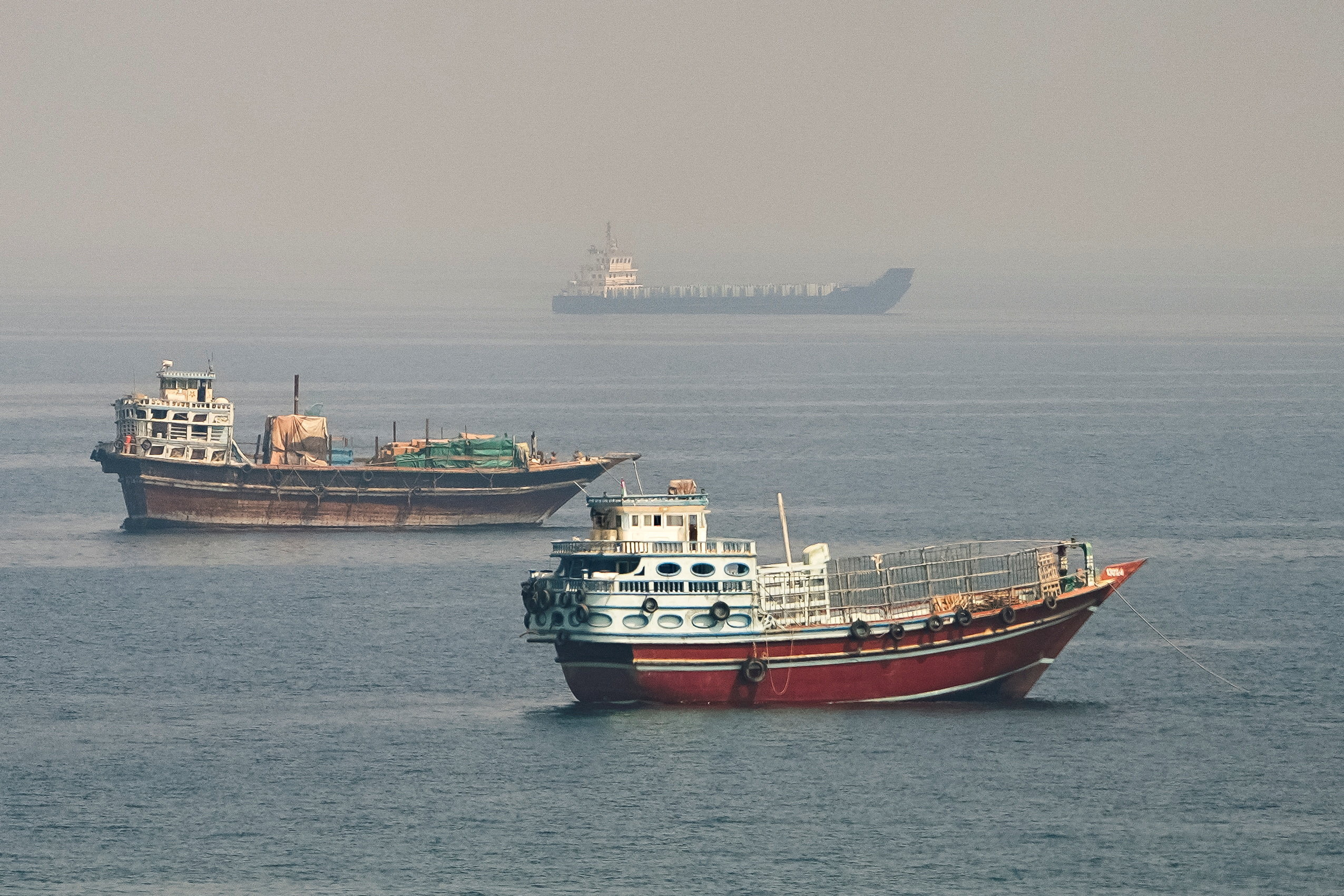
Trump's Hormuz remarks are the more novel of the two interventions. The Strait of Hormuz, the chokepoint between the Persian Gulf and the Gulf of Oman, handles roughly a fifth of global seaborne oil flows. It has been the subject of intermittent Iranian harassment, tanker seizures, and a long-running US Fifth Fleet presence based in Bahrain. What Trump proposed is, on its face, a trade: the US will move to reopen it "permanently" and keep the transit free of any US-imposed tolls. In return, the Europeans — who import significant Gulf hydrocarbons and whose insurers and shipping companies price the risk of Hormuz transit into every barrel — would take a security lead.
The second component, that the Strait will be "toll free when it reopens permanently," is the part that has not been stress-tested in public. There is no public framework for what a non-tolled, non-restricted Hormuz regime would look like under international law. Iran's revenue model, the Omani and Emirati transiting economy, and the global insurance market all have positions encoded in the present arrangement. The US statement is a negotiating posture, not a programme. What is striking is that the proposition was aired at the G7 — a forum that does not, in any normal reading, own the Hormuz file. Reading the move charitably, it is an attempt to put a price on European burden-sharing in concrete terms. Reading it uncharitably, it is an attempt to convert a Middle Eastern security task into a European budgetary line item. The same sentence supports both readings.
What Ukraine is actually being asked to absorb
The third leg of the day's news is the Ukraine connection. Trump's framing — that the US is "ready to boost support for Ukraine and increase pressure on Russia" if the Europeans help on Hormuz — implies, without stating, a continued American role in arming Kyiv. The G7 leaders, per the Kyiv Post's read of the session, "didn't reject the proposal." That is the bar that matters in G7 communiqués: not rejection. It is a soft yes, with the customary hedging.
The European Union's own support to Ukraine, on the data published by the bloc's institutions, has outrun the US contribution in calendar 2024 and 2025 by a wide margin. The US remains the indispensable supplier of certain high-end systems: long-range precision munitions, air-defence interceptors, advanced ISR. Europe's industrial base, even after the ramping of the Czech-led ammunition initiative and the German and Nordic artillery programmes, still depends on transatlantic supply chains for those categories. So the question the G7 left open is the one the diplomats were not willing to speak aloud: if the US holds or increases its headline support for Ukraine, what does it want in return, in non-monetary, in-kind European commitments? Hormuz is the named answer. The unnamed one is whether a similar ask is in train for the Indo-Pacific, for maritime tasking off the African coast, and for the cyber and space domains the alliance has been quietly expanding into.
The structural read: from automatic to transactional
What these three threads share is a shift in the operating logic of the transatlantic alliance. For the first two decades after the Cold War, NATO's European members consumed US security as a public good: paid for by a national-budget formula, delivered as a presence, and treated as essentially automatic. The two years since the start of the full-scale invasion of Ukraine have, slowly and then suddenly, converted that arrangement into a market. The US, on this reading, is signalling what its security tasks will cost in European obligations; the Europeans are being asked to choose which of those obligations they can politically absorb.
Two cautions are worth registering. The first is that this is a posture, not a programme. There is no draft treaty, no published table of pricing, no signed framework that would convert a Hormuz European maritime lead into a US Ukraine commitment. All that exists is the rhetoric of price, and the diplomatic willingness of both sides to discuss it in those terms. The second is that, even where the rhetoric has matured, the underlying industrial and force-generation machinery is slower than the rhetoric. European defence spending is rising, but the procurement cycle from budget line to deployable platform is measured in years. Force pledges, as Rutte was at pains to gesture at, are the metric that catches that lag in real time.
What remains uncertain
Several pieces of the picture are genuinely contested or thin. The exact content of the European "increased pledges" Rutte referenced is not in the public domain. The size and nature of any Chinese support for Russian defence production, while widely reported in fragmentary form, is not officially attributed by NATO in a single document. The Hormuz proposal has been aired verbally; no textual version has been published. And the question of whether a European-led maritime security mission in the Strait is operationally credible — with what platforms, under what rules of engagement, on what timeline — has not yet been seriously costed in public. These are not minor gaps. They are the substance the next two months of diplomacy will fill or fail to fill.
The shape of the transatlantic compact is being redrawn in real time. The lines now are drawn through newspaper press conferences, Telegram transcripts, and the working margins of G7 communiqués, not through the formal treaty architecture that built the postwar order. Whether that produces a more equal alliance or a more transactional one is the question that the European pledges Rutte claims to be receiving will, quietly, answer.
Desk note: this article was written from a thread cluster of four wire items on 17 June 2026; the analysis situates those items inside the longer trajectory of NATO burden-sharing and the Ukraine war without reproducing the wire copy.
Wire provenance
This editorial synthesis draws on the following public wire/social posts:
- http://reut.rs/3QtARRE
- https://t.me/ClashReport
- https://t.me/Kyivpost_official
- https://x.com/unusual_whales/status/
- https://t.me/ClashReport
- https://t.me/Kyivpost_official
- http://reut.rs/3QtARRE
- https://x.com/unusual_whales/status/
Follow the event.
These dated source records provide context. They do not retrospectively verify this archive article.
A dated voting record is evidence of one decision. Use the original UN record before turning it into an alignment label.
Visual explainer · historical vote of 2022-03-02 →